Leaving Honfleur is a bit of a wrench. It’s the hidden trap of slowing down, you form attachments that have to be left behind.
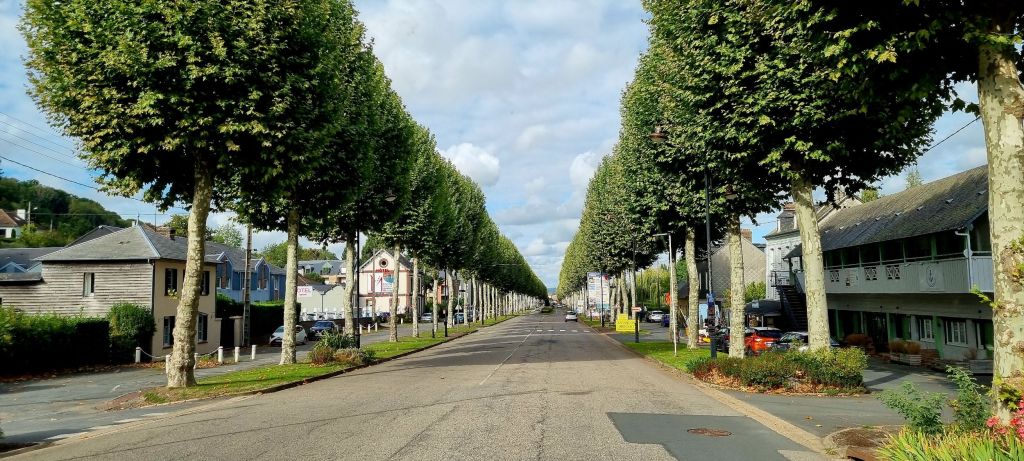
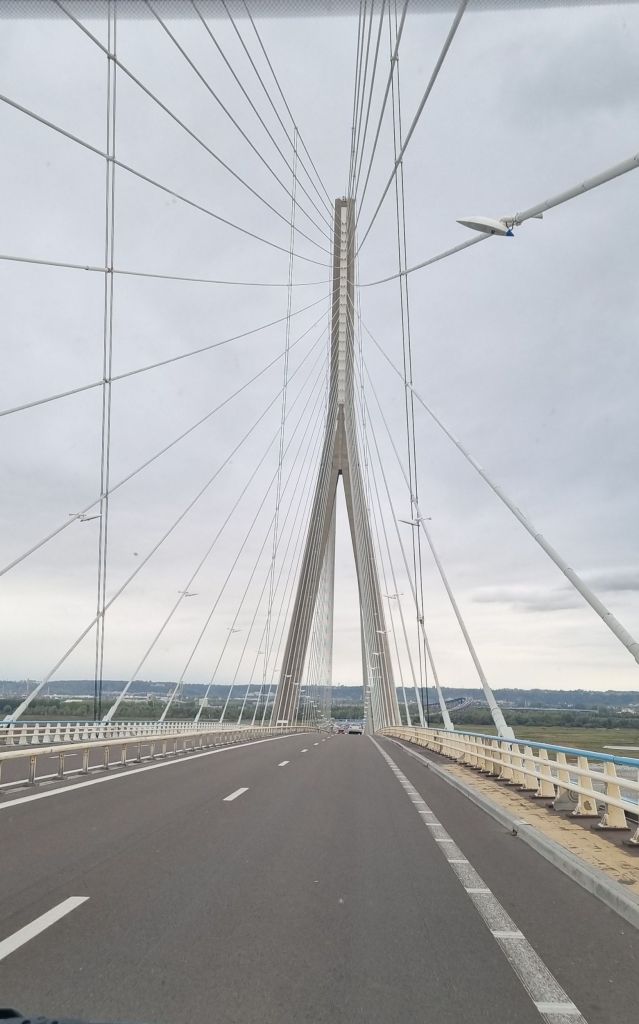
A tree framed exit takes us over the Pont de Normandie, the impressive bridge crossing Seine that offers a 100 km shortcut. It’s low tide, exposing kilometres of mud flats.
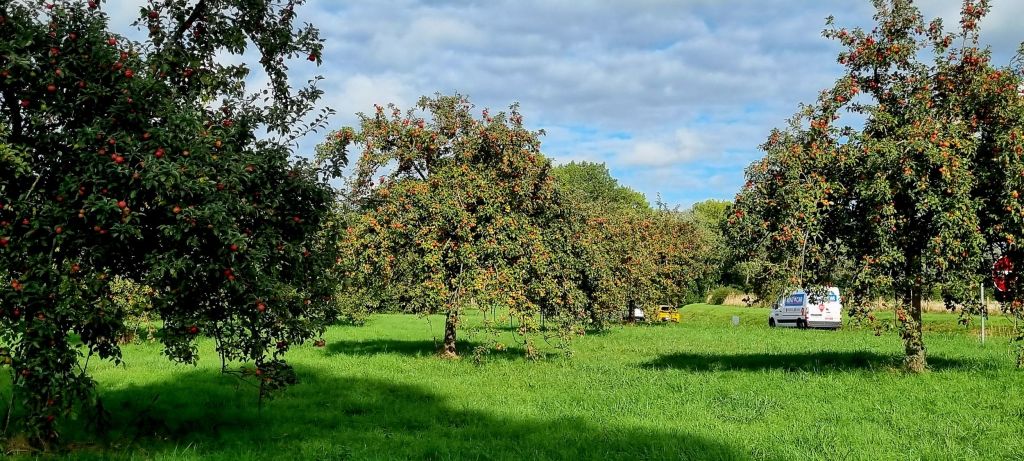
Our path takes us through apple orchards – along with magnificent dairy, Normandy is the land of cider and Calvados. If you’re so inclined, and have fruiting trees, you can take your crop to a mill for crushing and bottling.
We don’t get far, only to Saint-Jouin-Brunevala, mere 20 kilometers east, before Himself stops at the Port du Havre-Antifer supertanker station. Conceptualised after the Suez Canal crisis and built in the mid 1970s, it’s designed to accommodate massive crude oil supertankers with deep drafts. That second groin, further out to sea, is an extraordinary 3.5 km long accommodating supertankers up to 500 metres long. Unrefined crude oil is pumped out of the tankers into 600,000 m³ holding tanks then travelling through 26 km of underground pipeline to regional refineries.
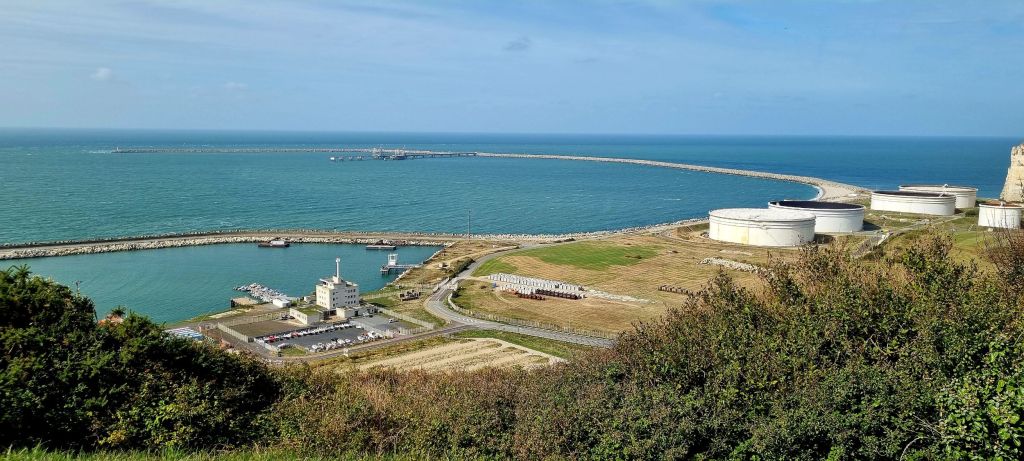
But it’s not this impressive bit of engineering that’s captured Himself’s attention – it’s the clifftop restaurant that overlooks it and has a particularly fine menu. I like it here (in the middle of nowhere) says He. Lunch tomorrow? Who am I to say no to his hopeful little face. And so we stop.
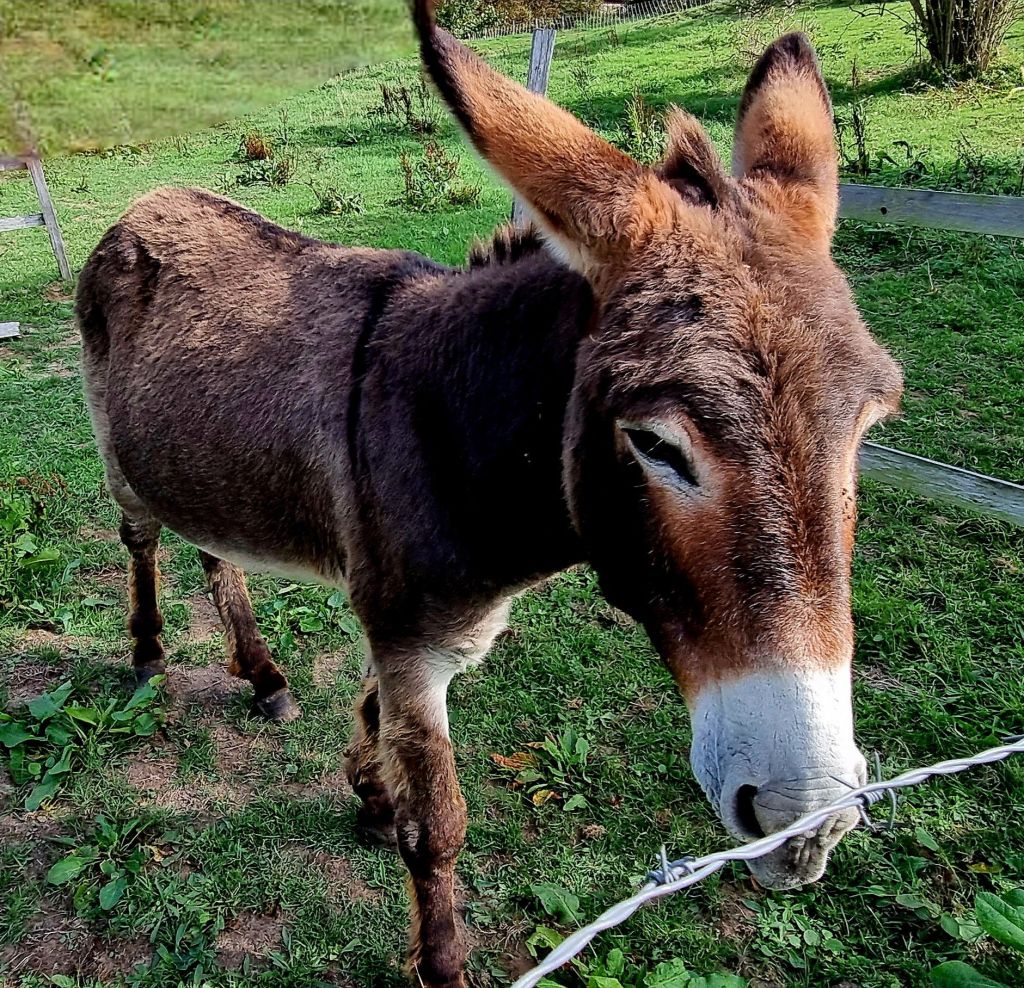
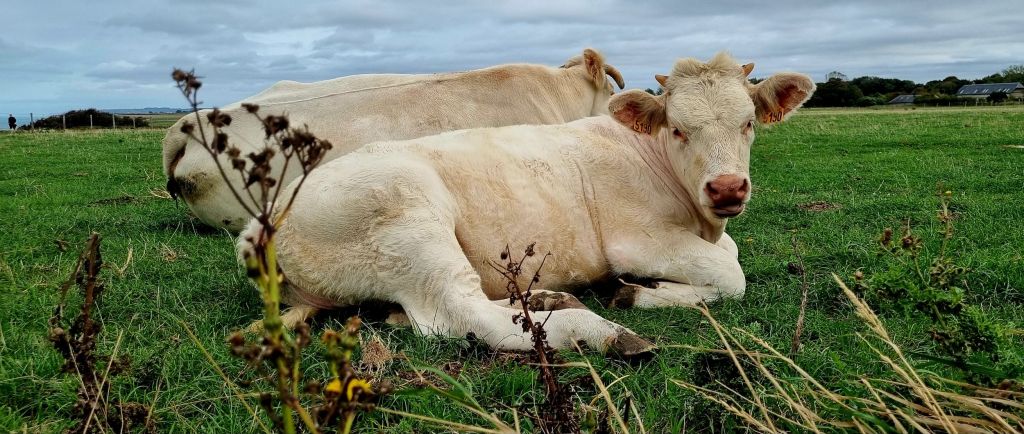
Armed with an apple treat, I make friends with the locals. This sweet boy is quite the smoocher and there’s a pretty sunset to end the day.
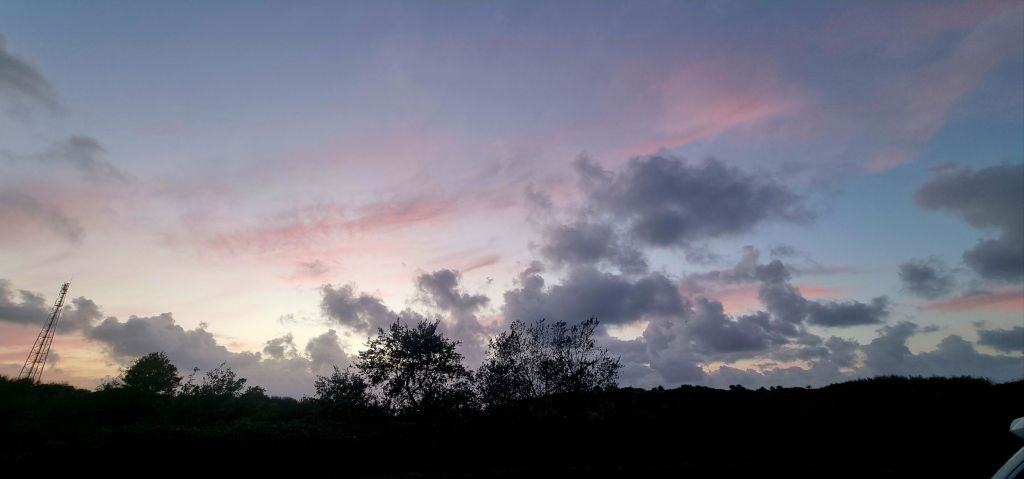
I had good intentions of capturing it across the water but rain scuttered that plan.
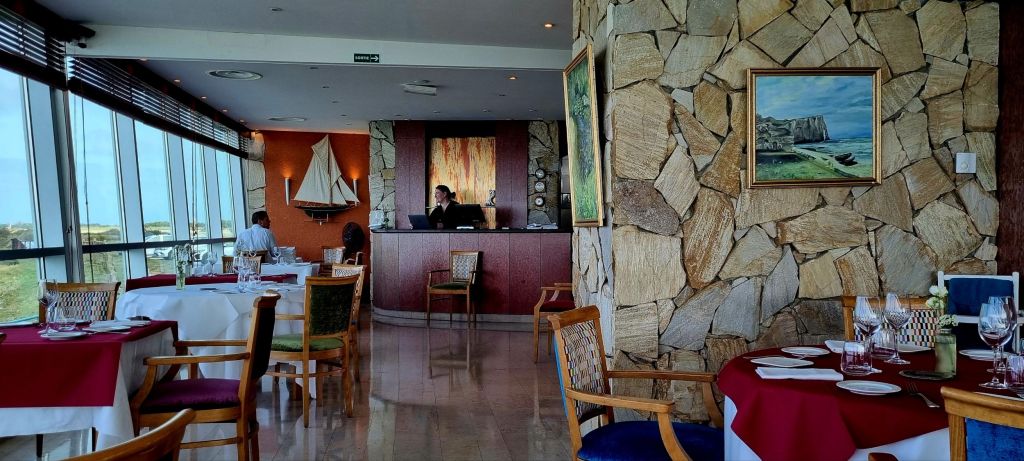
Lunch the next day proves a thoroughly good move. With views across the supertanker station,
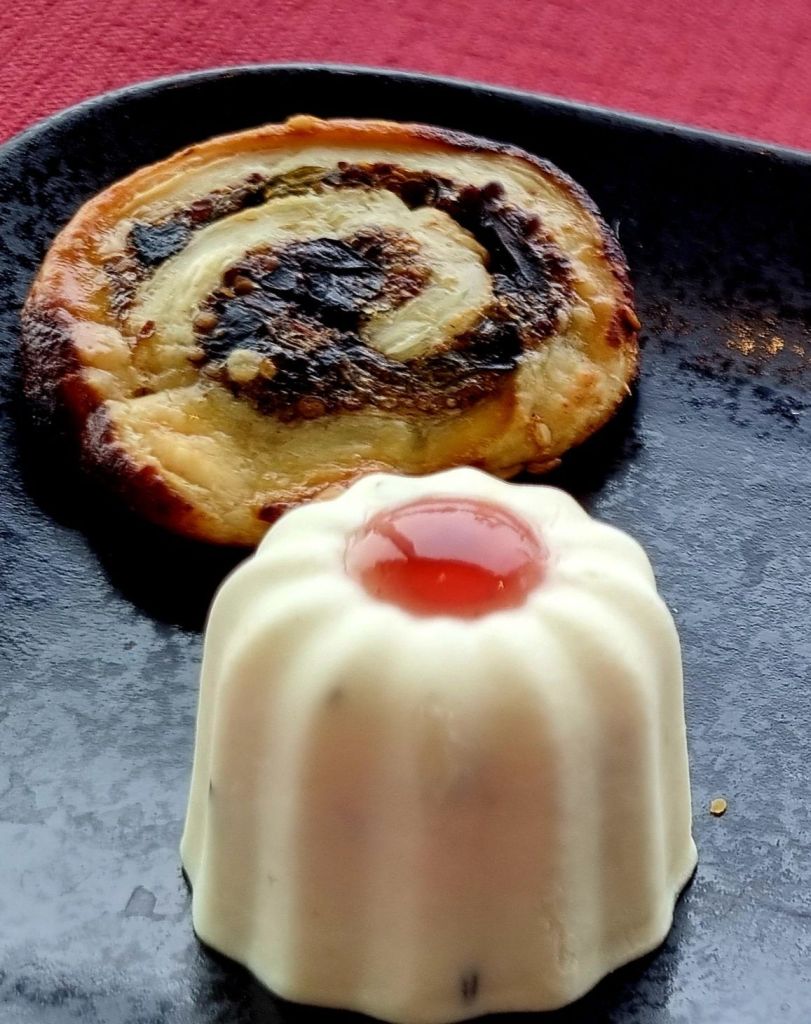
we enjoy amuse-bouce of camembert panna cotta and tapenade pinwheels,
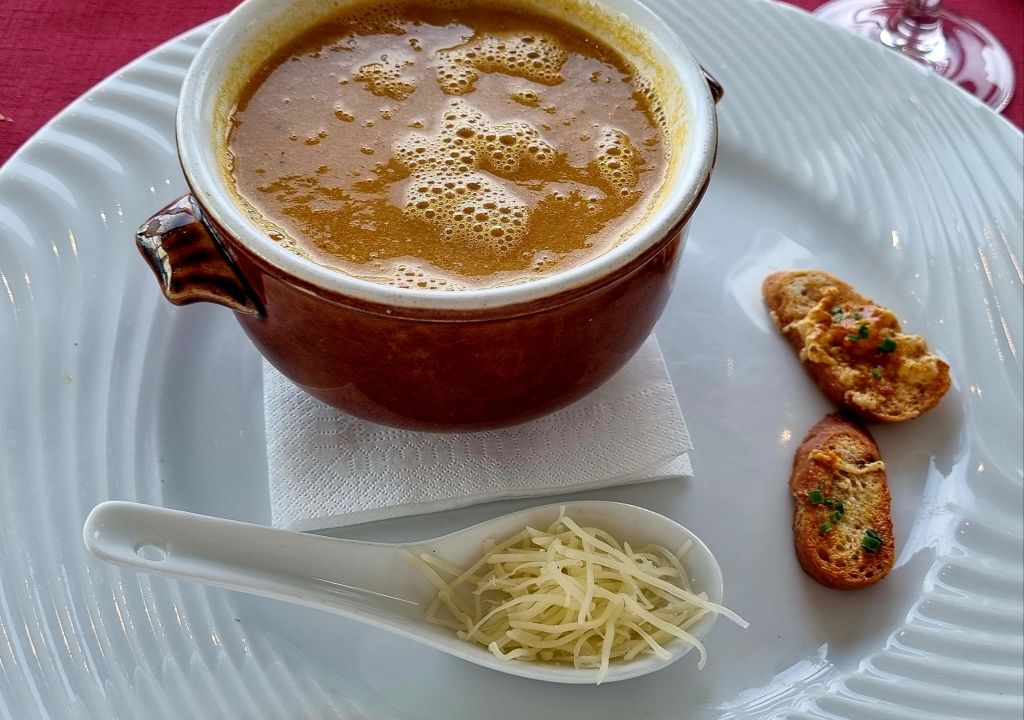
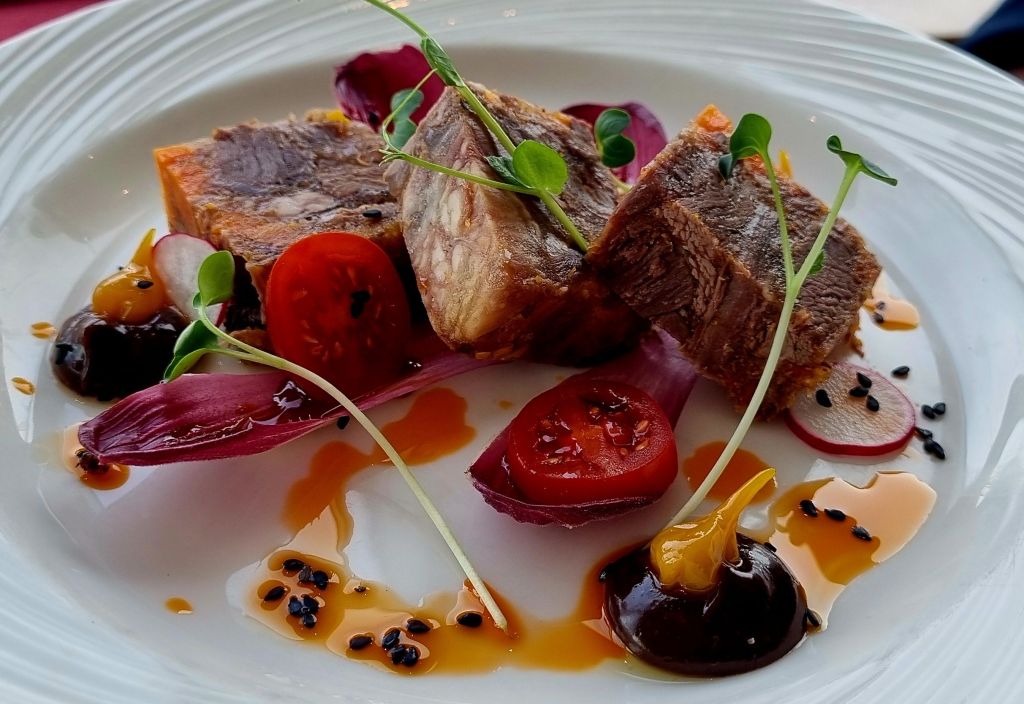
followed by intensely flavoured soup de poisson and beef cheek terrine for entrees.
I can’t resist a rib eye while Himself enjoys a stuffed guinea fowl breast.
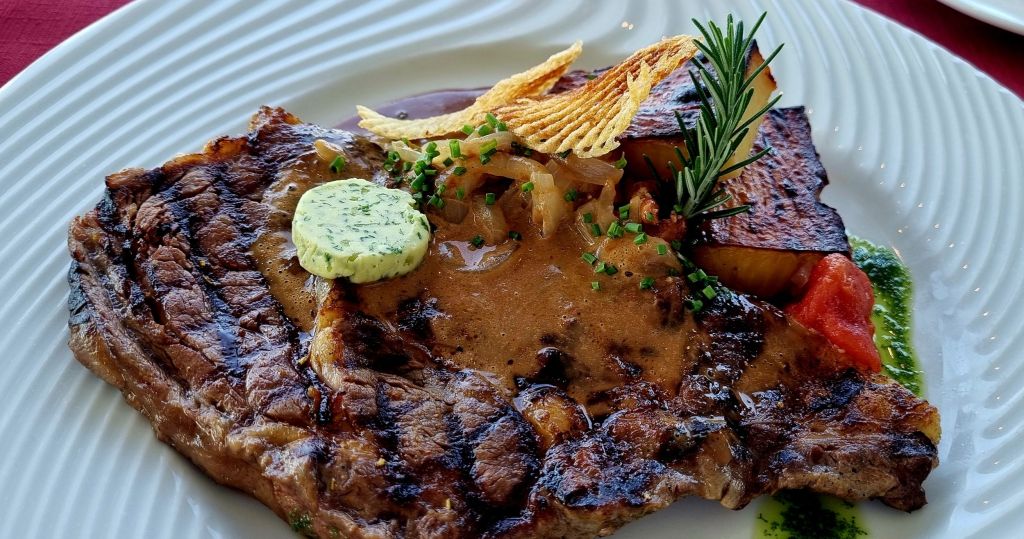
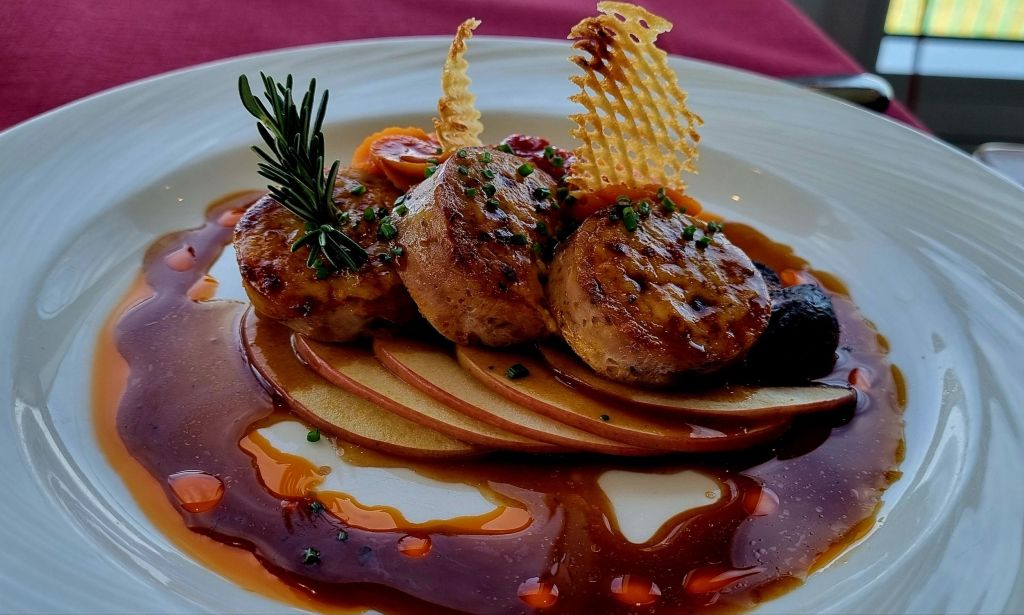
Dessert is a modern interpretation of lemon cheesecake with a sable biscuit base while Himself, not being able to decide, lands on the degustation option, a mouseful of each of the house specialties. Matched wines by the glass have us practicality purring by meal’s end.
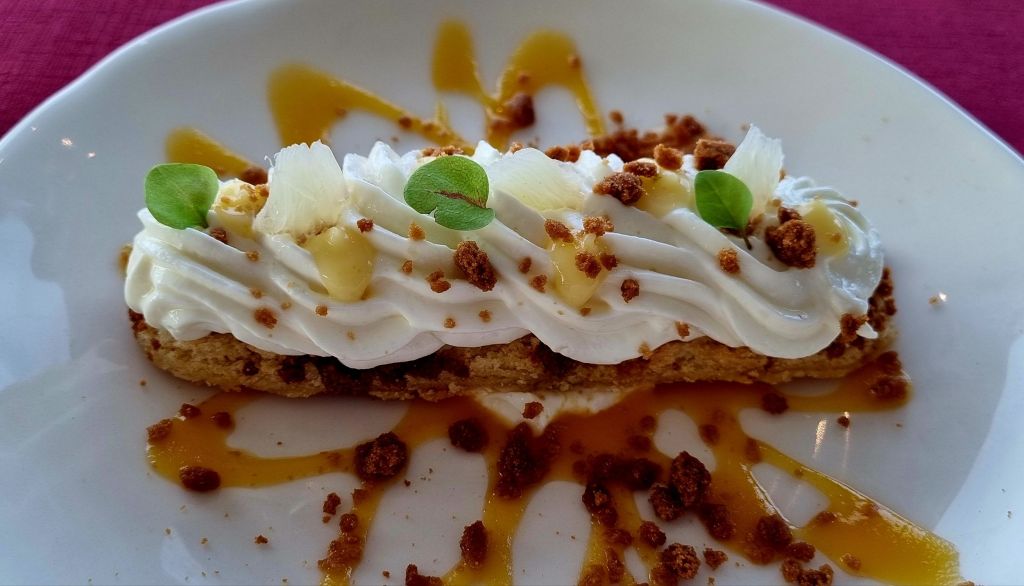
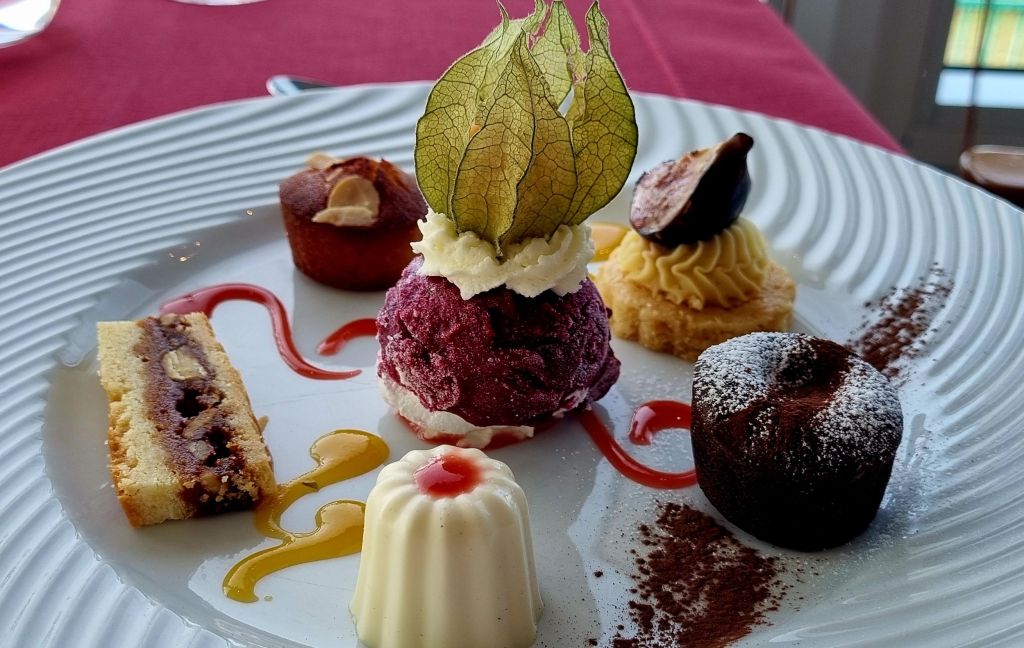
I love the French dediation to food – all of the above were choices from one of the series of menu de jour.
There’s clearly no driving after that lunch – the chalk cliffs of the Côte d’Albâtre (Alabaster Coast) have to wait until tomorrow. A post lunch nap is the only way to do that meal justice.
It occurs to me the following morning that we’ve driven this section of coast once before, in 2024, albeit from the other direction. It wasn’t one of our best efforts, thwarted by roadworks and overwhelming motorhome traffic at both Fecamp and Étretat. It’ll be interesting to see how we fare this time.
The Côte d’Albâtre spans a 120 km stretch of chalk cliff coast that runs from Le Havre to Le Treport. It’s part of the same geological system as the White Cliffs of Dover on the other side of the English Channel and includes the towns of Dieppe and Fécamp, both earmarked for this trip.
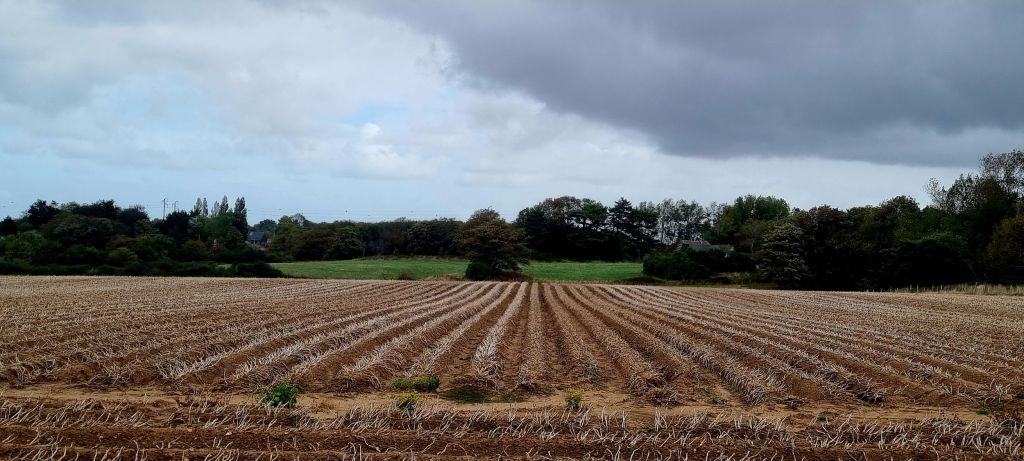
Along our way, farmers are busy with autumn tasks. Corn crops were sun burnt but they’ve been harvested none the less and green spikes of new plantings are pushing their way through following recent rains.
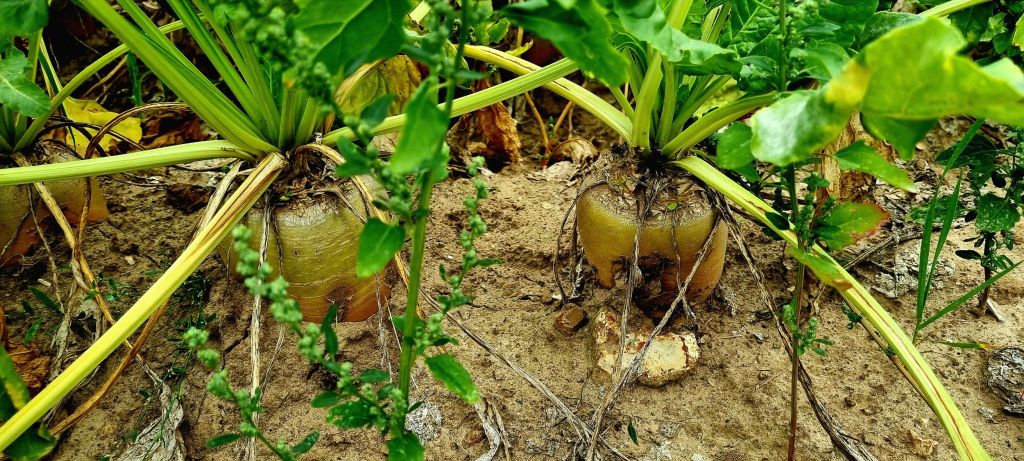
Beet crops are a regular sight – an enormous yellow variety that grows up to 4 kg. Used as high energy livestock feed I believe.
As feared, Étretat proves impossible – some 3 km out of town, a seemingly endless train of motorhomes start to line the streets. A victim of Instagram, it’s heaving with tourists and there’s no point trying to make our way to the aire. Armed with better information than we had in 2024, we choose to move on. Étretat is just one town in a 120 km stretch – local knowledge suggests that Benouville, the next town along, offers a cliff top walk with good views of the chalk cliffs. They prove correct of course.
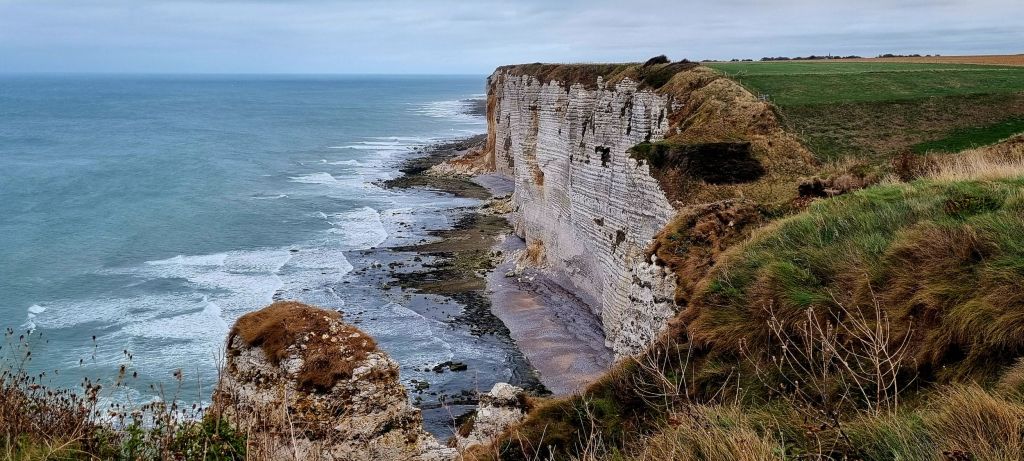
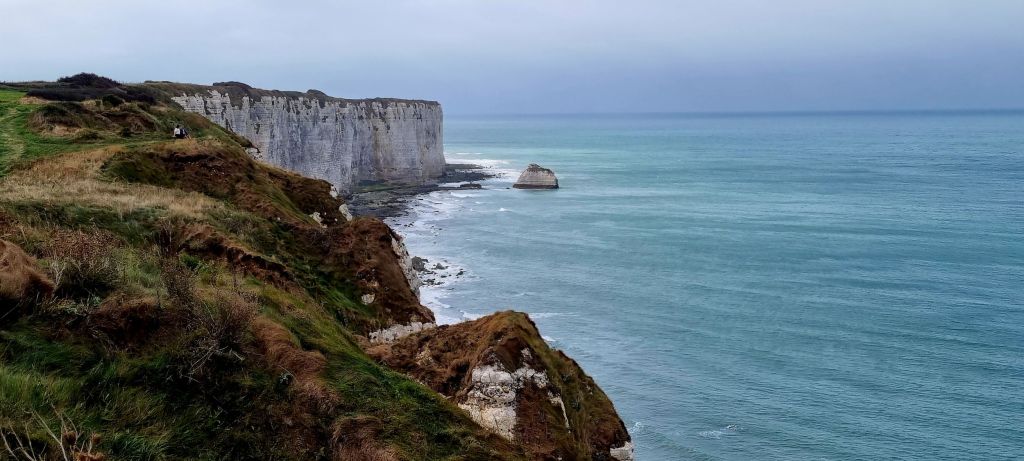
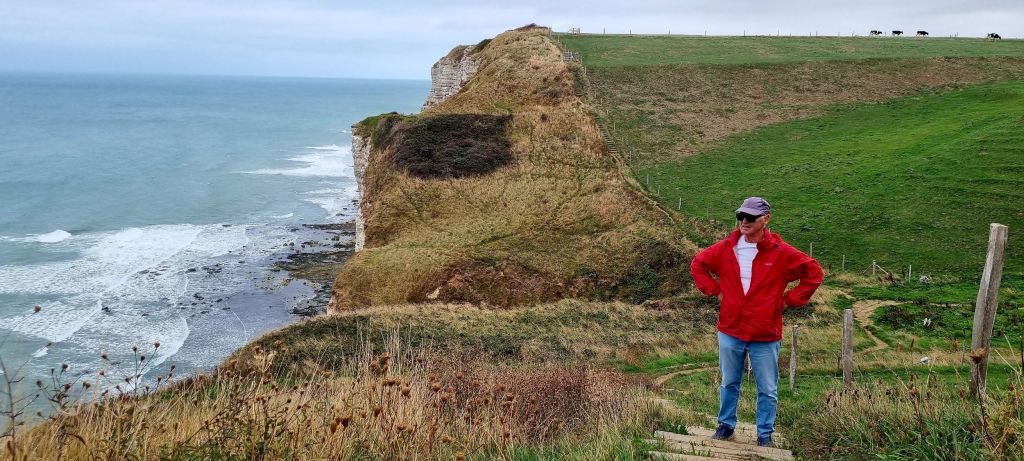
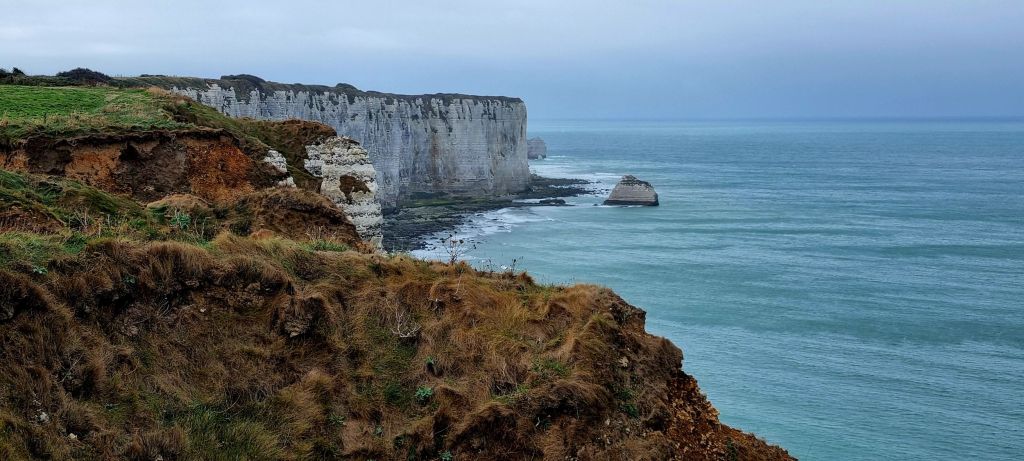
Benouville in contrast is beautifully peaceful. Edged by farmland, the clifftop walk meanders for kilometres. Should one be so inclined, you could walk the 6 km back to Étretat.
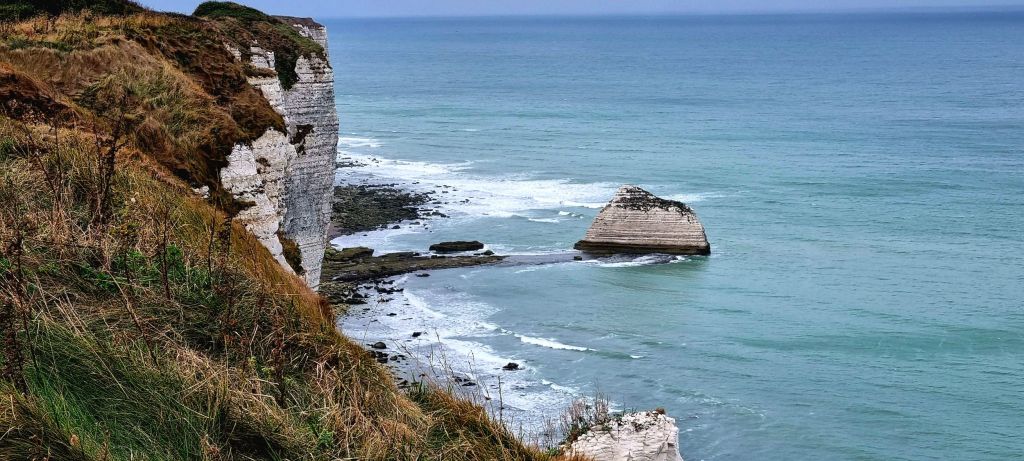
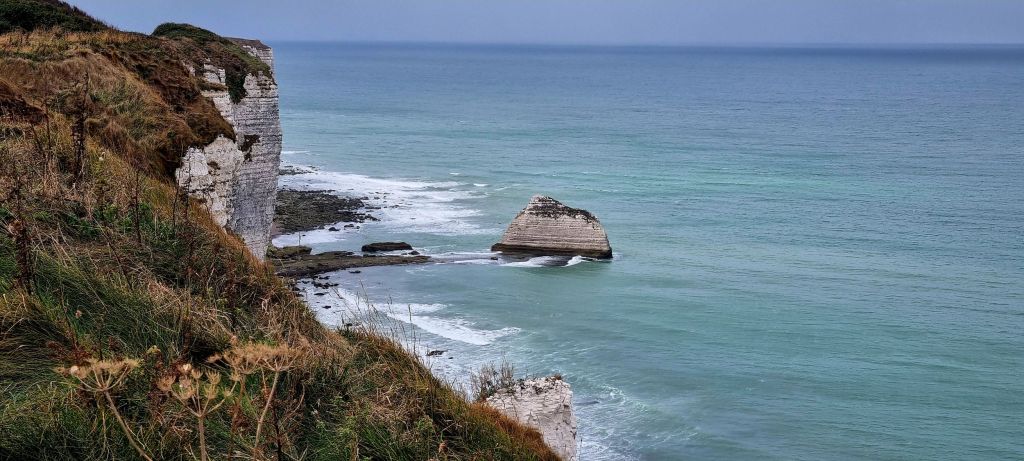
We spend a relaxing afternoon walking and admiring the views along with the locals. The cliffs are spectacular, white chalk in sharp contrast to blue skies and sea. The sea is taking it’s toll though, signs of erosion are everywhere. I have to keep a close eye on Himself who has no fear in approaching the edge.
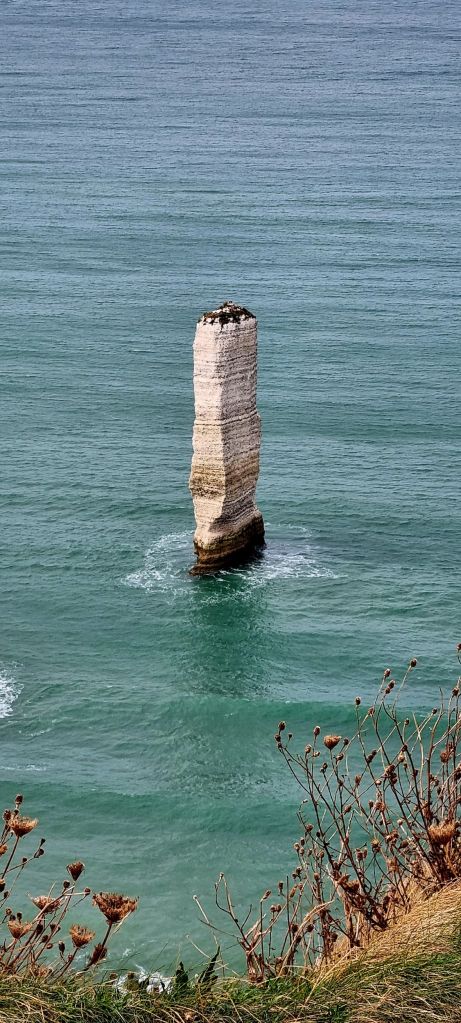
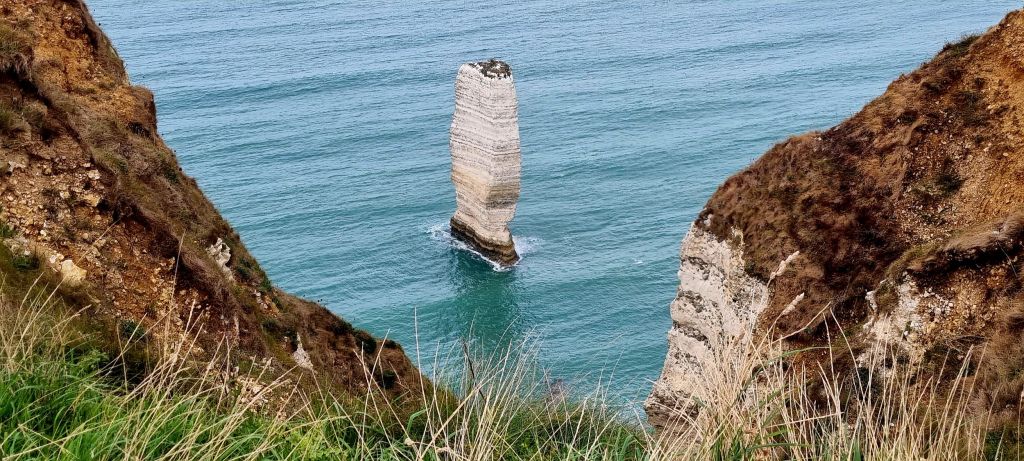
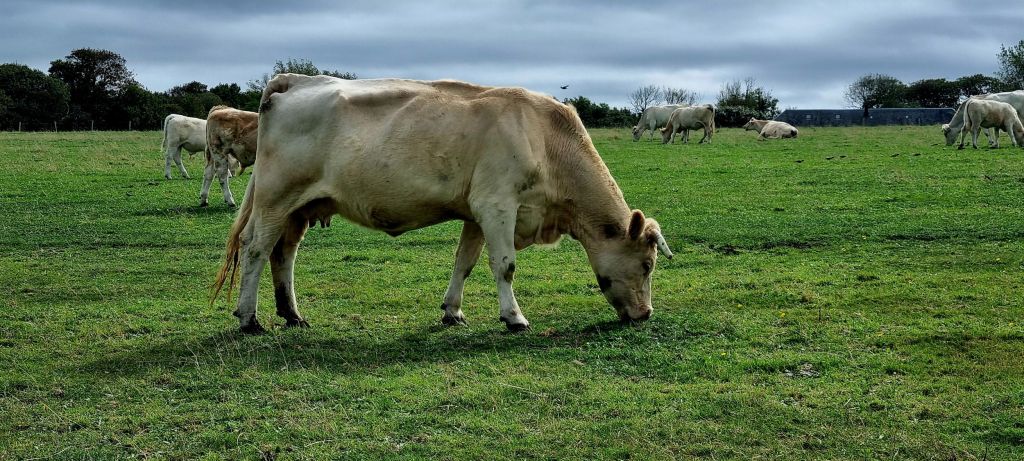
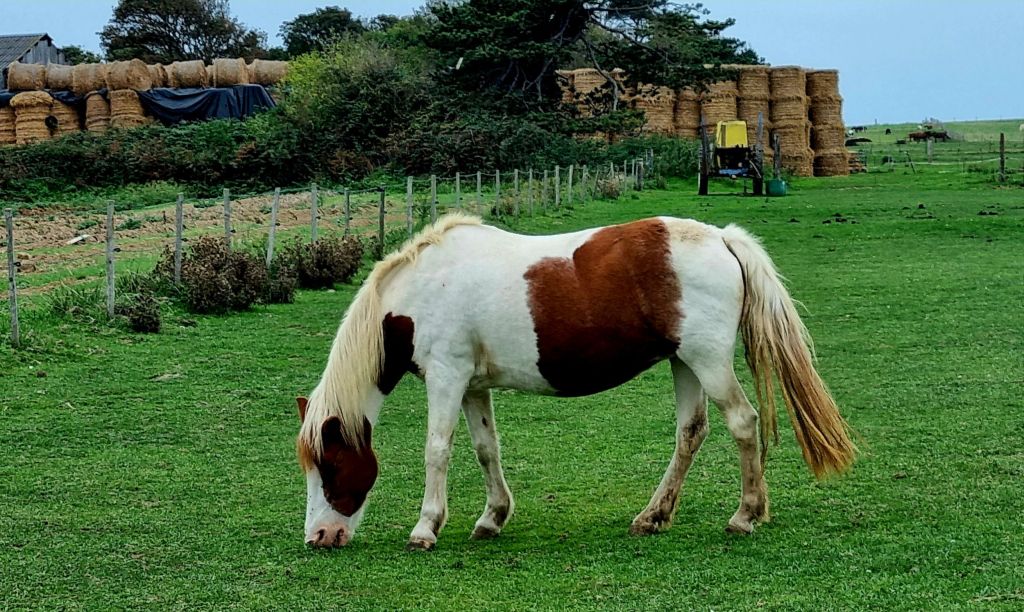
We walk back though the village and spend the night on a local farm, one of a handful of motorhomers escaping from the madness of Étretat. I don’t think Instagram has done them any favours there.
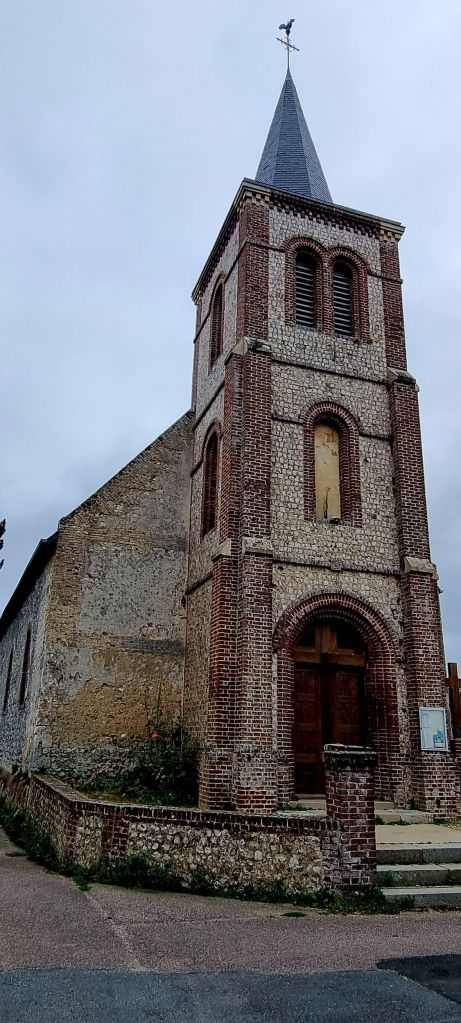
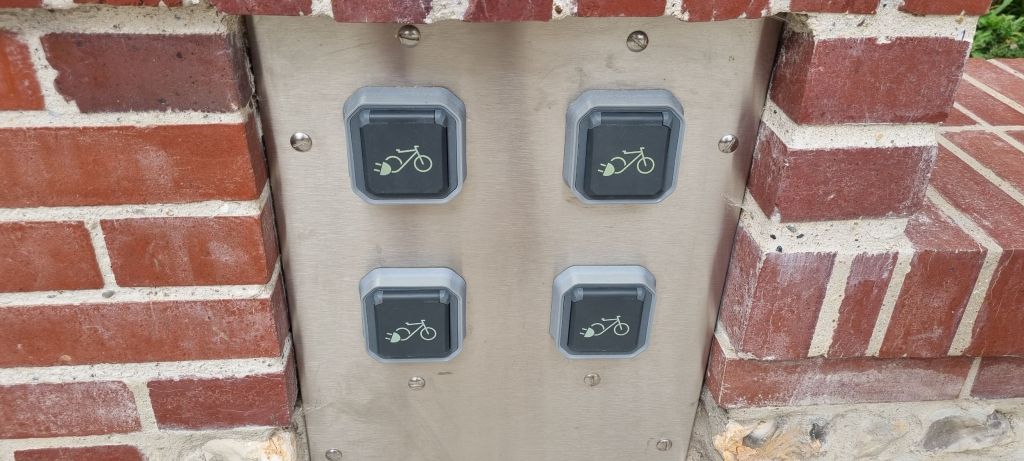
Benouville has proved a pretty spot with thoughtful touring facilities – the square next to the church has an electric bike charging station and bike service point with tools and pumps.