
We’ve finally turned around for the journey back to Exeter. It’s a surprising distance, across the widest expanse of England. There’s nothing quite like a limit on your odometer to focus you on distance. It’s funny how something you never give a passing thought to can start to consume your thoughts.
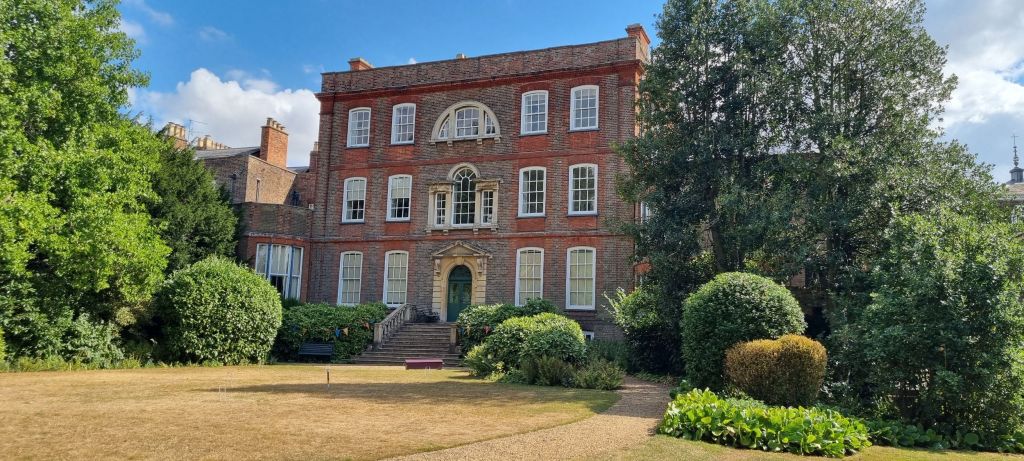
Our journey west takes us to Peckover House, a Georgian townhouse in Wisbech, built in 1722 and home to the Peckover banking family for 150 years.
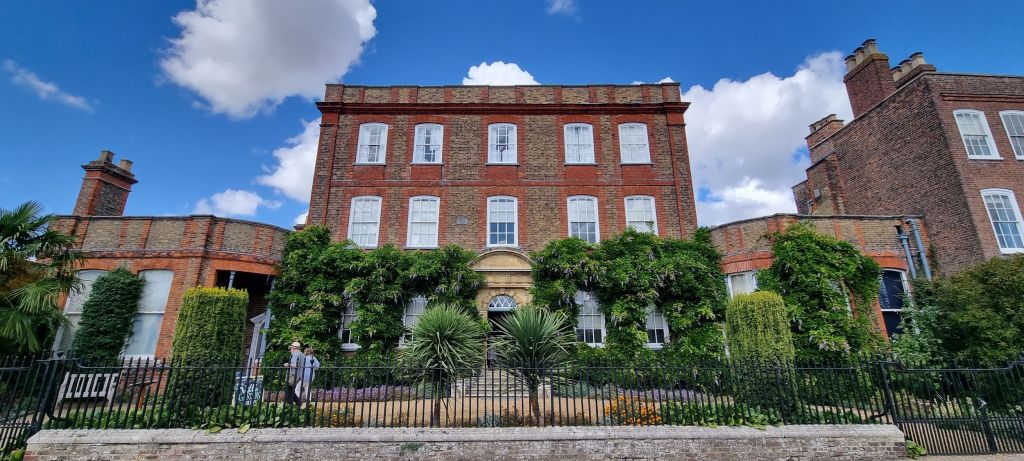
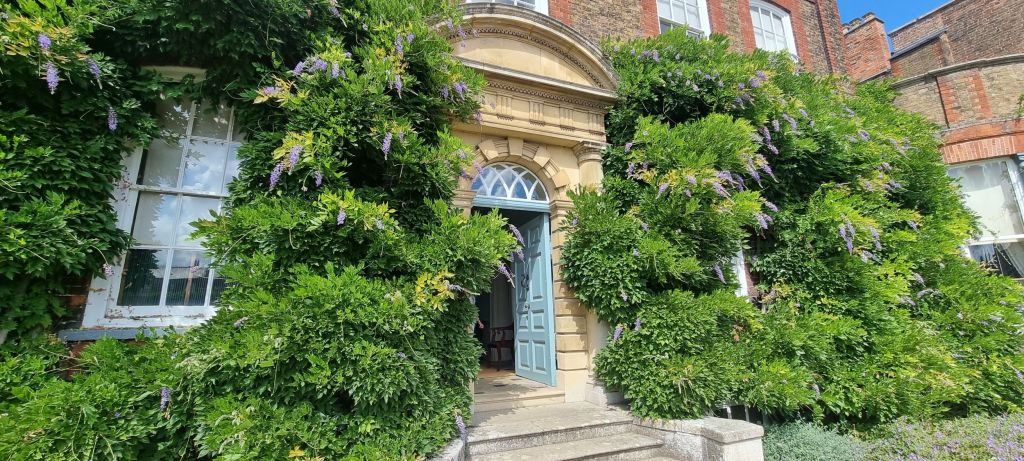
The Peckovers didn’t build it though – the original builder’s details have been lost to time. We do know that the house was bought from the Southwell family – these cheeky three, siblings. They used it as a fun parlour where gambling, drinking and general merriment was conducted downstairs while the bedrooms upstairs…well as our guide puts it, ‘weren’t used for sleeping’. Oh my! The Georgians were bawdier than Jane Austen would have us believe..

In between partying they found time to remodel, opening a dark stairwell with a large window overlooking the garden and commissioning intricate plasterwork throughout the formal rooms.

At some point the party must have come to an end though, as they sold the house to Johnathan Peckover in 1794. The Peckovers were Dutch Quakers who moved to Wisbech to initially run a general store in the High Street. They became respected members of the community who often managed money for their customers, a practice that led them to open their own bank in 1777. It proved an exceedingly successful move, enabling the purchase of house shortly thereafter.
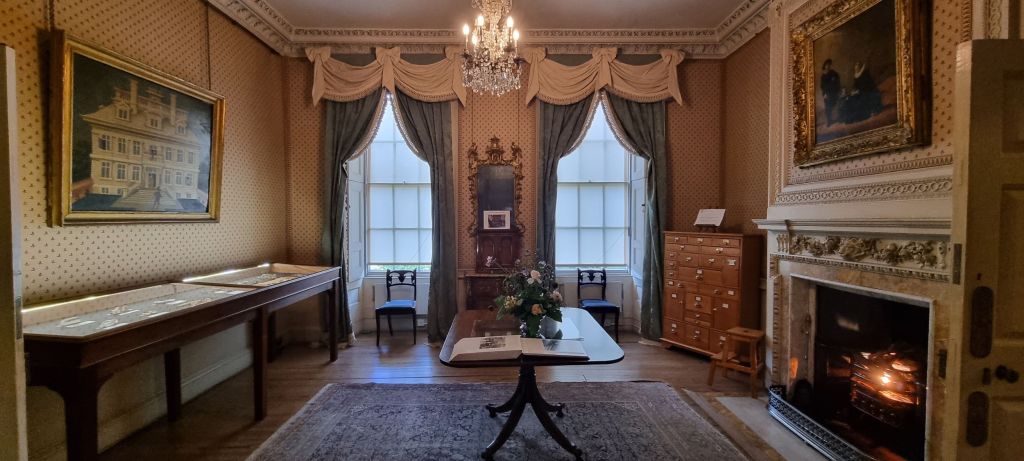
Peckover House is pure Georgian elegance. We see beautifully decorated formal rooms,


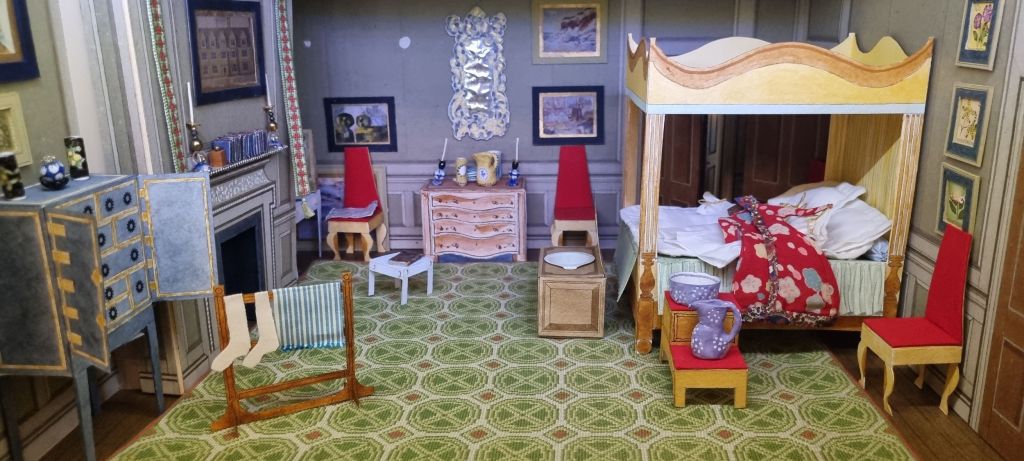
an intricately detailed and furnished dolls’ house


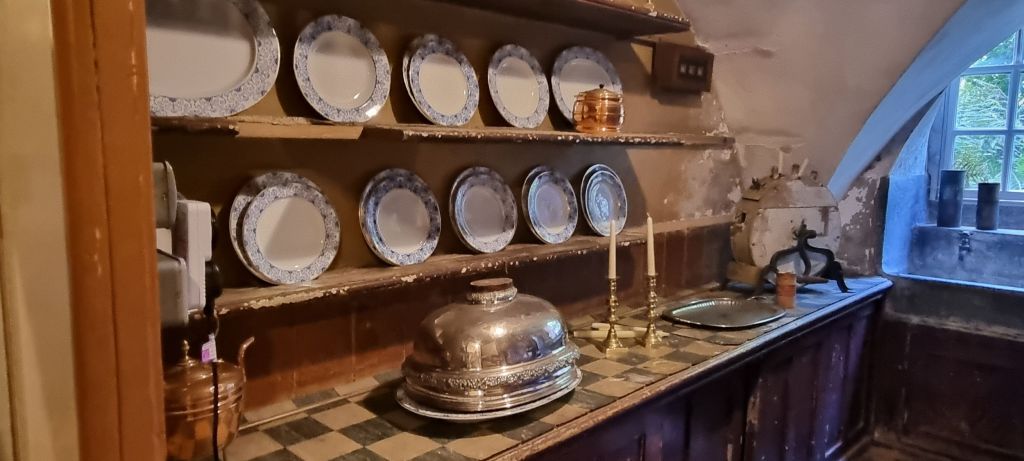
and get a glimpse of ‘downstairs’ life in the kitchen and housekeeper’s room.

The Peckovers were committed philanthropists who supported education, prison reform and the anti slavery campaign of Wisbech local Thomas Clarkson. Additionaly, they contributed to the founding and upkeep of many of Wisbech’s schools and hospitals.
We eventually wander through to the garden, which much to my delight is one hidden surprise after the other. Looking from the top of the stairs, the garden appeared to be a lawn edged with trees but that’s is just a small section: the entire garden is set out over two acres.
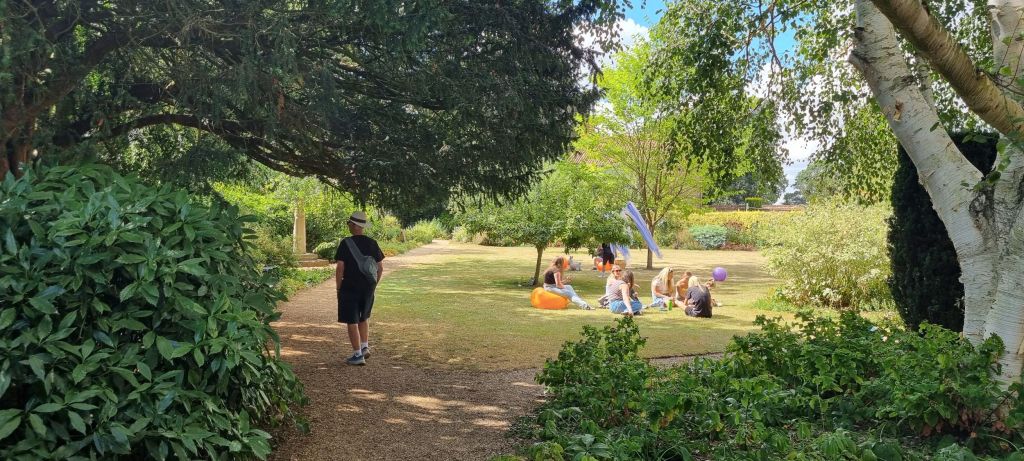
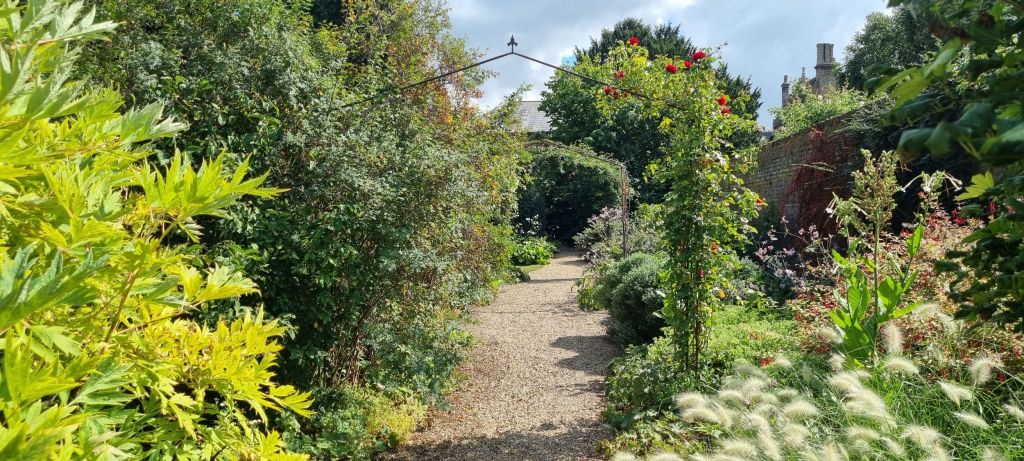
It was developed in the ‘gardenesque’ style, surrounded by high walls and divided internally by walls, trees, hedges and shrubs, creating distinct garden areas with their own character. Paths connect the different sections, both winding and geometricly straight.
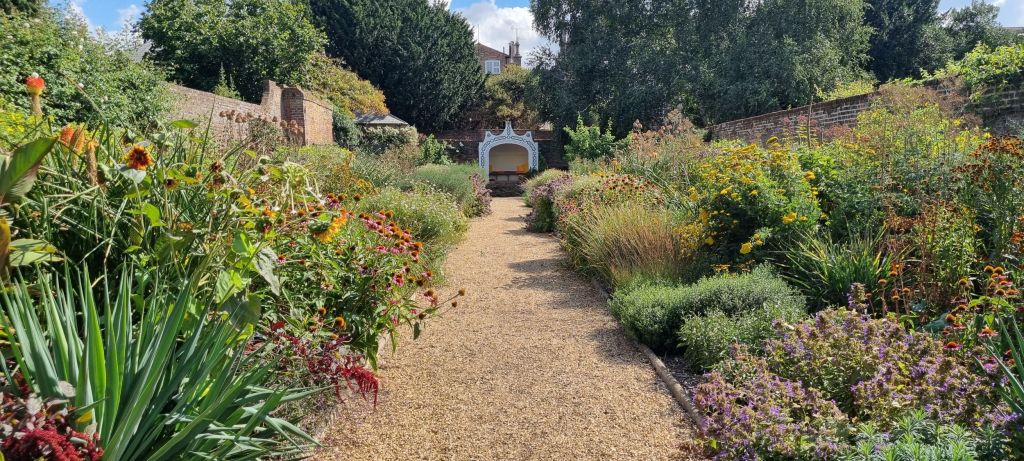
There’s a fragrant rose garden,

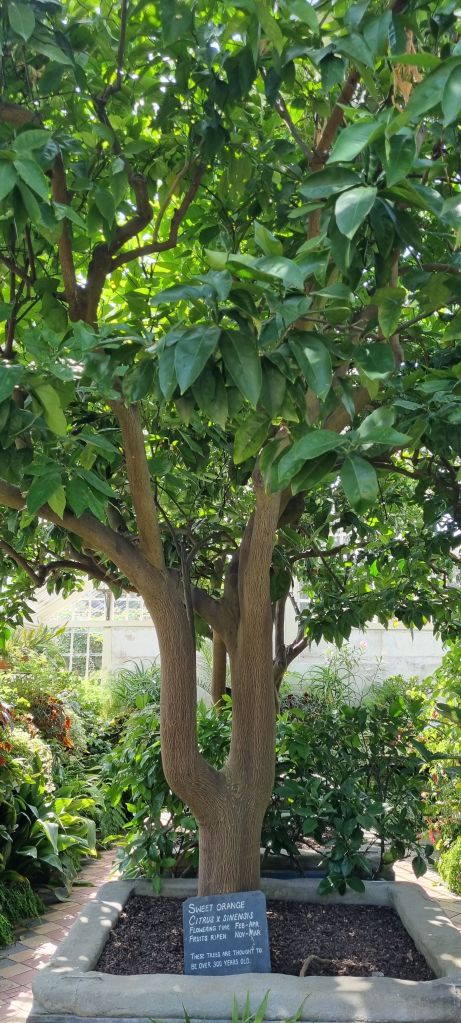
an orangery with 300 year old orange trees (who knew they could grow that old),
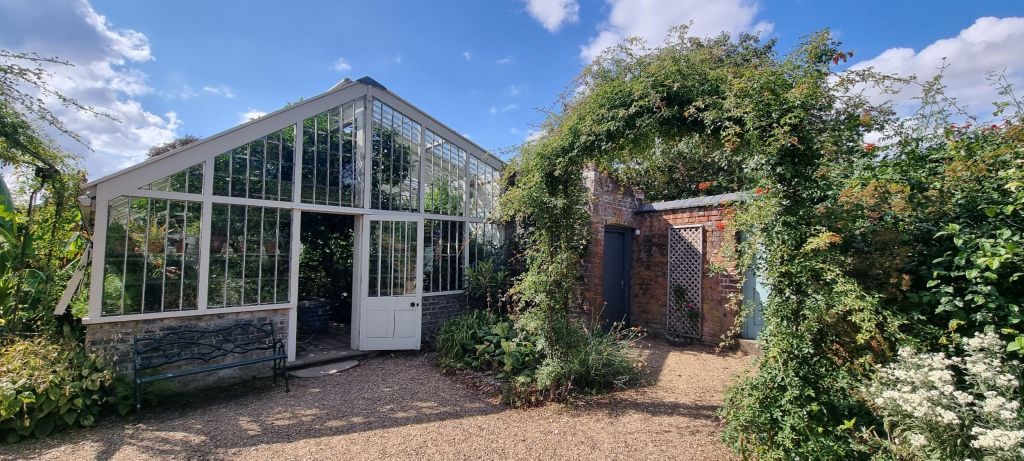
a sunken pond, shady trees, bee hives
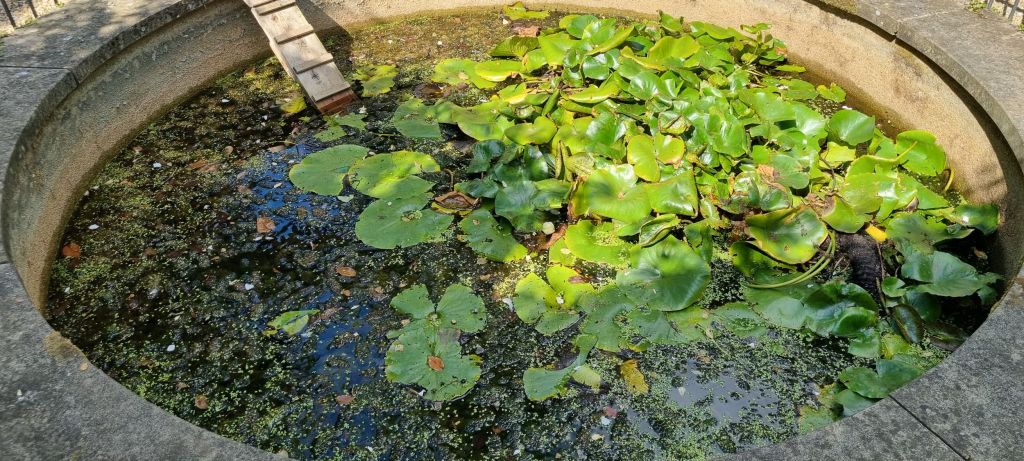
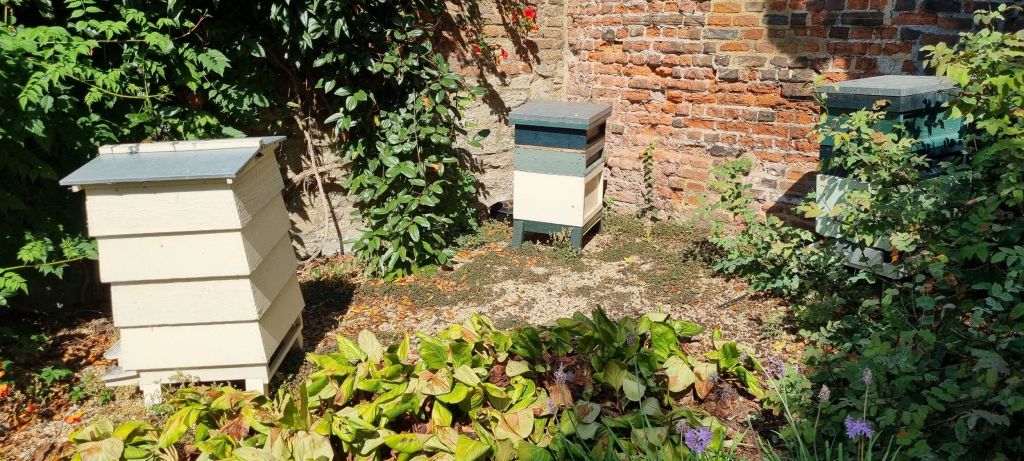
in addition to several lawn areas. Peckover House’s garden has been recognised as one of the most important 19th century town gardens to survive, fully retaining its Victorian character.
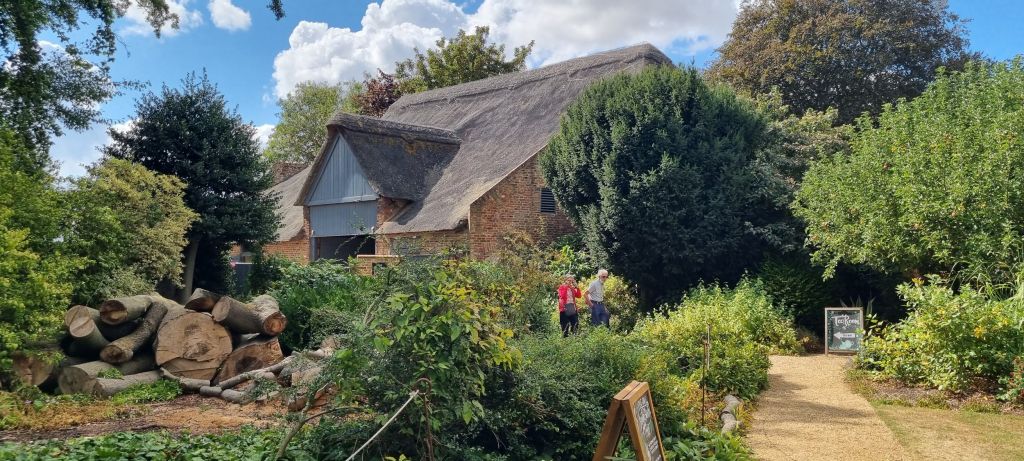
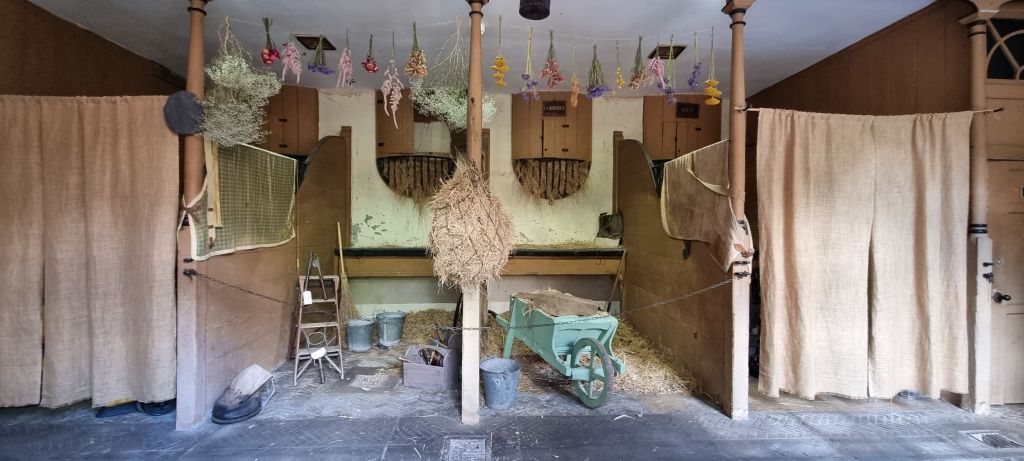
Tucked away in a corner of the garden is a thatched reed barn, now in use as the cafe and secondhand bookshop. We also see the stables and tack room.
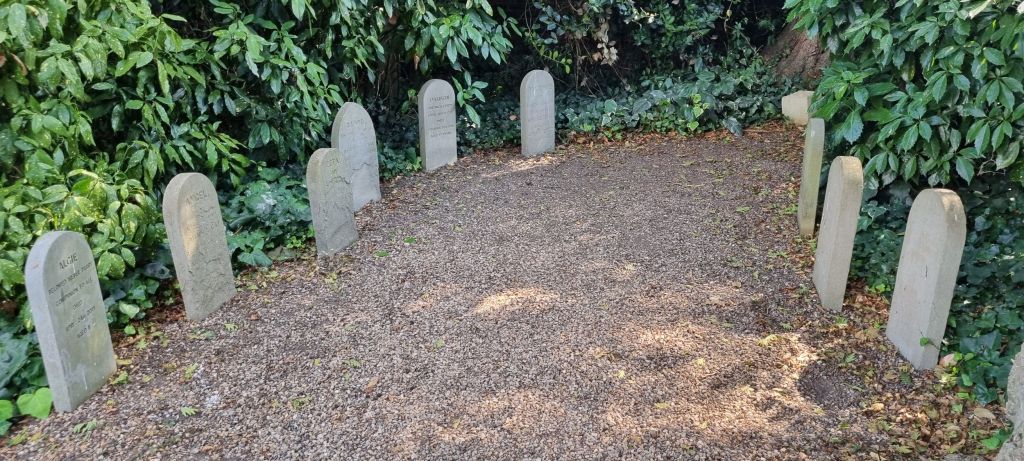
Poignantly, tucked away in a private corner is a series of much loved cats’ graves. Little headstones are engraved with loving epitaphs to faithful companions through decades.
Sadly, the Peckham family dwindled over time – largely due to the Quaker propensity to marry within their faith. The relatively small Quaker community meant that many didn’t marry and produce offspring. The last family member Alexandrina (1860–1948) upheld the family’s charitable interests, donating land for playing fields before bequeathing the house and remaining estate to the National Trust in 1943.
Day’s end should have seen us relaxing over a drink but instead we make a mad dash back to the garage – you wouldn’t believe it…but we inadvertently left our Great Britan guide in the loan car. We would’ve replaced it but it’s not in stock at Waterstones and it’s very much part of our travel history. There go those miles again….
 Miss Baci Travels