
As the Python’s say, ‘and now for something completely different’. The motorhome is in the shop, getting its bushes replaced. Don’t ask me – it’s part of the front suspension and will allegedly stop a noise that’s been driving us both squirrelly and not in the good way. Luckily there’s a lovely garage near Sandringham that’s taken pity on us and squeezed us in on the same day. And they’ve lent us a car! Absolutely spectacular service from Leziate Drove Garage for which we’re both deeply grateful.
To keep us entertained while they perform their magic, Himself has found nearby Oxburgh Estate and we’re off! Enroute we run into a diversion and it turns out that it’s just as well we’re in a teeny loan car as the road becomes little more than a track – the motorhome wouldn’t have stood a chance.
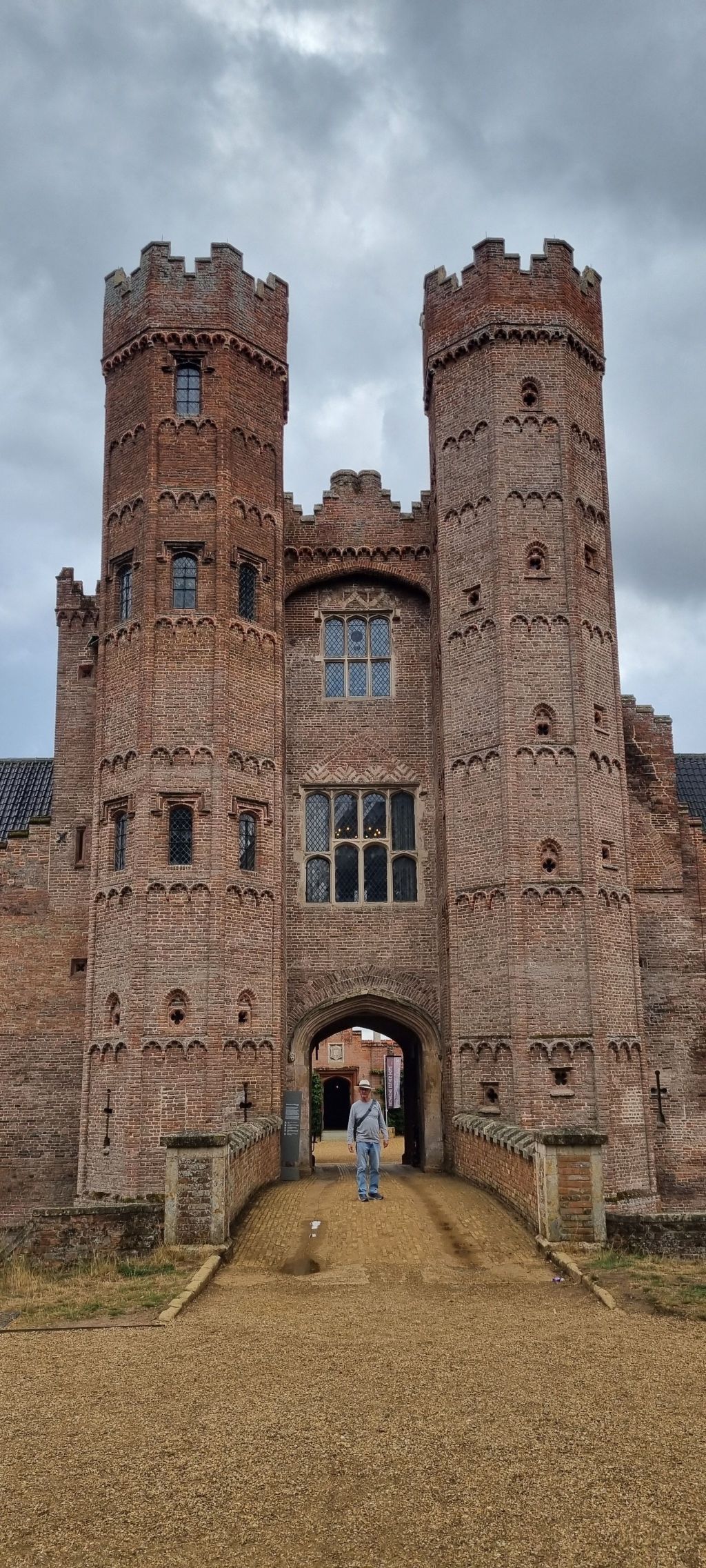
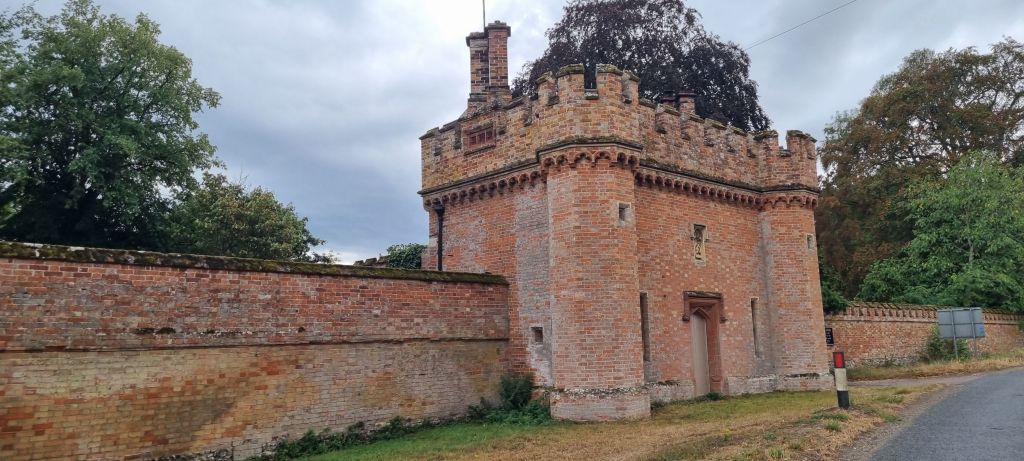
And then we’re there. It’s fantasticly old world, a grand, 500 year old red brick manor house sat atop a moat. Oxburgh was built at a time when red brick was rare – it was a clear display of wealth and power. It takes no imagination to picture it as a castle, armoured knights roaring up on horseback, swords blazing. For all the crisp brown lawns we’ve seen, it’s here that the impact of this summer is clear – the moat is dry in all but its deepest corners. It’s stark evidence of the blistering summer England is trudging through.
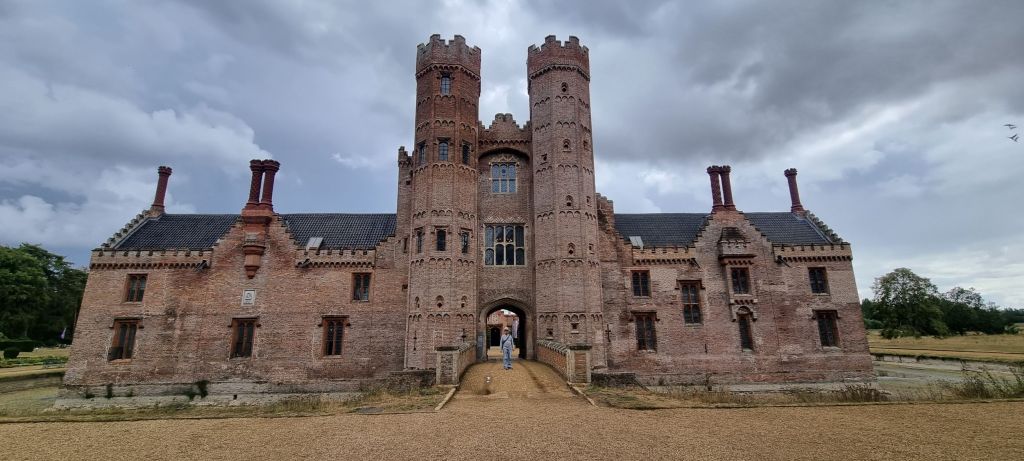
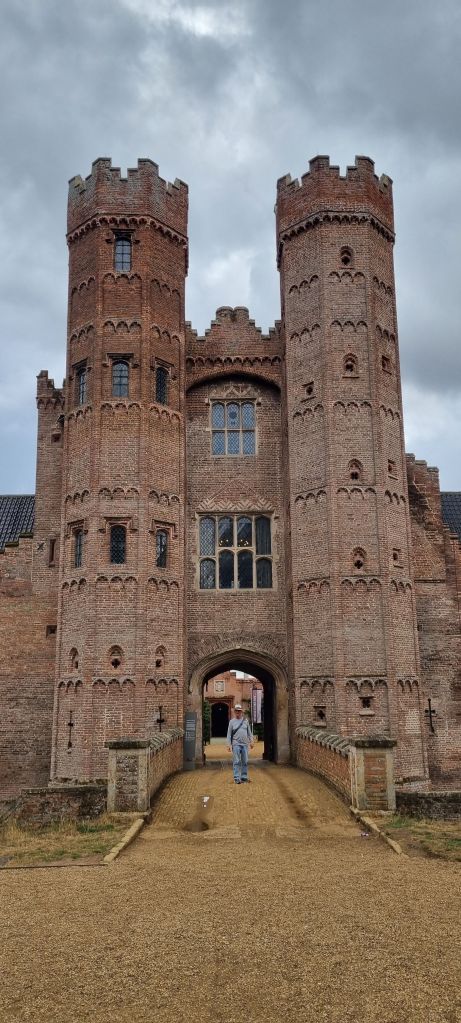

Oxburgh Hall was built in 1482 by Sir Edmund Bedingfeld and it’s been the stronghold of the Bedingfeld family ever since. Family members still maintain private apartments on the property.
The Bedingfeld history is an extraordinary tale of endurance. They were and remained, staunch Catholics when the balance of power at the royal court ‘fell the other way’ to Protestant rule. Surviving the English reformation period with faith, life and property intact would have taken skillful political and social maneuvering.
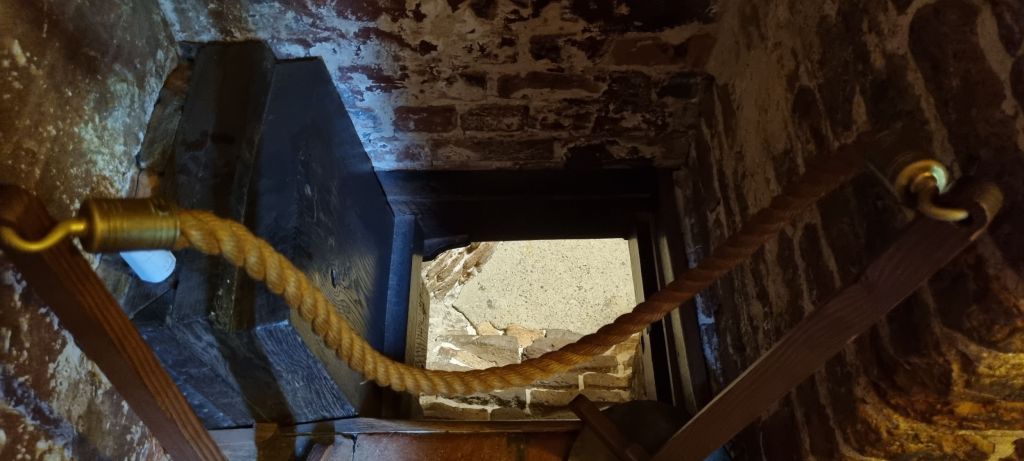
And a balancing act it must have been. With their faith practiced in secrecy, master builder Nicholas Owen was commissioned to construct a priest hole beneath a garderobe (loo to you and me).
In start contrast, there’s also an impressive painting of Protestant Elizabeth I on display. She doesn’t look like she’d brook any nonsense, does she….

That priest hole was grim viewing. A massive stone was lowered over that tiny opening. Once so covered, the priest could only only be lifted out by his arms from above when danger passed. Should the family not survive the raid it would have been a grisly end indeed. Our guide tells us that raids were conducted at night – the soldiers would feel the beds for warmth, then count the people they’d ousted. If warm spots exceeded bodies found, a hidden priest was suspected. Imagine living with that terror over your head.
The family’s fortunes waxed and waned over the centuries. In the mid 1600s, parliamentary troops ransacked and burned parts of the house during the English Civil War, leading to financial hardship for the Bedingfelds. Many of Oxburgh’s furnishings and prize possessions were lost during this period.
A marriage in the 1800s brought financial recovery and restoration of the house in the Gothic Revival style we see today. Whilst it’s not my taste, the restoration work is faithful to its exterior. It’s gothicly dark and moody, quite other worldly. It’s easy to imagine you’ve stepped back in time.
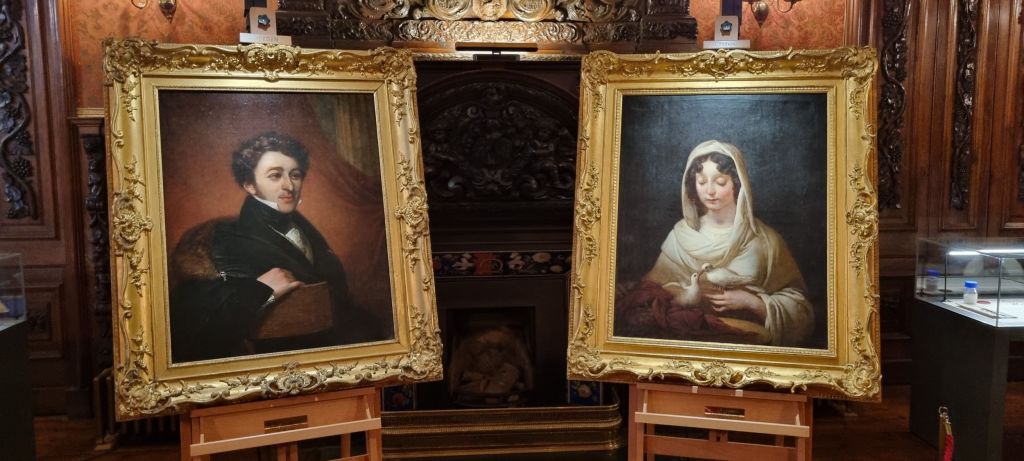

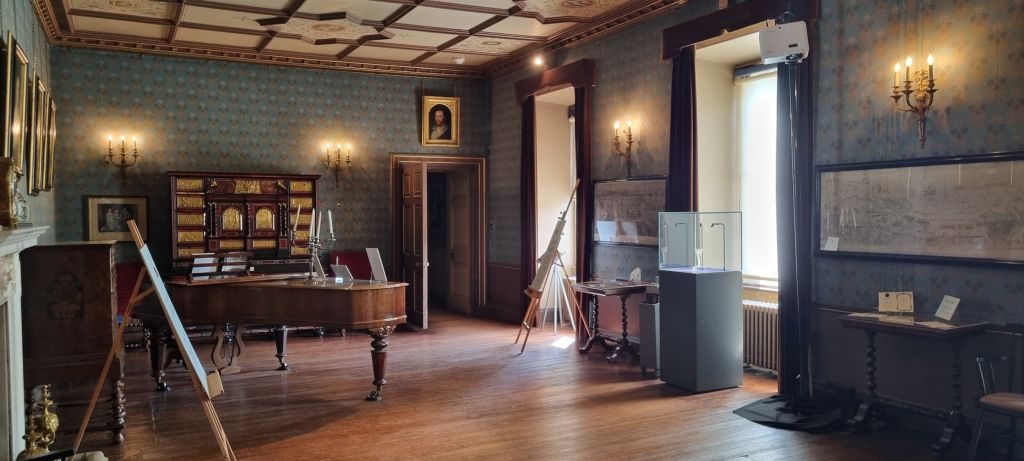


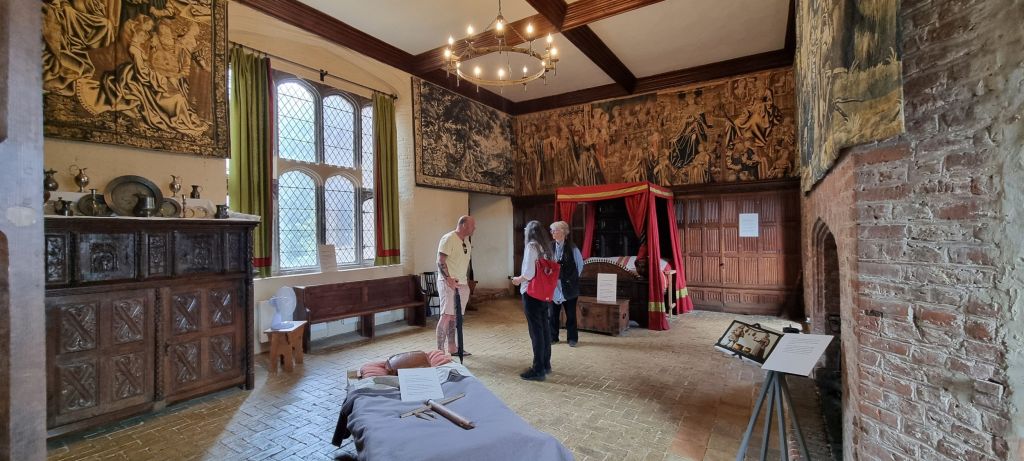
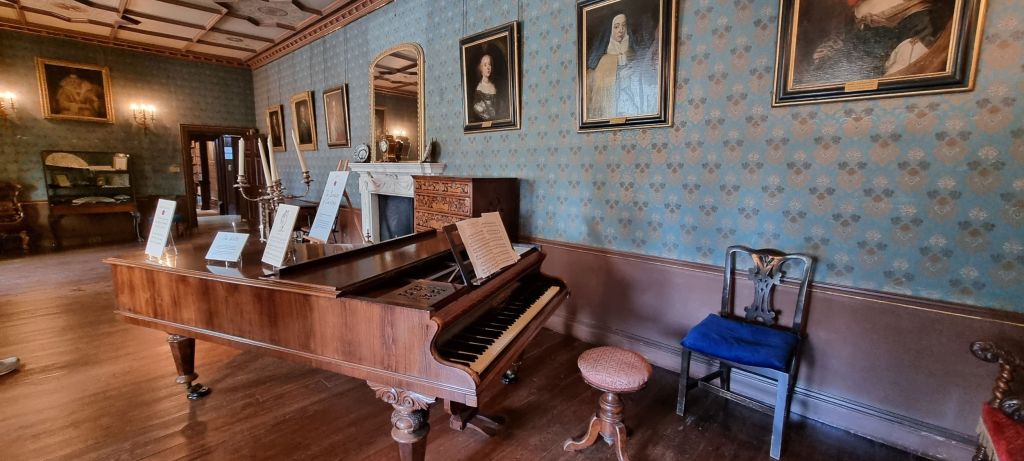
One guide regales us with one of the house’s interesting stories, relating to the tapestry below of Queen Esther. It was sold off a hundred years ago to a buyer in New York. It then traveled to France and disappeared from record until recently when it popped up in an auction catalogue and was spotted by an Oxburgh volunteer. Funds were hastily arranged and after 100 years, Queen Esther hangs in her rightful place once more. Luckily she was stored well in her absence – there’s been no loss of colour or condition.


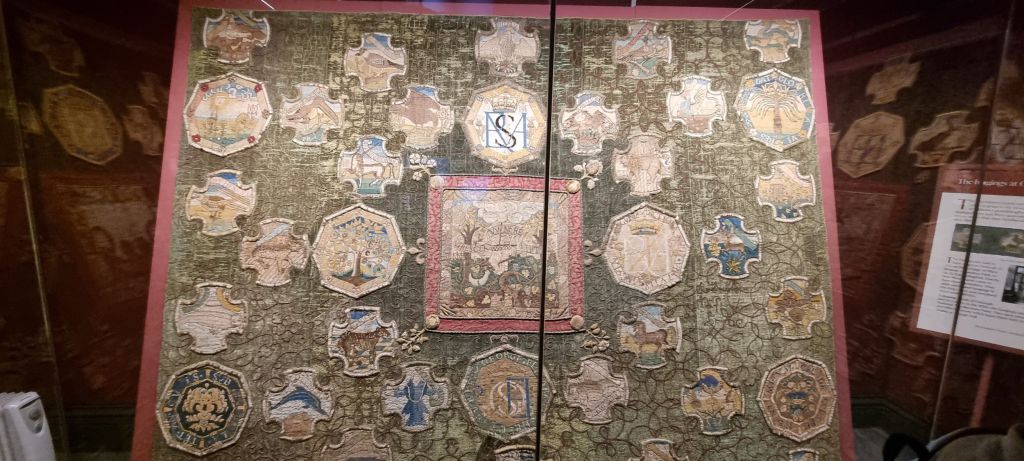
We also see a display of three large wall hangings, made up of embroidered panels on a background of green velvet. They were created by Mary, Queen of Scots and Bess of Hardwick between 1569 and 1584, when Mary was in captivity on the orders of Elizabeth I. They came to Oxburgh through a marriage in 1761.


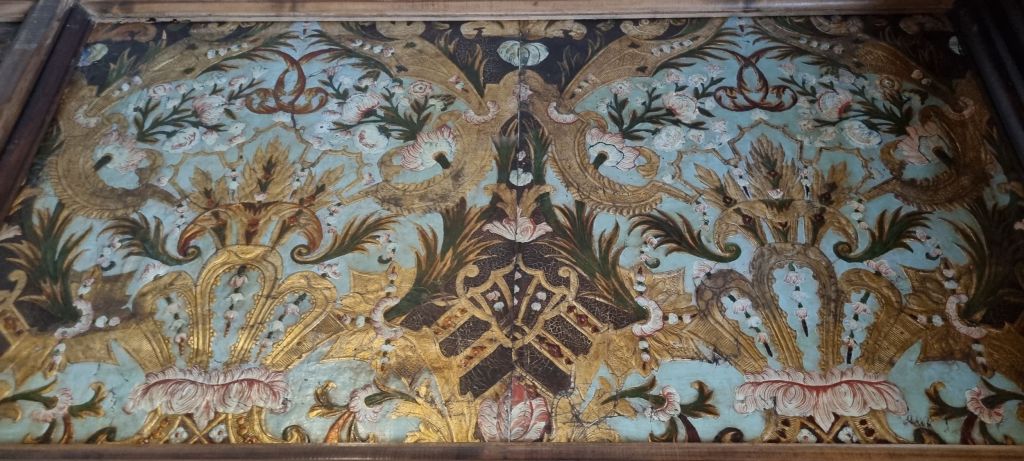
A unique feature of Oxburgh is its wall decorations – embossed, painted and gilted leather. To a modern eye they’re incredibly busy and colourful. Making them would’ve taken and extraordinary effort – they’re not original though, installed as part of the Gothic restoration.


We learn that Oxburgh was almost lost to history in the 1950s when it was at risk of being demolished and sold to pay post war taxes. Instead the house and gardens were purchased by a family member and gifted to the National Trust. Just as well, imagine losing 500 years of history to a bulldozer and tract housing.
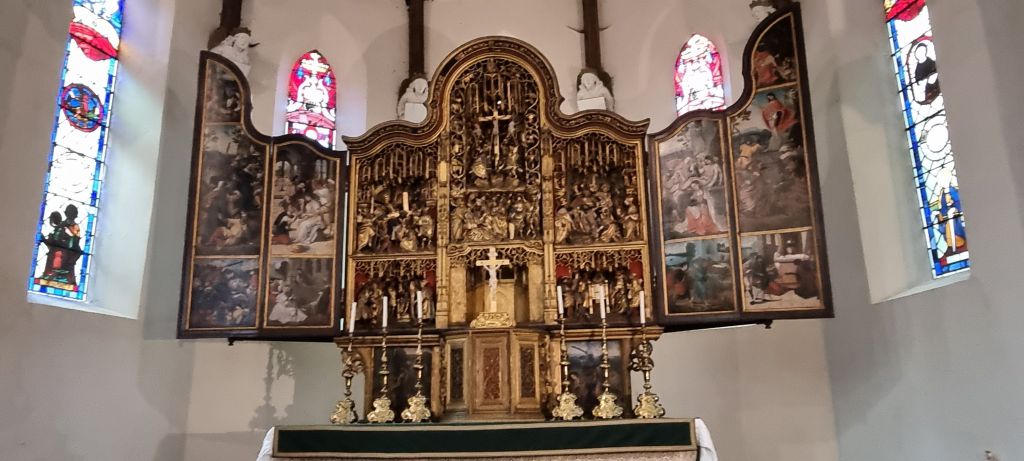
Post house tour, we make our way to the Chapel. Following the Roman Catholic Relief Act of 1791, the family financed a makeshift Chapel in the village then built this Chapel on site in the 19th century. It’s still regularly used for family mass.

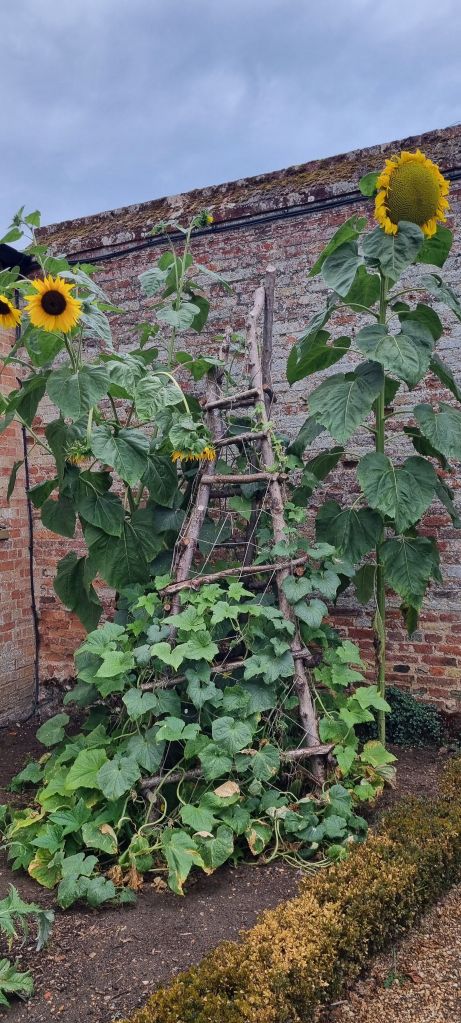
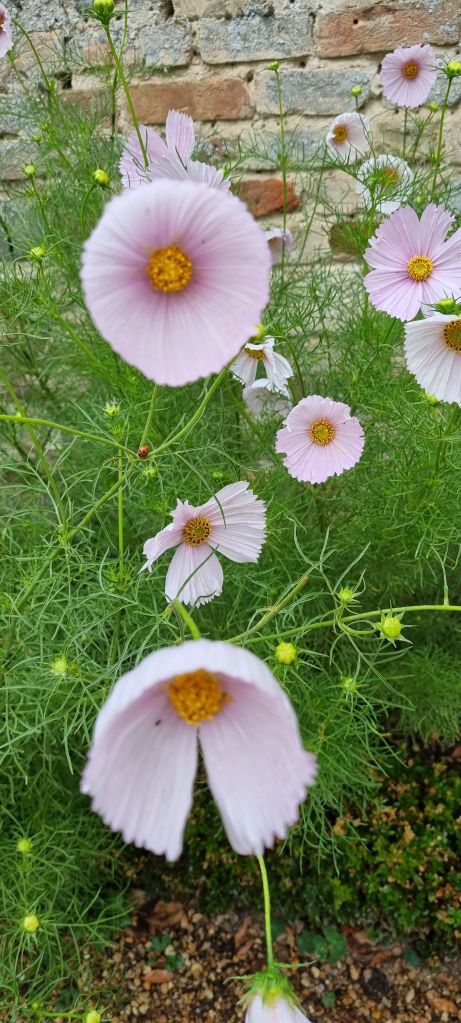
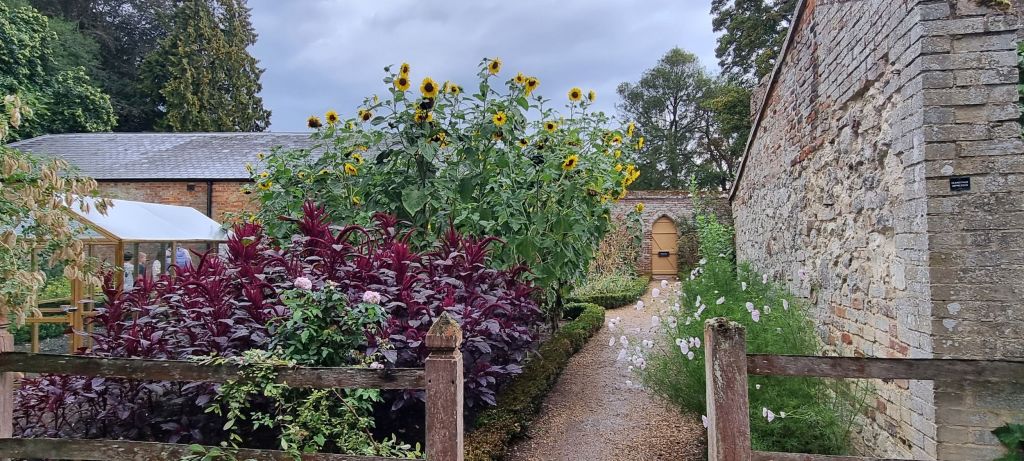
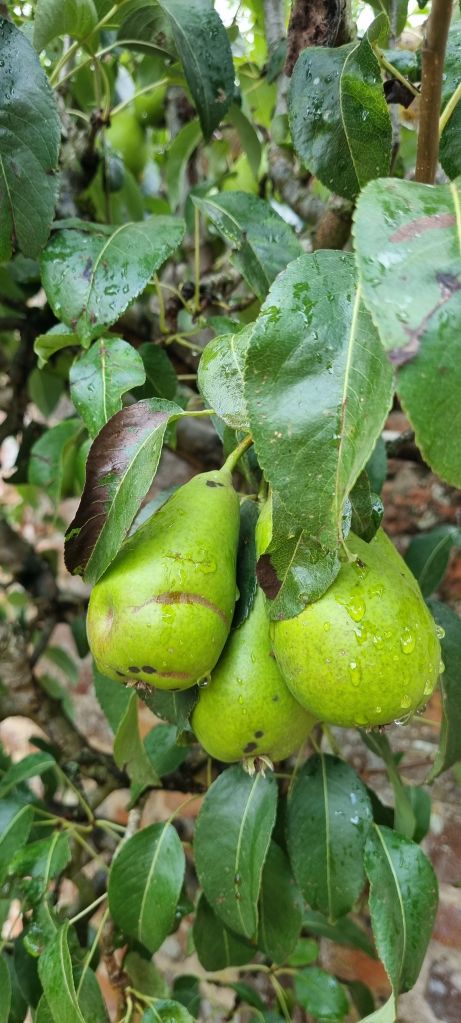
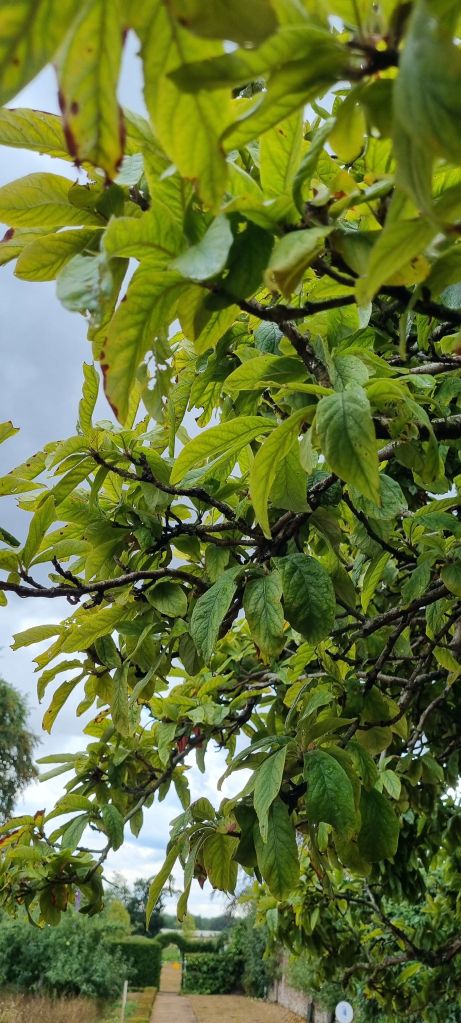
Oxburgh’s gardens meanwhile are a sheer delight. It’s a relief to be in nature and light post a dose of Gothic darkness. There’s a bountiful walled garden, bursting with autumn fruits and vegetables and pretty flowered walkways.






I spy a pair of elegant white swans and their cygnet on what’s left of the moat. Thunder crackles overhead as we conclude our tour with a coffee in the courtyard. Rain is on the way, at last.

Oxburgh house set a dark mood for me, quite unlike any National Trust property we’ve visited. I felt it an authentic step into a troubled time. It unsettled me in a way I can’t quite articulate. Perhaps centuries of living under persecution have left an indelible mark.
Day’s end sees us reunited with the motorhome. New bushes in place, our ride is both quiet and smooth. By the time we hand the motorhome over, it’s going to be in great shape. The irony of this is not lost on me.
It’s too late in the day to move on and so we spend another night in Sandringham. Luckily this is no hardship – it’s a lovely site.

