
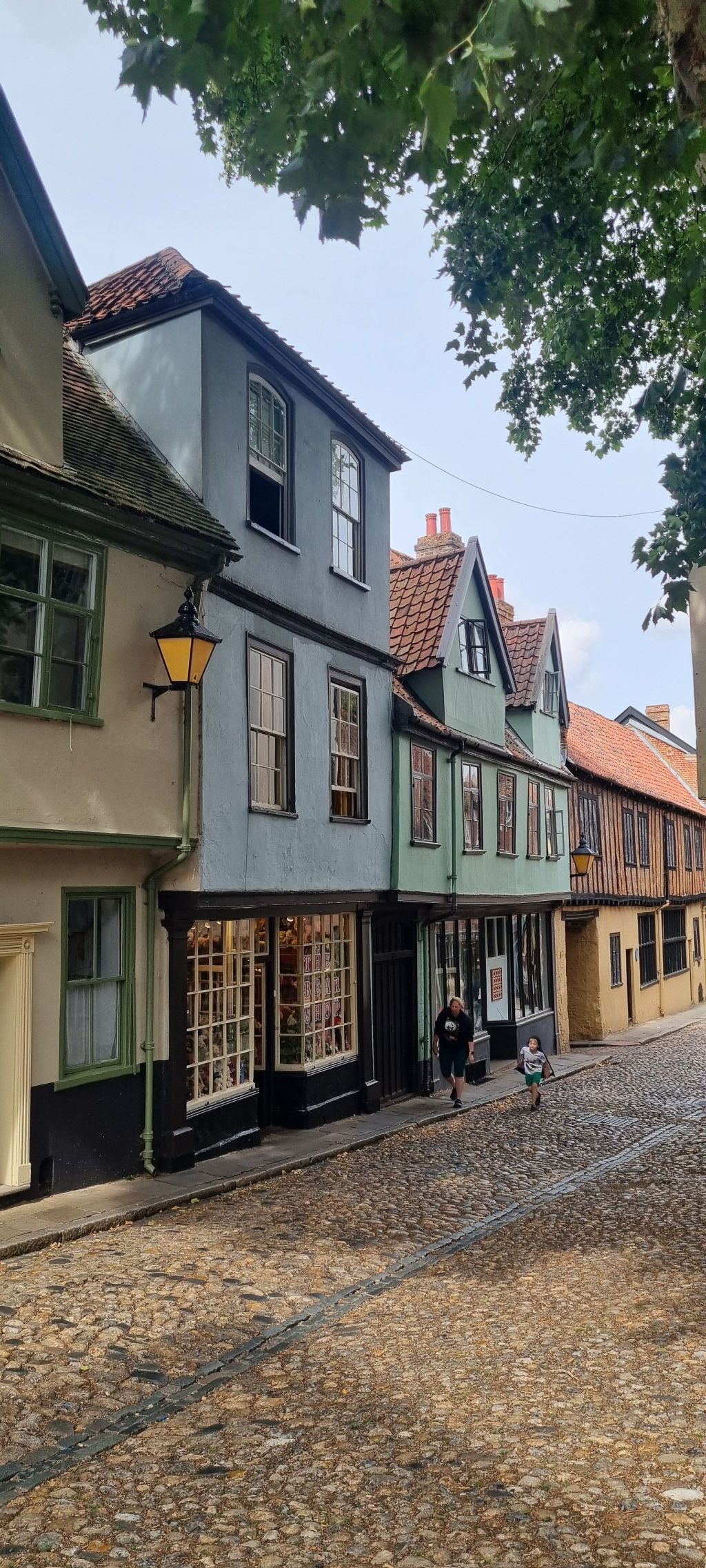
We continue Himself’s quest Northeast. This was the path last year’s trip was meant to take before it was waylaid, an area of the UK we’ve not explored before.
It takes us to Norwich, a cathedral town that began as the Anglo Saxon settlement ‘Northwic’ in the 5th – 7th centuries, growing to England’s second largest and wealthiest city driven by a booming wool and textile trade. Today Norwich has the distinction of being the most complete medieval city in the UK.
In a time honoured path, when you’re very successful, it’s inevitable that someone will try to take it from you. Danish Vikings did their best in 1004. Norwich rallied, only to run into the William the Conqueror later that century. He liked it well enough to put down roots, building Norwich Castle in 1067. It still stands in an excellent defensive position perched on high.

The Castle was followed with Norwich Cathedral. Building commenced in 1096 and it’s till standing in excellent condition 900 years later. William may have missed his calling as a builder..
King Henry IV made Norwich a county in its own right in 1404 and it went on to become a hub of Dutch and Walloon (Belgium) Protestant refugee immigration who revitalised mediaeval textile weaving, manufacturing and brewing.
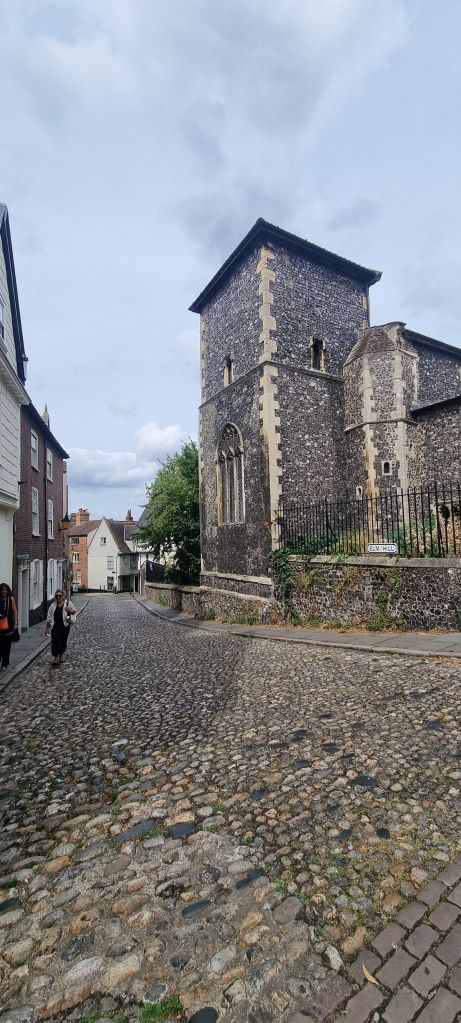
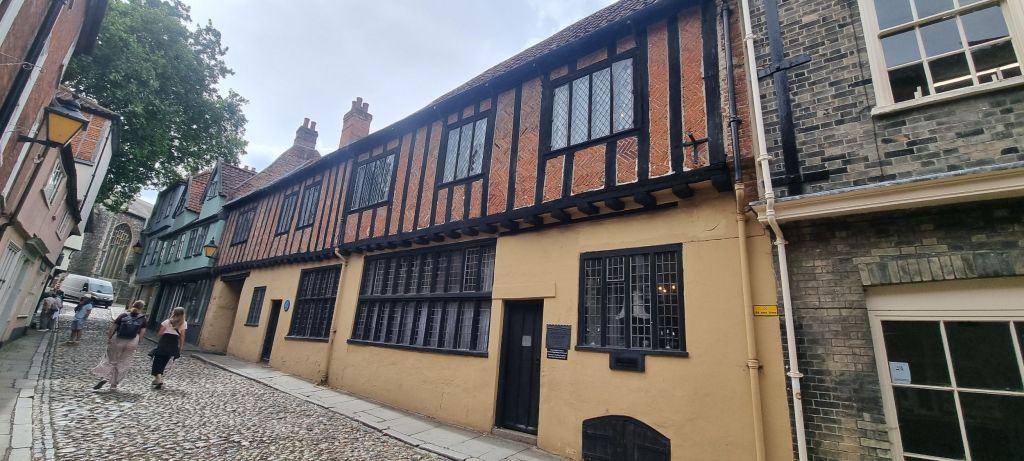
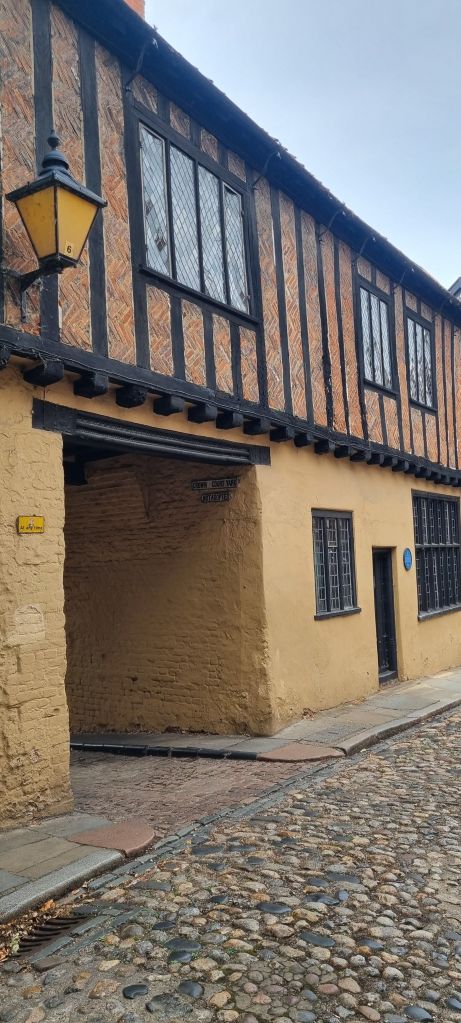
One of the town’s attractions is Elm Hill, a perfectly preserved medieval street showcasing the merchant architecture of the era. Elm Hill’s street is laid with flint, fantasticly knobbly and foreign underfoot. It’s an excellent place to sprain an ankle and one can only speculate what it does to modern suspension. Regardless, it’s lucky to survive intact as Norwich suffered heavy bombing in WWII.
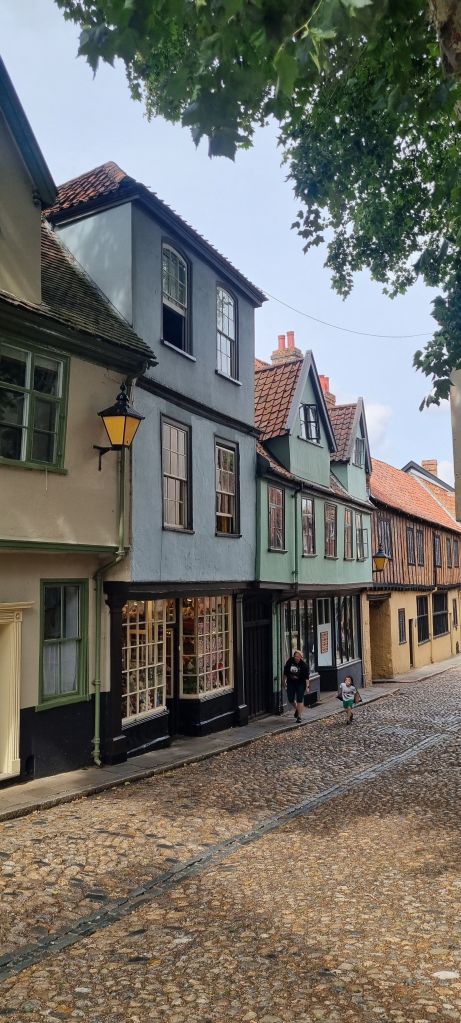

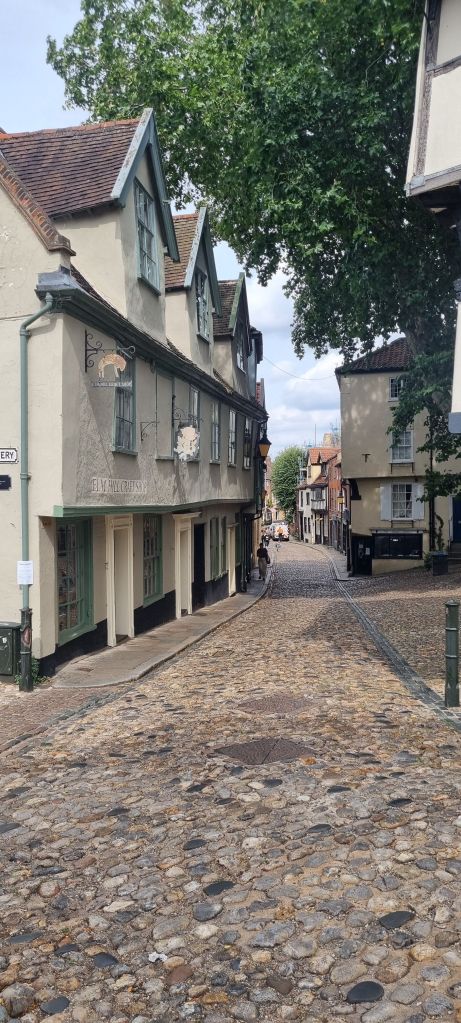
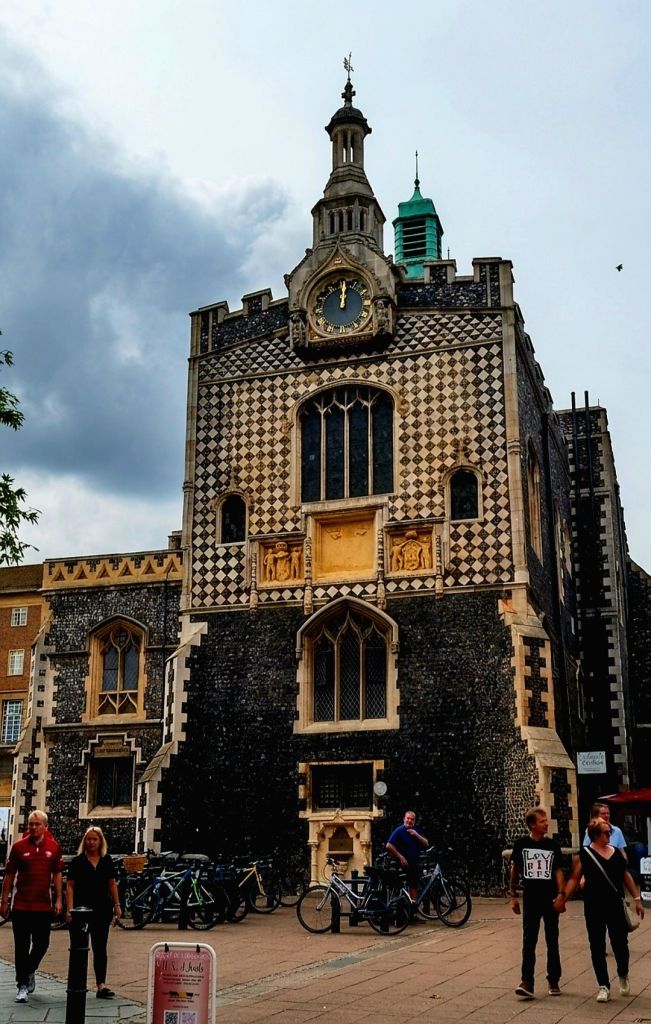
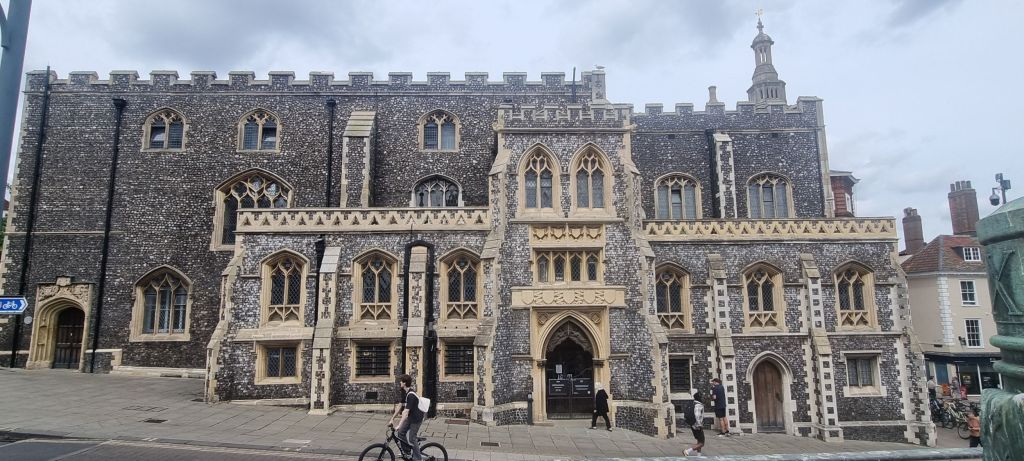
Despite this, there are spots where history shines through – the Guildhall, Norwich’s original trading hub:
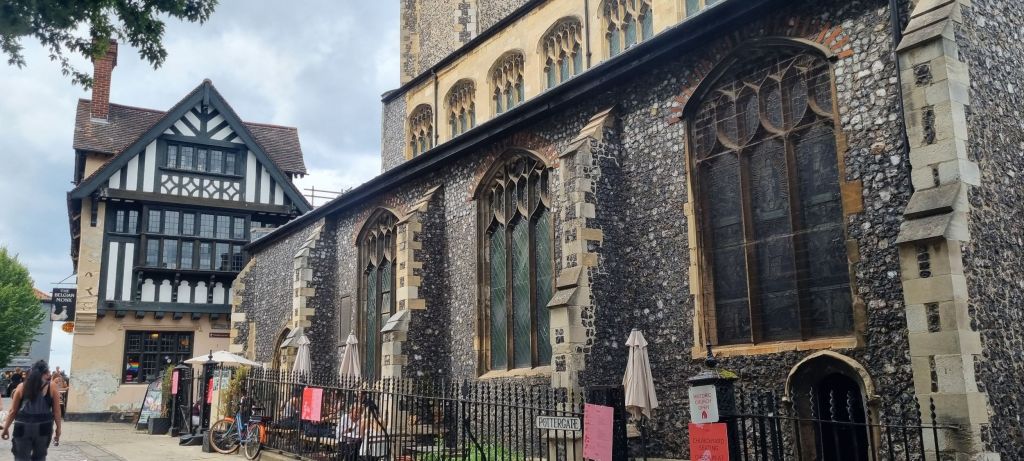
and pretty mediaeval cottages now in service as cafes.
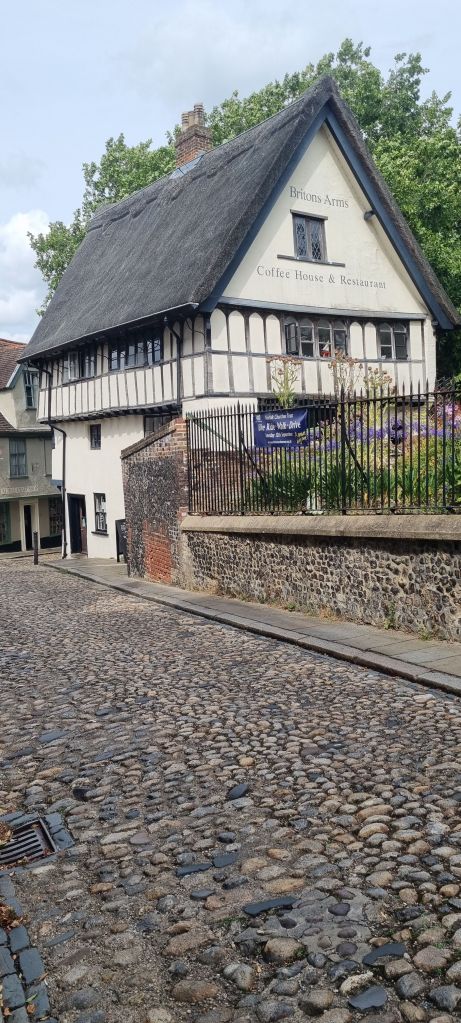
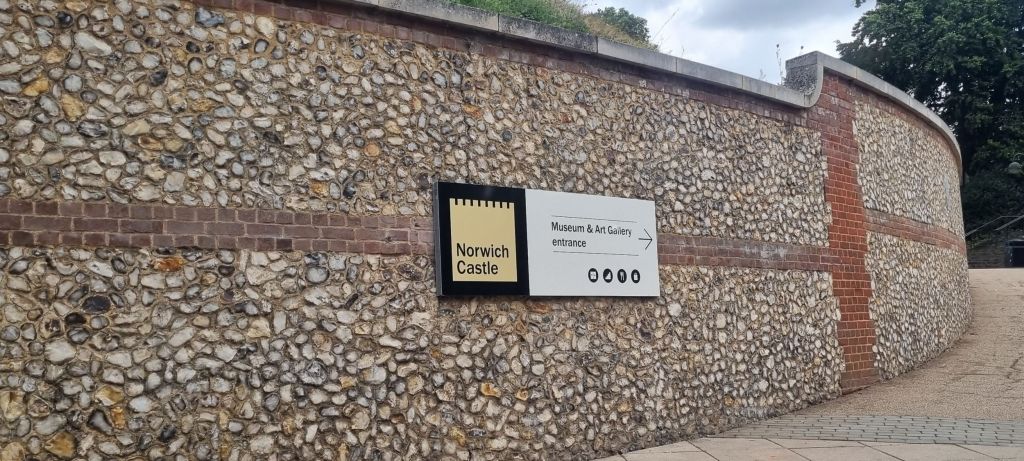
The use of flint as a building material is heavily evidenced,both whole and split to reveal its dark glassy interior. It’s proved durable and is very pleasing to the eye and touch.
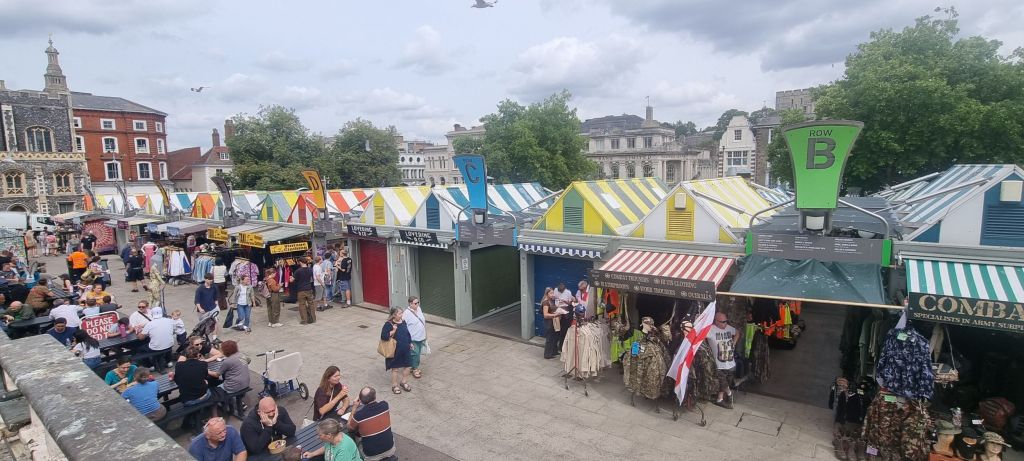
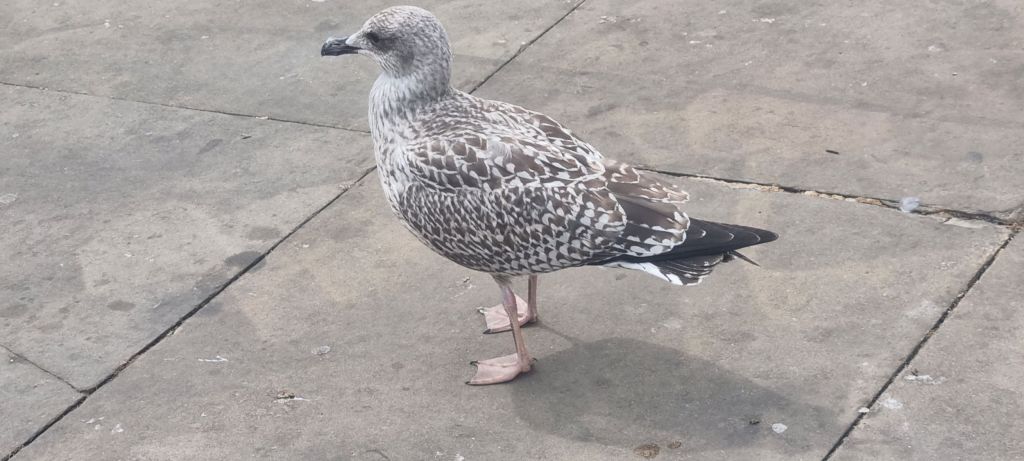
We see Norwich’s central market complete with spotted seagull chicks ever hopeful of a free snack – I love this spotty stage of their development.
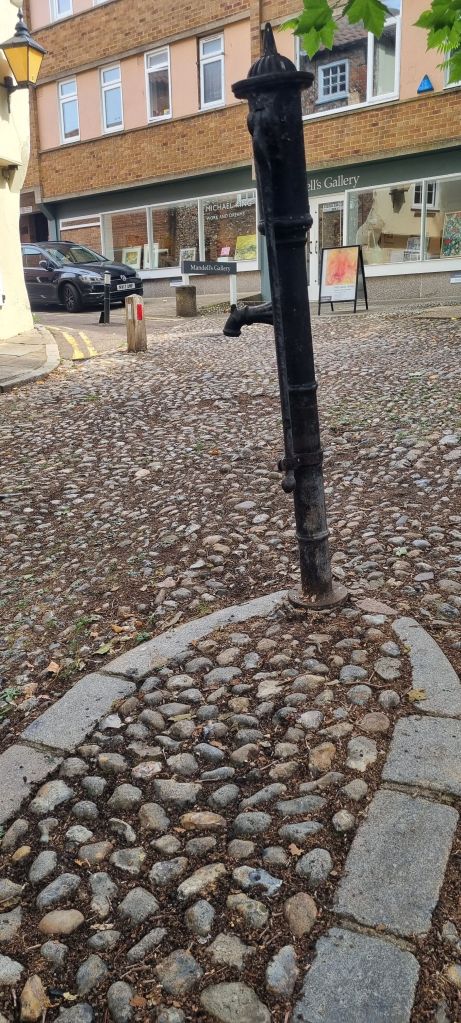
An original water pump is still in situ, albeit sans handle.
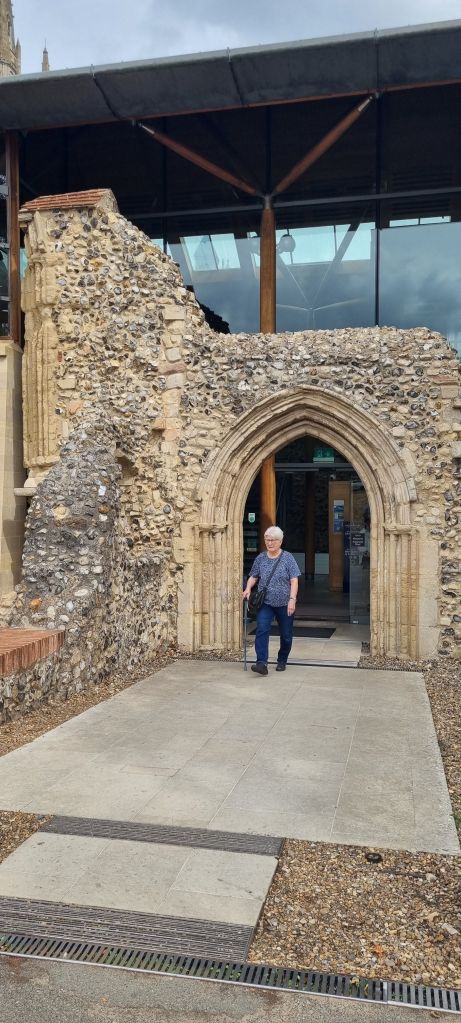
We also tour Norwich Cathedral but I’ll admit to being a little ‘churched out’ at this point. The entry gate and visitor entry have been cleverly blended to preserve history with modern requirements. The cathedral has an enormous footprint, once covering one tenth of the mediaeval town.
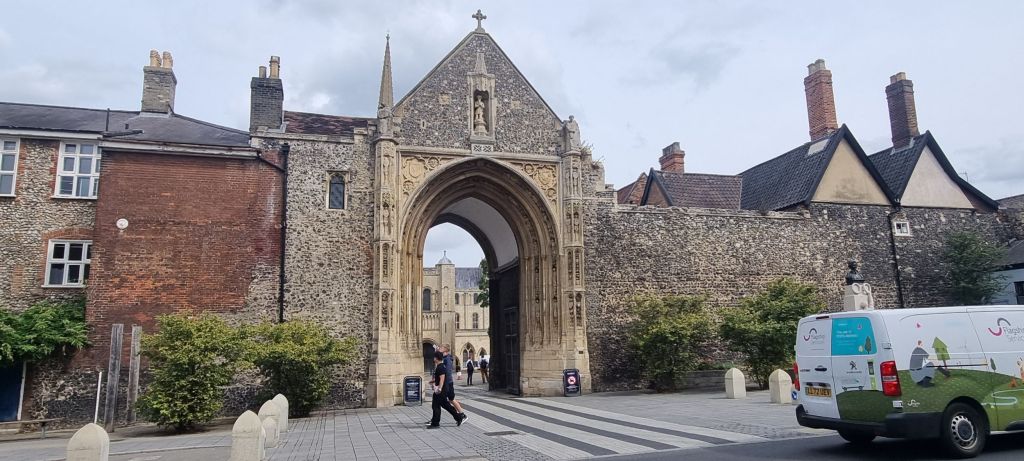
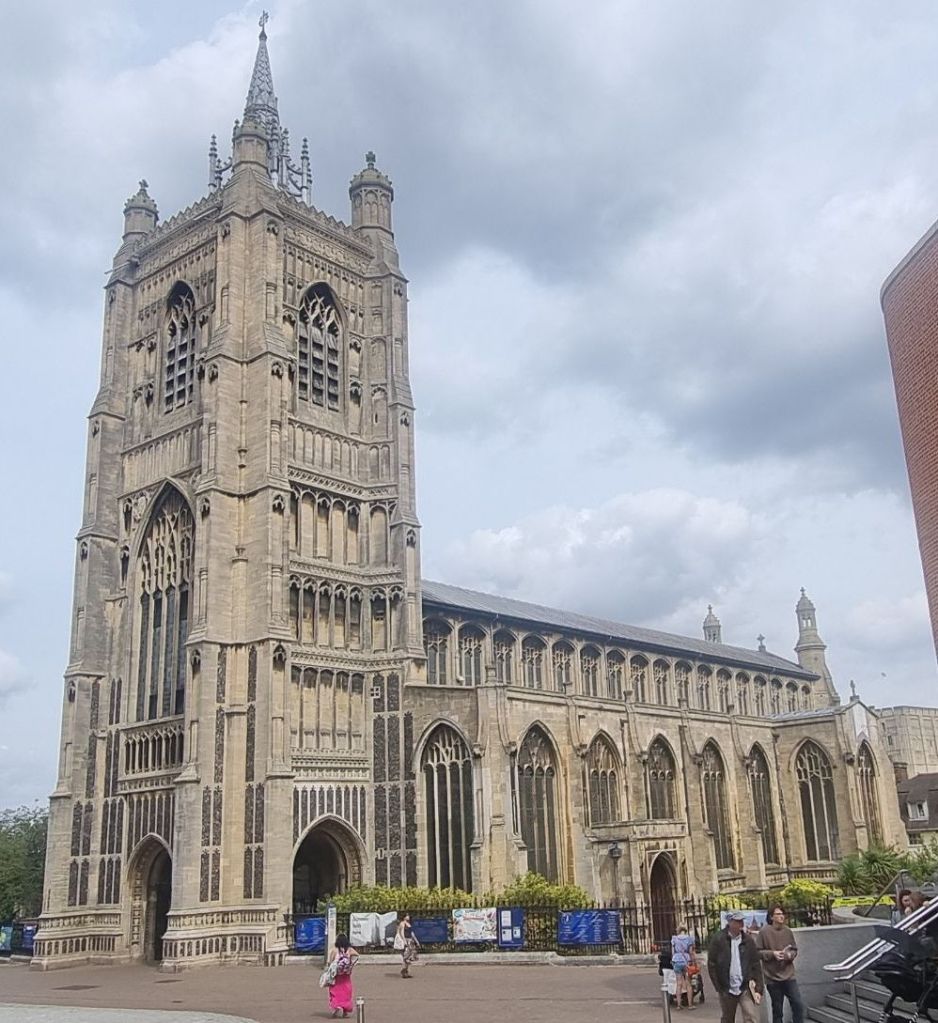

In addition to its 900 year history, it does have a number of distinguishing features: the second highest tower in England,cSalisbury being the highest).
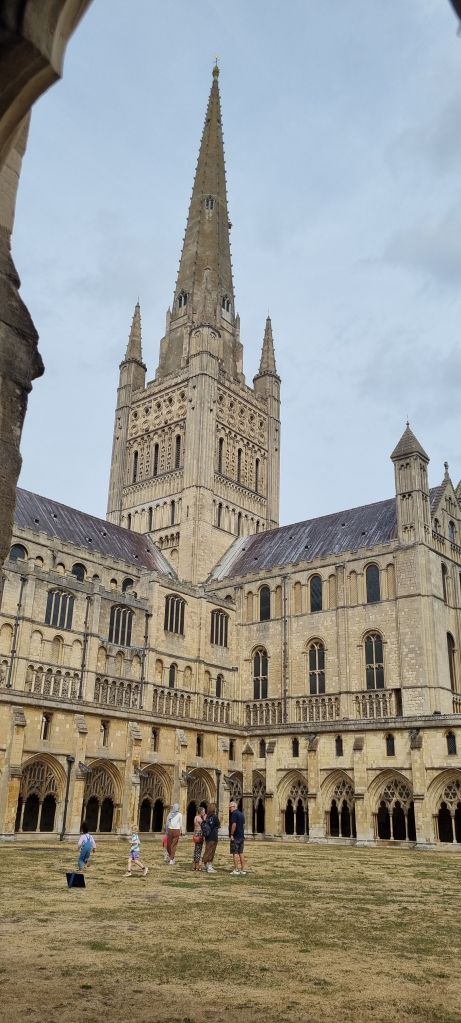
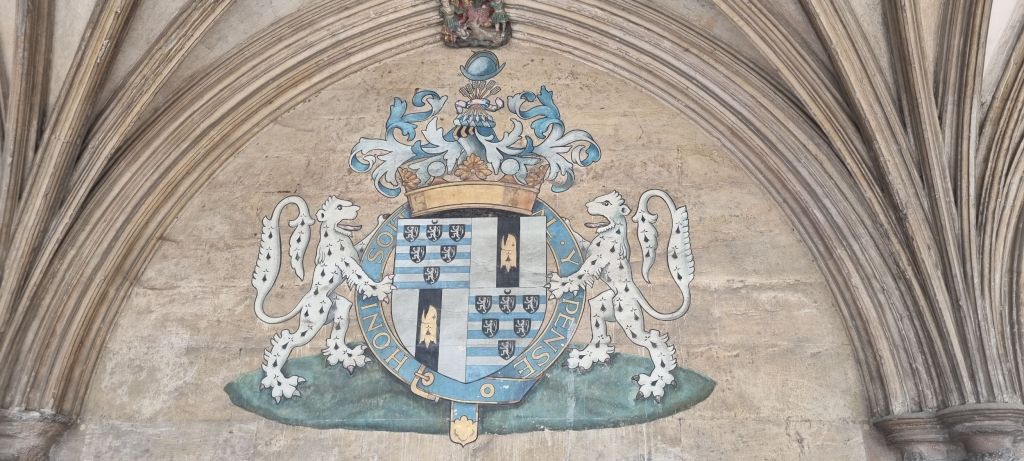
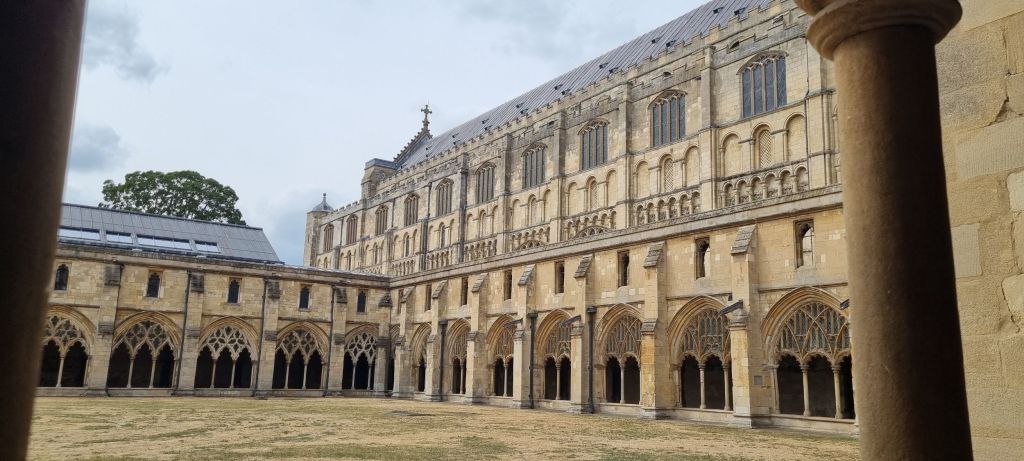
It also has he fourth largest cloisters, the walkways decorated with familial crests, overlooking a parched internal courtyard.

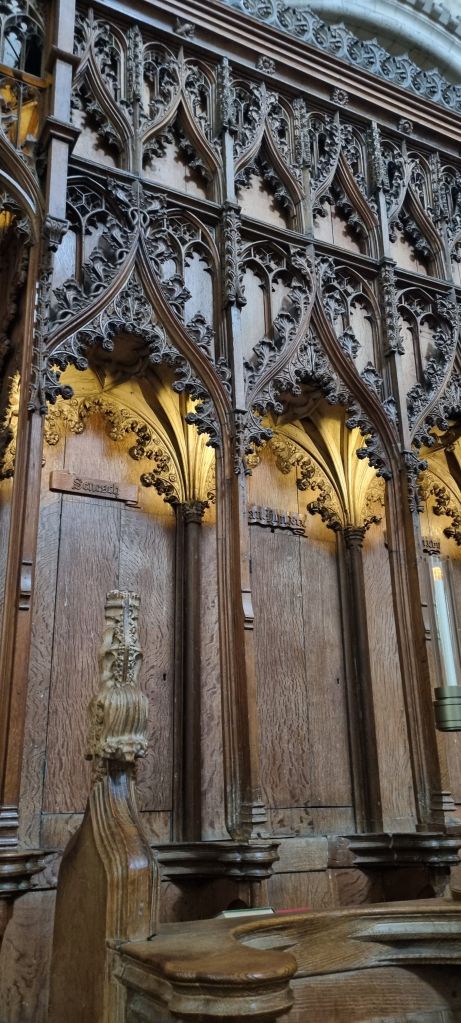
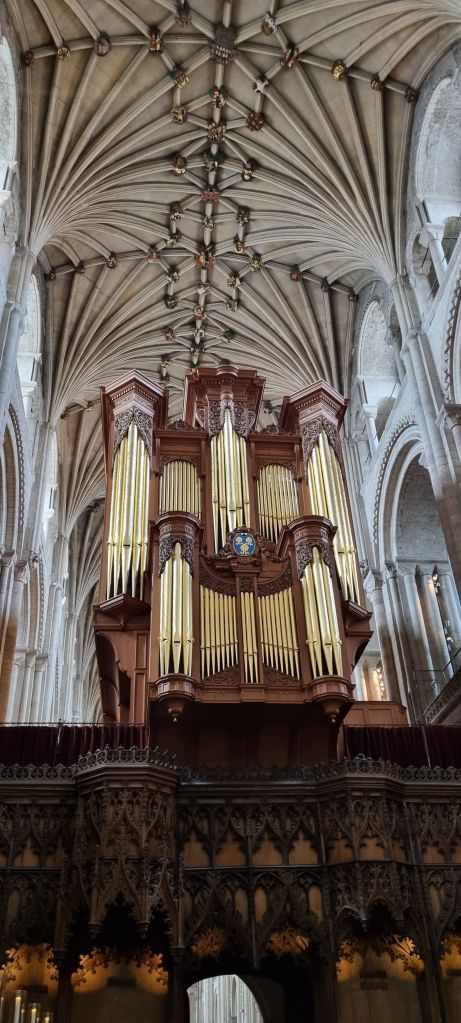
There’s a beautiful fan ceiling and intricately carved choir:
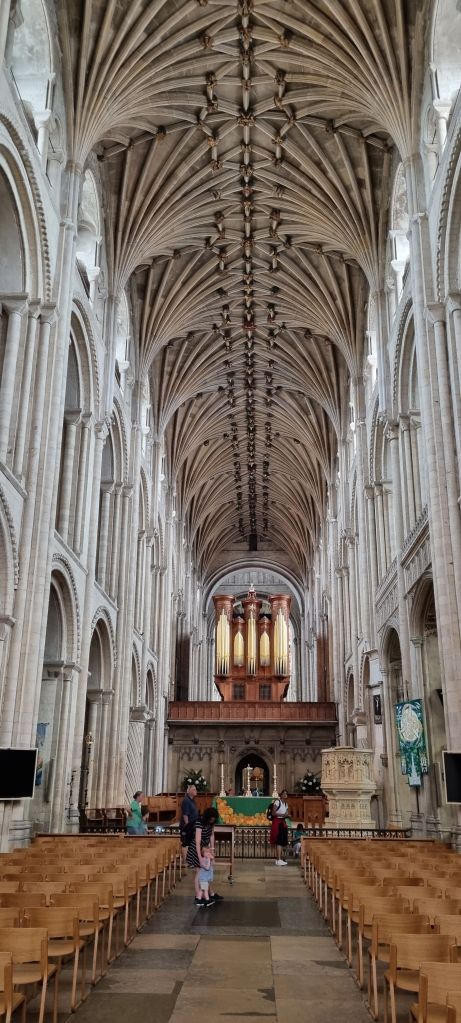
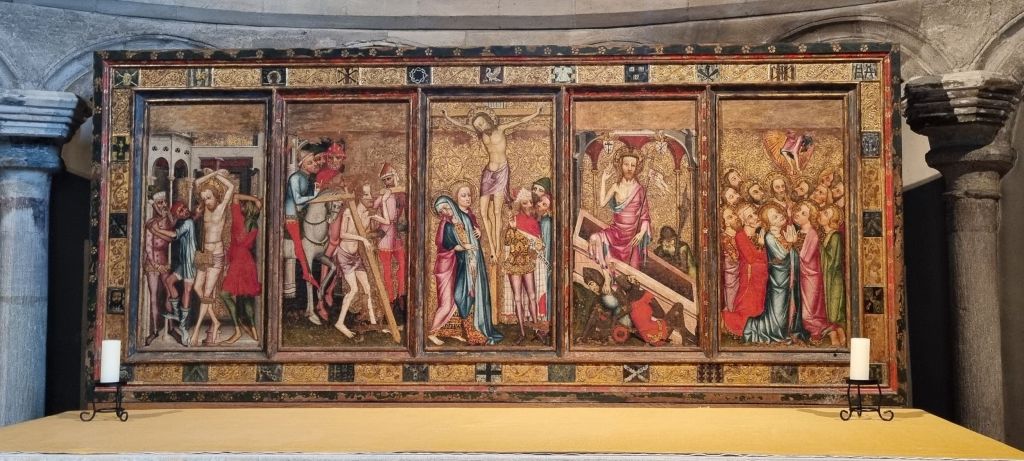
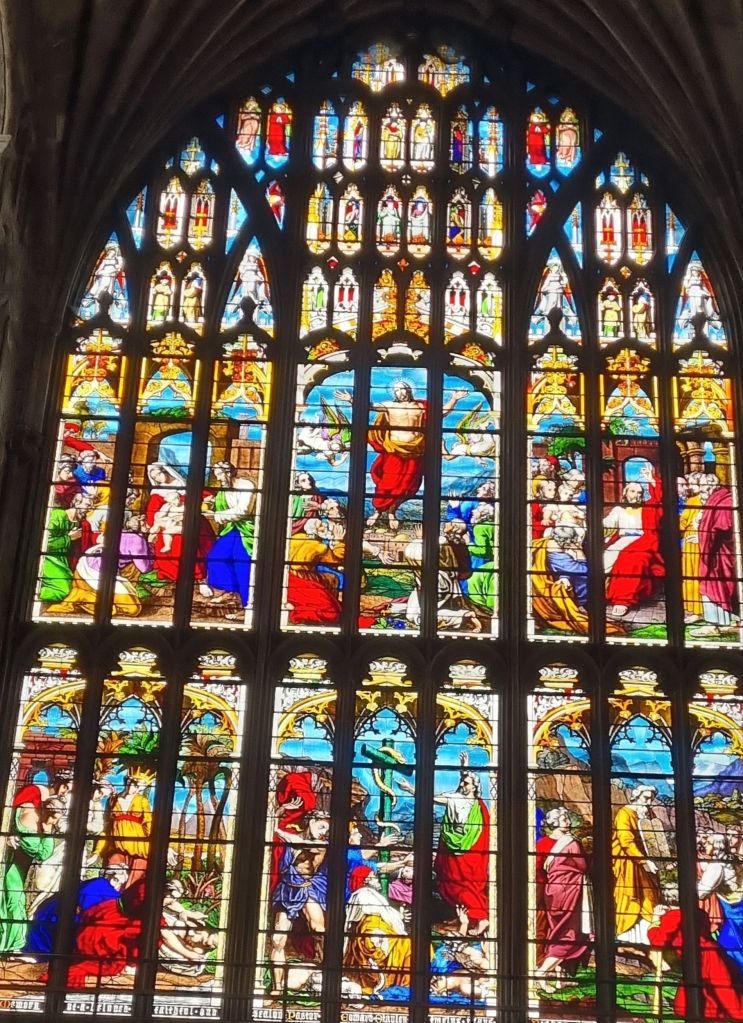
Norwich Cathedral also has the distinction of having a wholly intact mediaeval altarpiece depicting the passions of the Christ, the Despenser Reredos, believed to be the only one of its kind. Beautiful stained glass of the same period has also been lucky to survive WWII ravages.
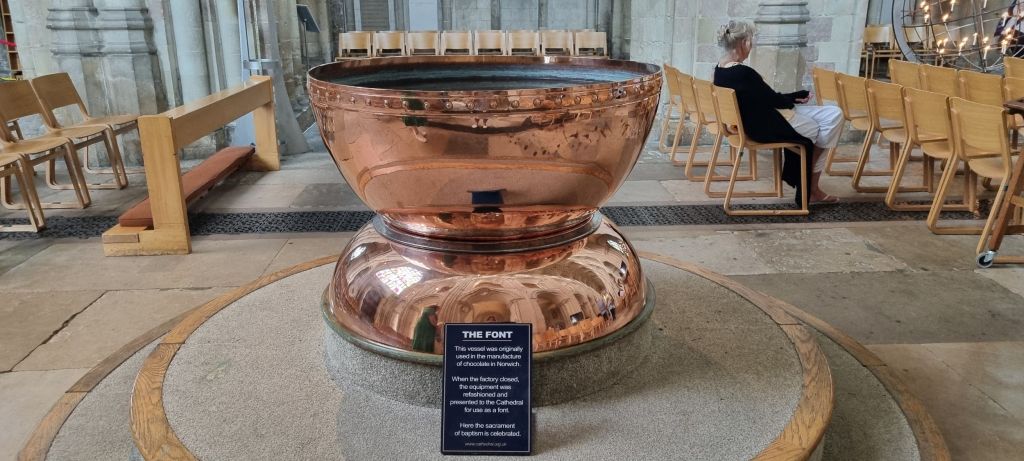
But my favourite bit has to be the copper baptismal font, a truly unique piece. The two copper bowls, previously used for chocolate making, were gifted to the church by Rowntree on closure of its Norwich factory in 1994. Fabulous! Recycling at its best.

