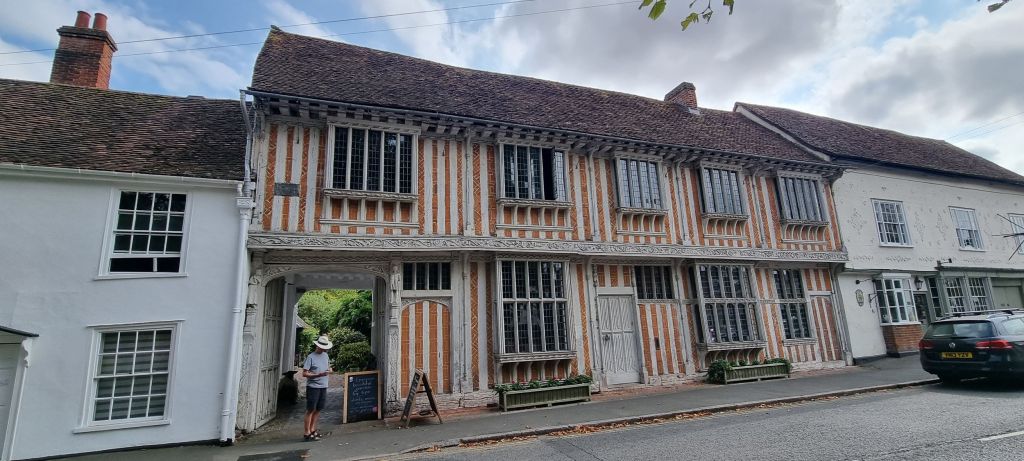
There’s a distinct change of pace today. We’ve gone from the grandeur of titled estates to the more modest pace of successful merchant life. We’re visiting Paycockes House, home to Thomas Paycockes, a 16th century Tudor merchant in Coggeshall, Essex.
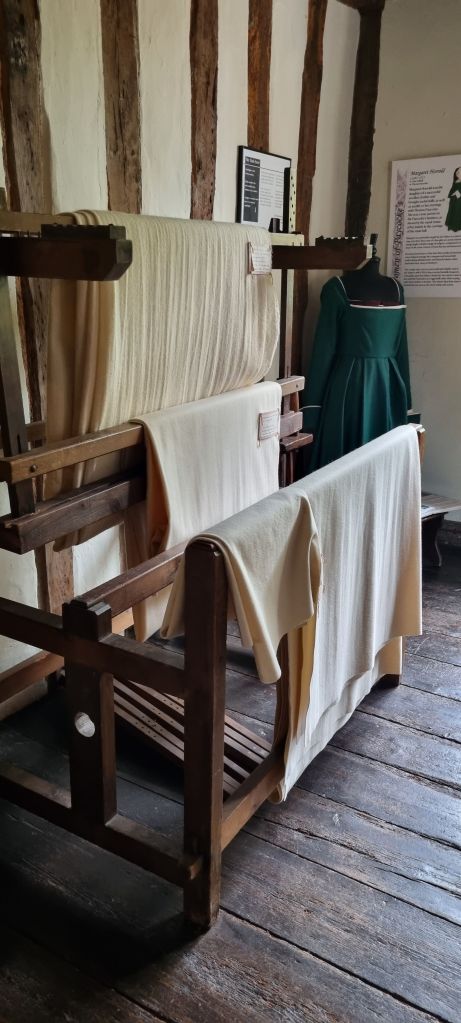
Coggeshall developed a thriving medieval wool and textile trade – Cistercian monks farmed sheep for high quality wool since the 12th century turning the market town into a manufacturing hub for (then considered) lightweight, undyed broadcloth known as ‘Coggeshall Whites’. Created in the 1530s, this finely woven, undyed woolen cloth held the reputation as the best of its kind in England.
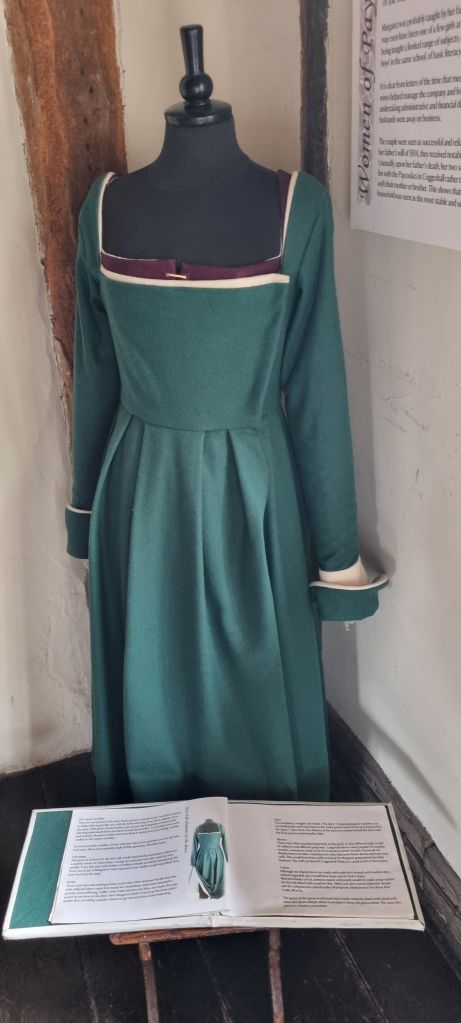
Thomas Paycockes built his fortunes on this trade and samples of the woven fabric and a typical dress of the period are on display. To a modern hand it’s heavy winter fabrication, but the weave is very fine with an almost felted appearance. It certainly would have been warm, especially once paired with cotton undergarments and a pinafore. The cotton under and over garments were vital – I imagine that the heavy fabric was a challenge to launder and dry.
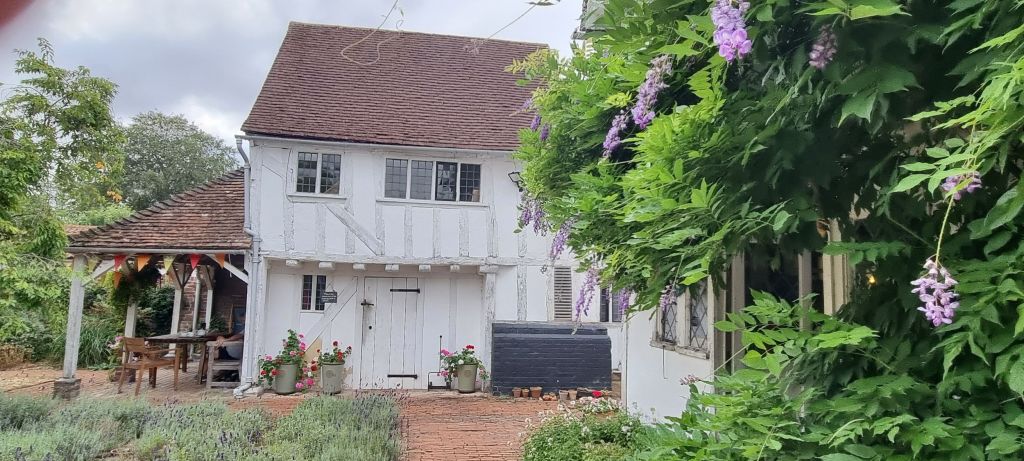
Today, Paycockes House presents as a well restored example of the wealth generated by the 16th century cloth trade. The oldest part of the building dates back to 1420 (below) and was once part of an open medieval hall. Later buildings were added to the site in two phases of construction between 1509–10.
Paycockes House features oak panelled rooms and elaborate woodcarving as the latest architectural fashion of the period.
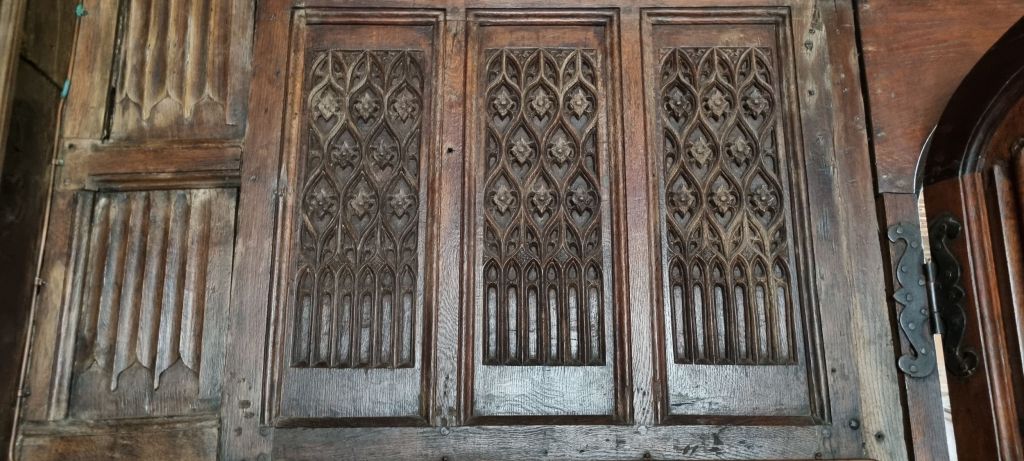
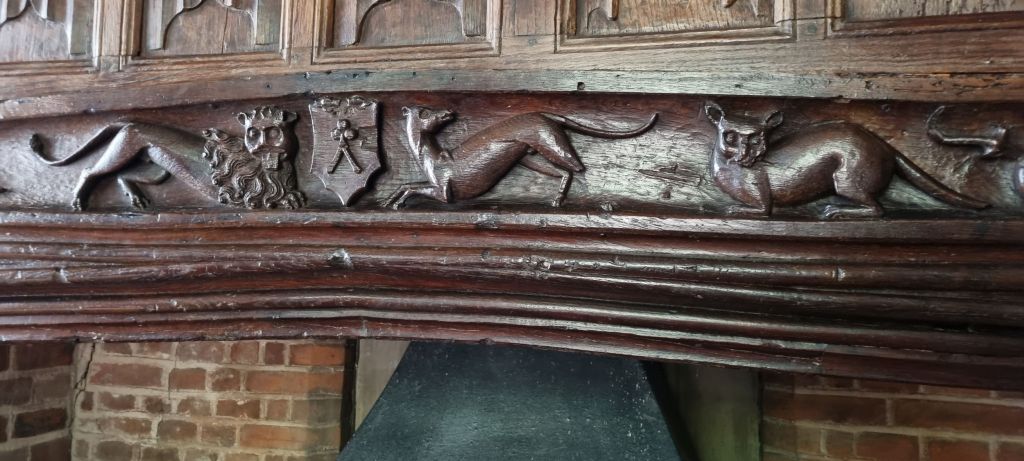
It’s likely that Thomas was influenced by French and Italian architecture observed during his business travels and it’s likely he employed overseas craftsmen. It’s humerous to see that human nature doesn’t really change – in a show of wealth, the more elaborate carvings were confined to the front half of the house where visitors first entered and the light showed them off to best advantage.
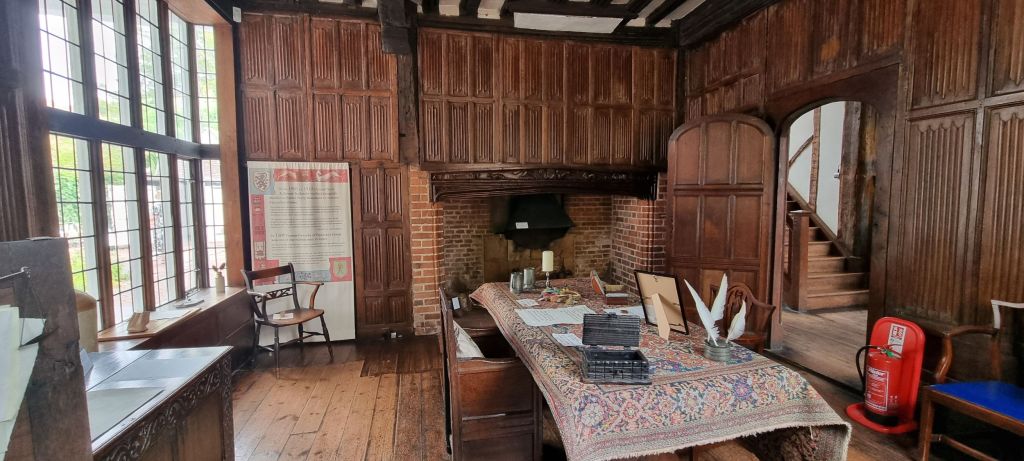
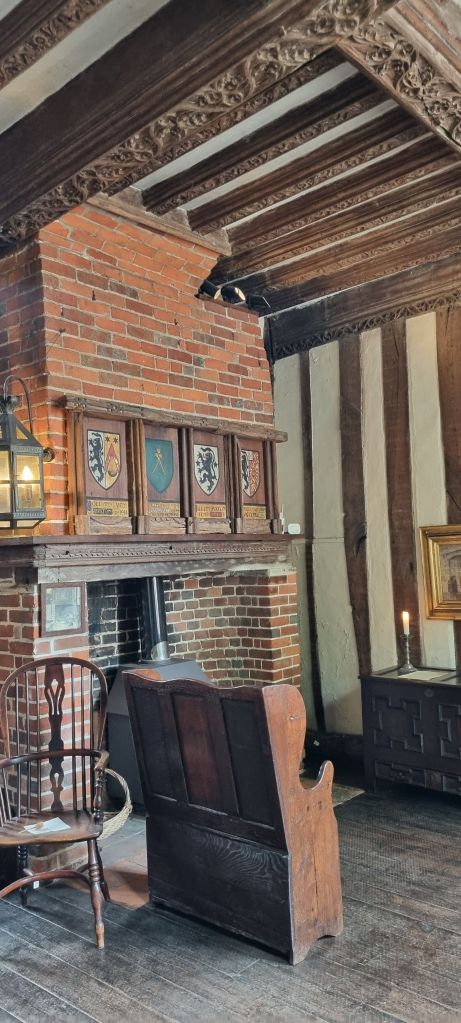
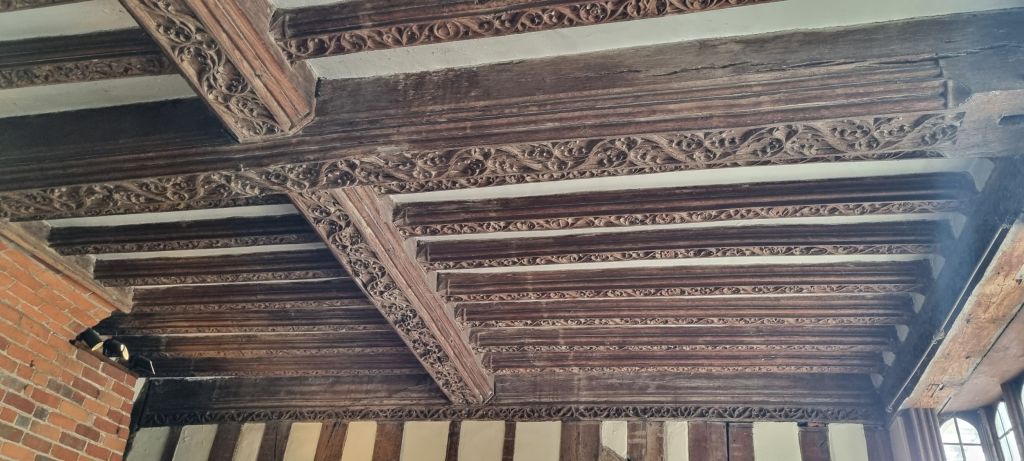
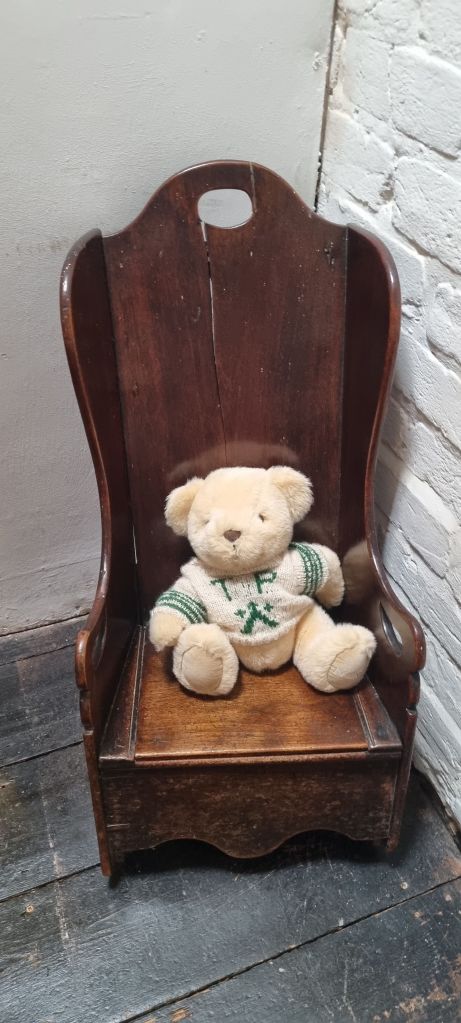
Outside of the receiving rooms, Paycockes is a more modest affair. I did rather like that teeny bear chair, the perfect size for a toddler.
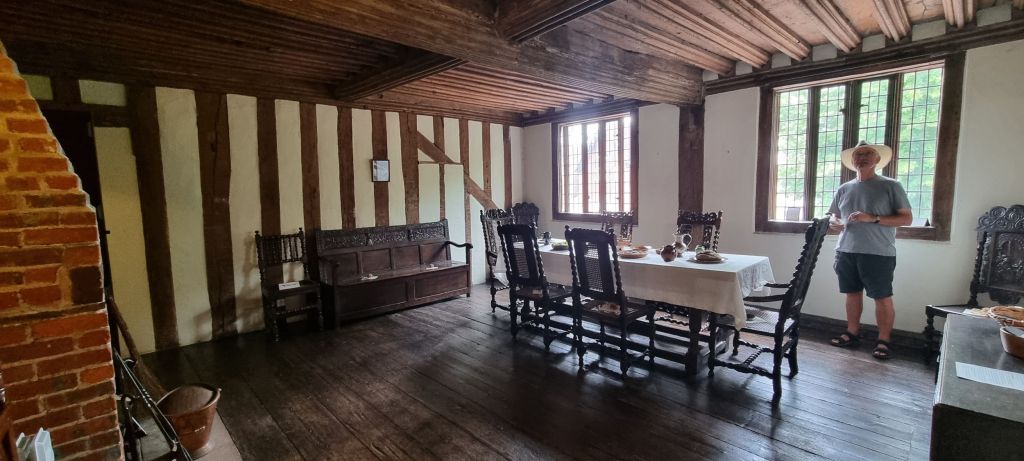
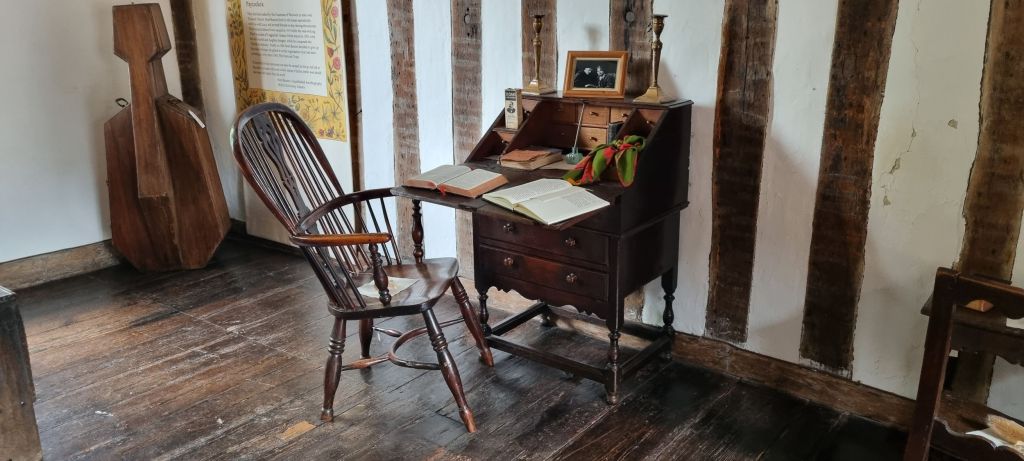
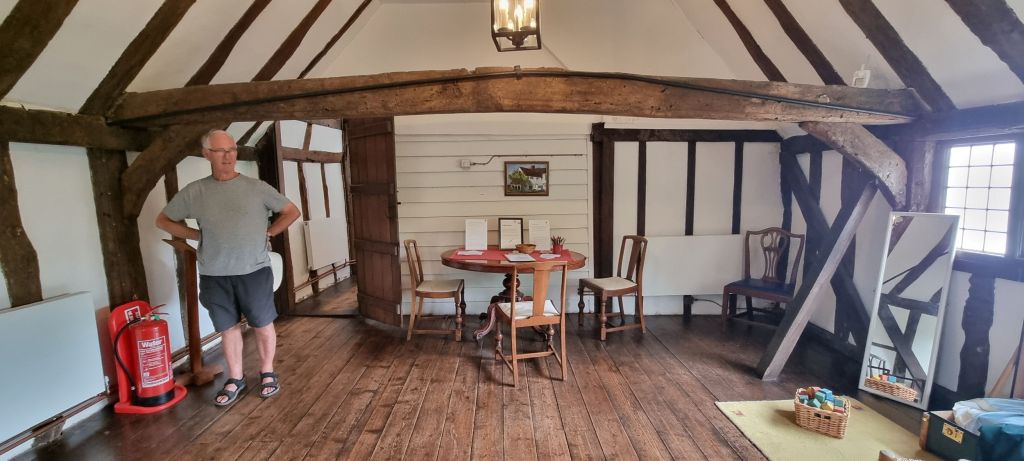
Over time, Paycockes House fortunes rose and declined – at one stage its features were covered and it was split into three residences, each individually rented. It passed into National Trust hands in the 1920s and underwent a 20 year restoration to reveal and restore its original features and layout.
The house wasn’t without controversy. Markings in the room above the cartway caused quite the stir – circles with lines running through them were once associated with witches’ marks. Whilst some believe these markings may have a witchy meaning, others sensibly believe they were just marks to help builders put the beams together. Given that witch trials and subsequent burnings were held not far from Coggeshall, it’s not an accusation you’d make lightly. They were a superstition lot in mediaeval times. Just as well the Paycockes didn’t have a black cat…
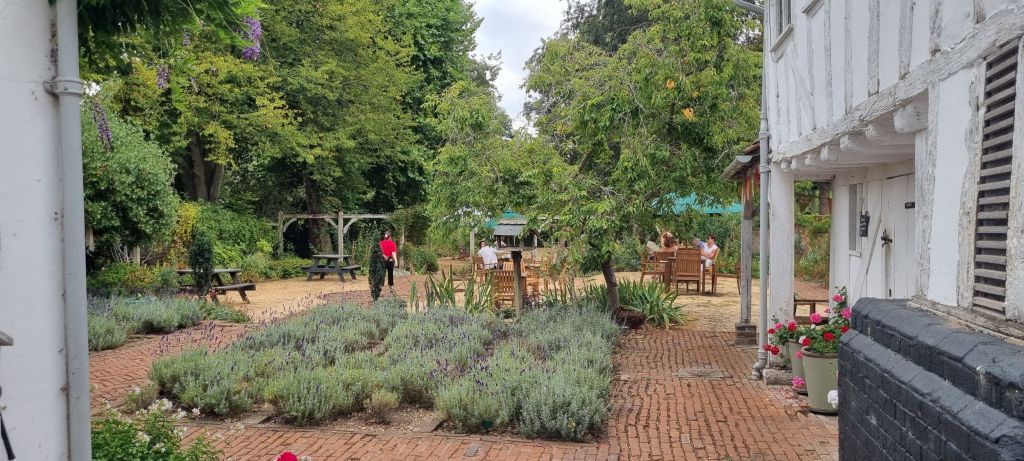
National Trust volunteers have worked tirelessly to create a beautiful garden at the rear of the property. It’s an incredibly deep block, once part of Paycockes business premises. A cartway was built in the second phase of construction, allowing transport wagons to from the road to the yard. Tudor outbuildings also once stood here including stables, a dovecote and possibly the kitchen. Tudor kitchens were typically separated from the main house to minimise fire risk.
Today’s garden is divided into three sections, a pretty flower planting that also serves as coffee shop seating, a grassed area to keep visiting children busy and my favourite, a rear kitchen garden with an apple tree border. I couldn’t resist lifting the first pic off the National Trust site to show you the garden in all its glory. Rain is so desperately needed.
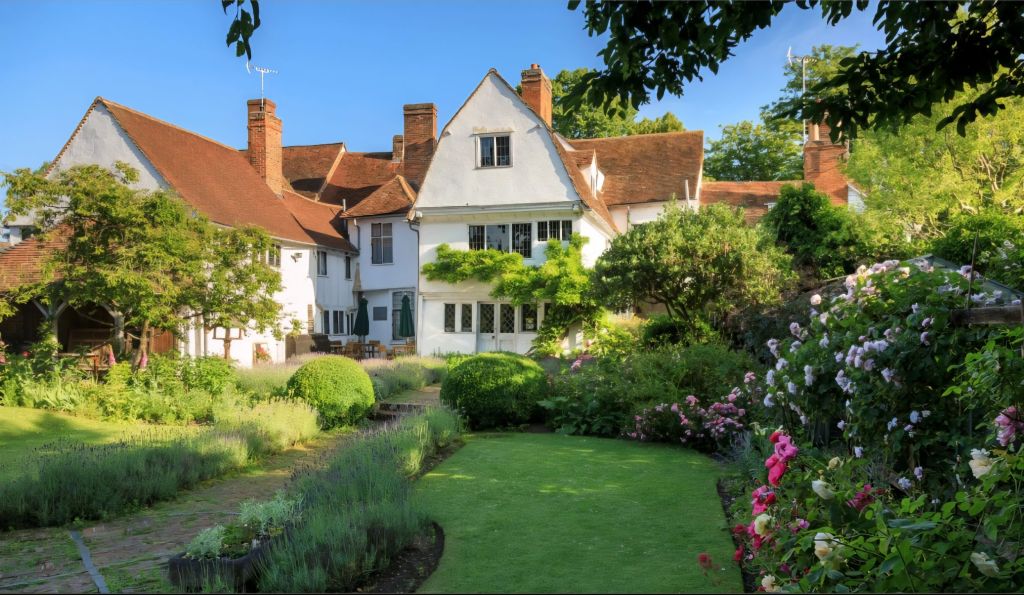
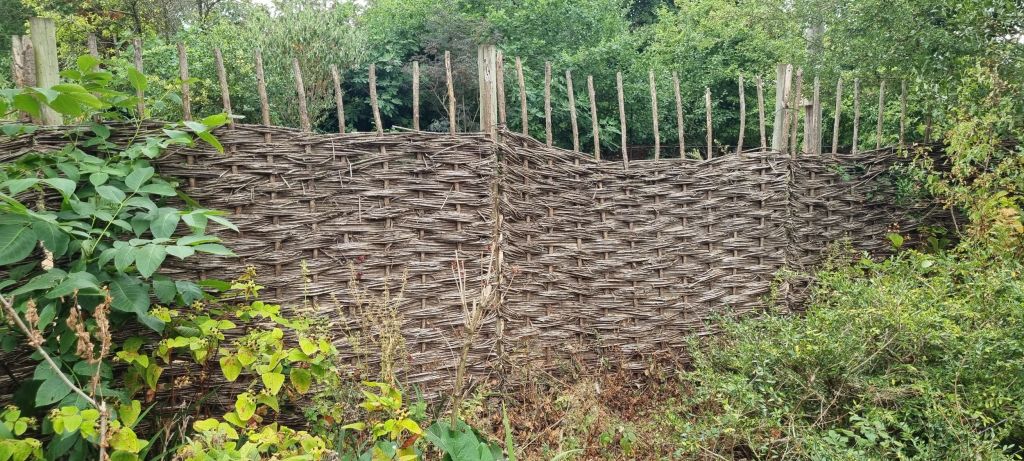
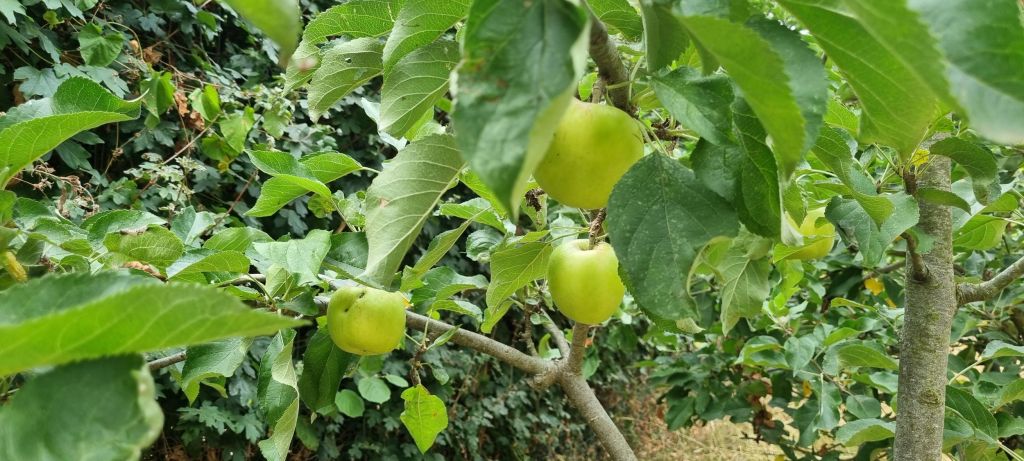
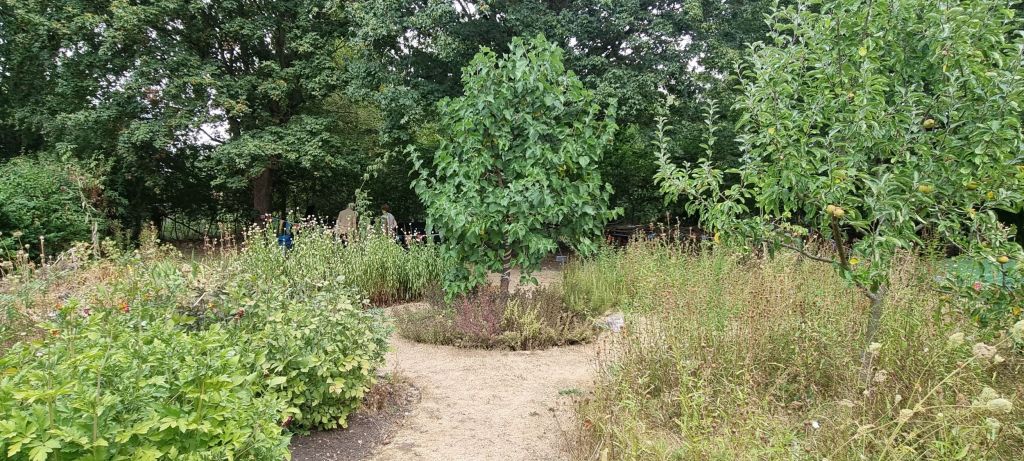
It’s just the the size of country block I fancy. Many hints are dropped to Himself but he remsins oblivious. *Sigh* I’ll keep working on that, afterall my copper pans do need a home…
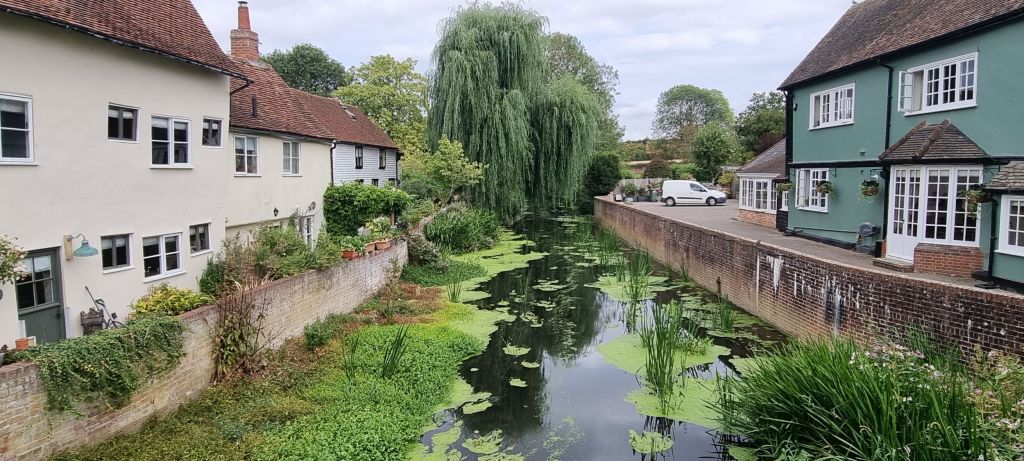
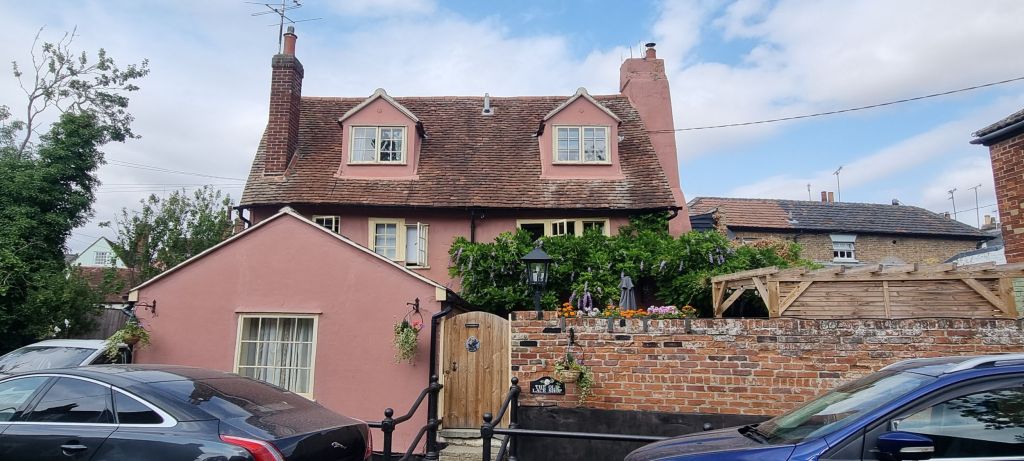
There’s time for a quick stroll around Coggeshall before we leave. It’s a pretty spot and several houses have name plates describing their history with the fabric trade which moved over time from Coggeshall Whites to velvets and lace.

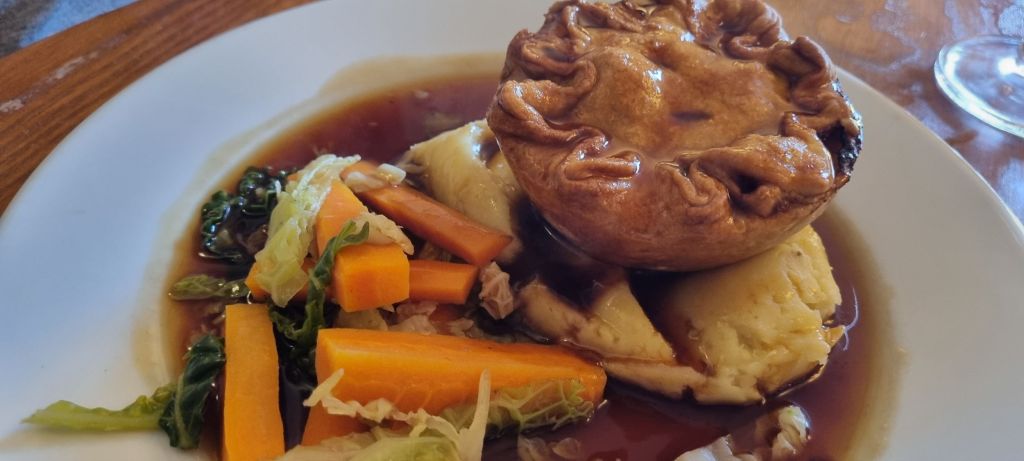
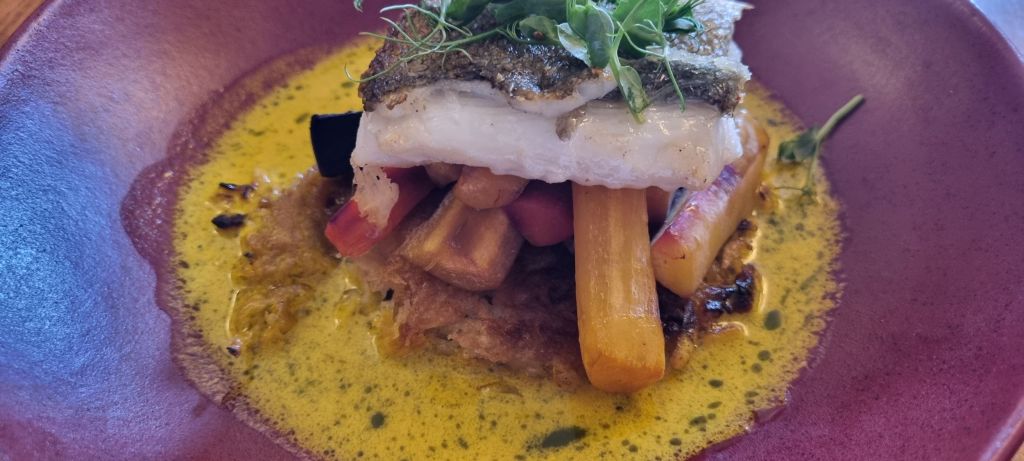
Day’s end sees us at a country pub for dinner. A ham chicken and leek pie for Himself and a delicious cod on a potato rosti and heirloom carrots for me. Lovely.