We’ve success today in seeing Hatfield House, a bonus on our way back from the motorhome appointment. It was closed on the way up so I’m rather chuffed not to have missed out.
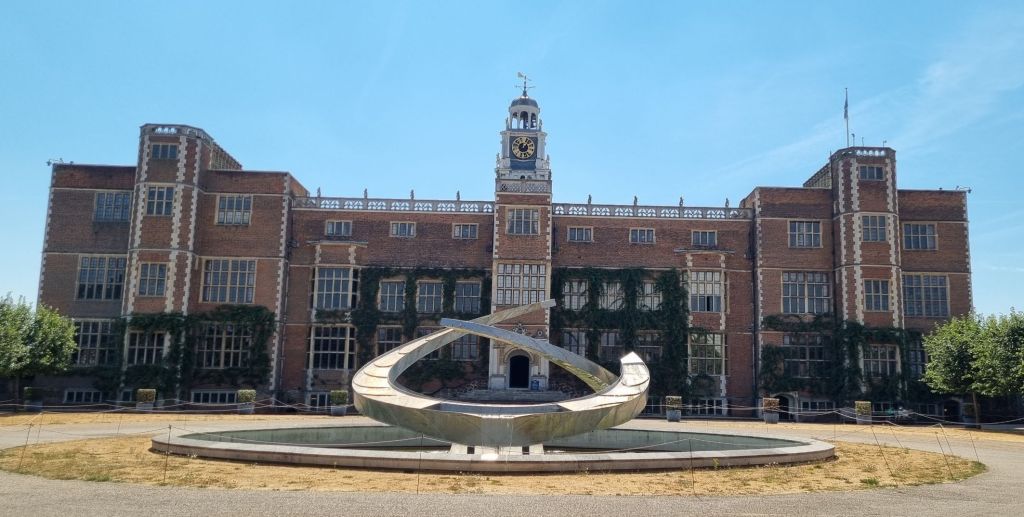
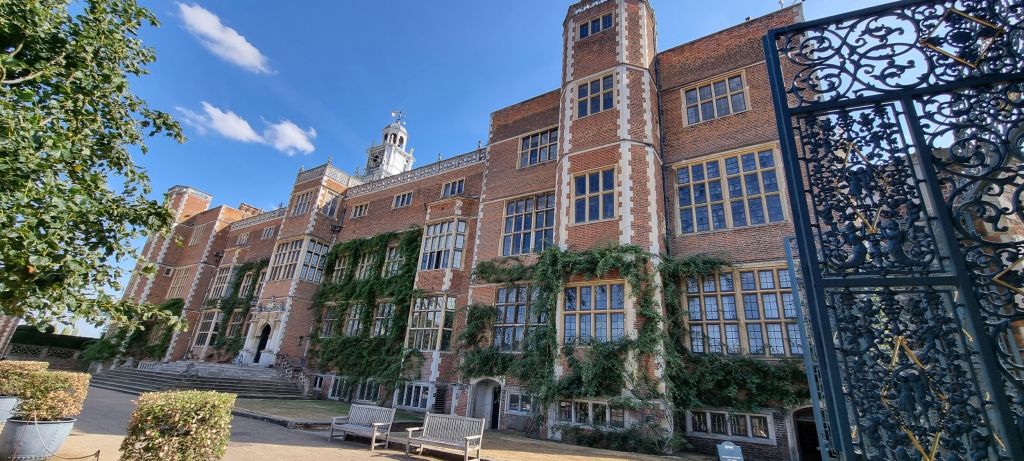
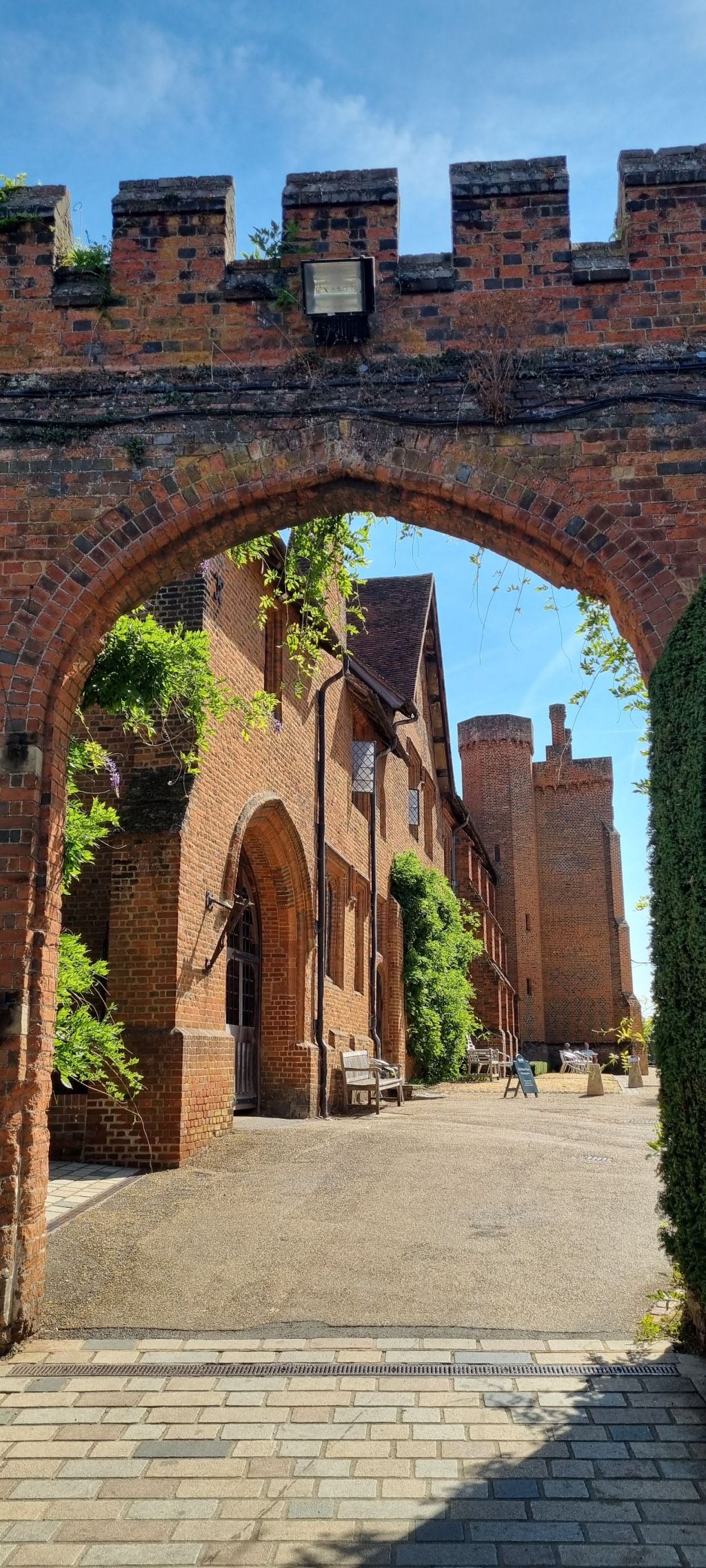
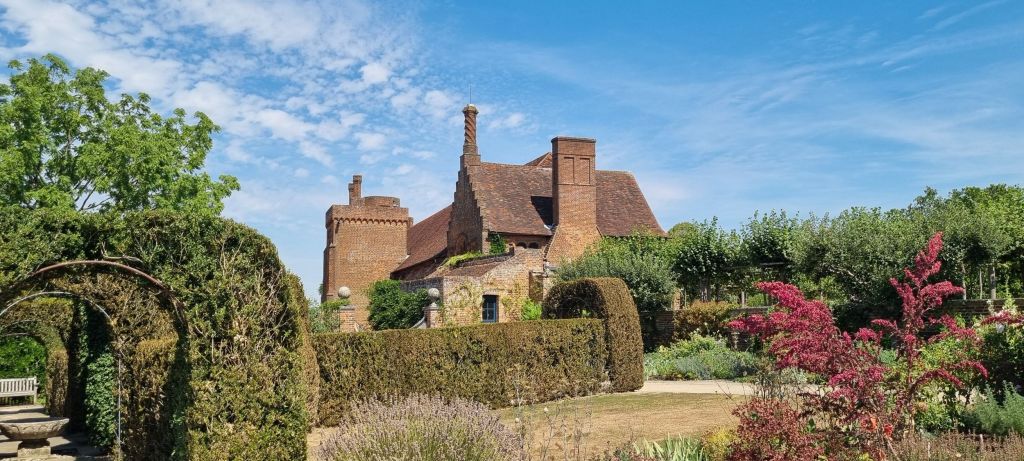
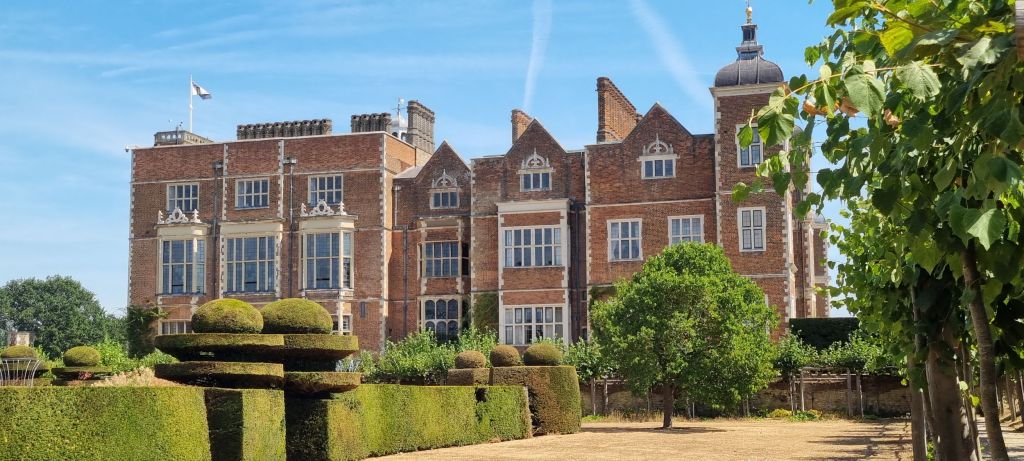
Built in 1611 by Robert Cecil, Chief Minister to King James I, Hatfield has a dual history. There’s the 400 year old grand Jacobean masterpiece of course, capturing a brief but fabulously opulent moment in architectural history, and then there’s remains of the ‘Old Palace’ (below) where Elizabeth I lived most of her young life prior to her ascension to the throne.
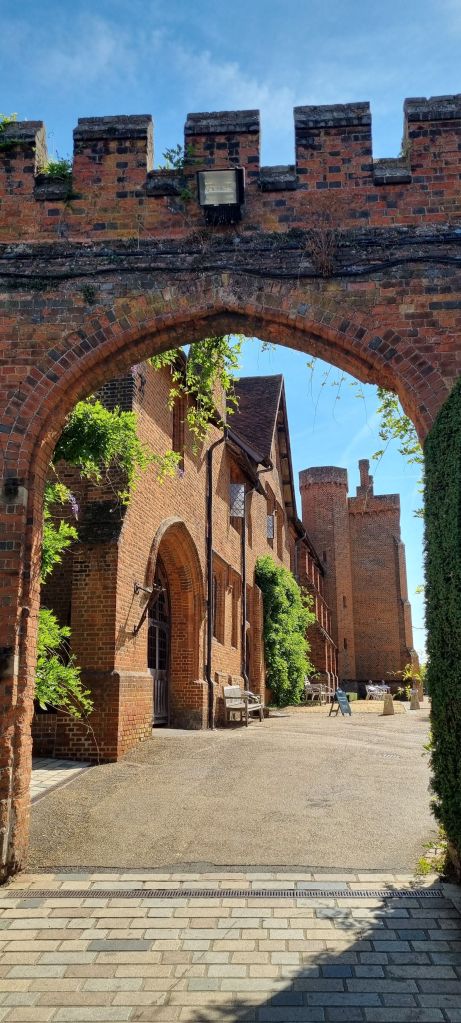
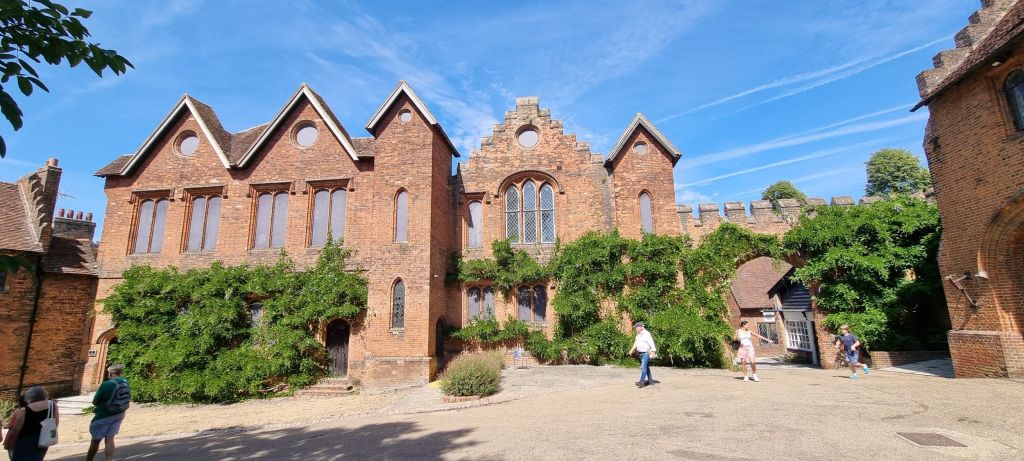
400 years on, the estate is home of the 7th Marquess and Marchioness of Salisbury, and lucky for us, it’s open to the public. Hatfield has also been a location shoot for The Crown and The Favourite. (Mental note to self: rewatch The Crown).
Whilst we’re free to tour the House and grounds on our own, the Old Palace is a guided tour. And just as well – Elizabeth I’s path to the throne was exceedingly complex. Our walking encyclopaedia guide takes us through it in fine detail.
The Old Palace was built in Tudor style in 1485 by Cardinal John Morton, Bishop of Ely. Originally created as the Bishop’s home, its convenience to London made it a frequent royal stopover when travelling, so much so that Henry VIII acquired the property in 1538 and promptly turned turned it into a royal outpost where his three children were raised: Mary, Elizabeth and Edward. Hands on parenting was clearly not favoured in Tudor times! A case of children should neither be seen nor heard…
We learn of the complex history of these three: Mary was stripped of her royal privilege following Henry’s first divorce and was forced to work in the ‘nursery’. Oh, what a comedown – Princess to handmaid. Elizabeth’s mother meanwhile was beheaded. It was only the longed for son Edward who received an education befitting a future King. Luckily for Elizabeth, she was allowed to sit in on Edward’s lessons, perfectly, if inadvertently, preparing her for what was to come. Her life was not without challenge though, being imprisoned in the Tower of London on accusation of participating in a plot to overthrow young King Edward, her half brother. It was a perilous time to in the line of succession.
On convincing the King of her innocence and her subsequent her release, Elizabeth returned to the Old Palace and petitioned her brother for ownership of its title, which he acquiesced. Elizabeth then lived in the Old Palace until the death of both Edward and her half sister Mary, making her Queen at 25.
Legend has it that she was sitting under an oak tree reading her Bible in 1558 when a dispatch from London arrived to make the announcement. Her respond was captured for history “This is the Lord’s doing and it is marvelous in our eyes”. In Latin, as you do. That happenstance education clearly paid off – Elizabeth I went on to reign over an incredibly prosperous period, referred to as the Golden Age. It’s said that Elizabeth rode out of the Old Palace for London with a retinue of a thousand. What a grand sight that would’ve been.
Sadly that oak is no more although sections of it are preserved elsewhere in Hatfield. Queen Elizabeth II planted a new oak in its place in 1985, and it’s doing rather nicely, thank you very much.
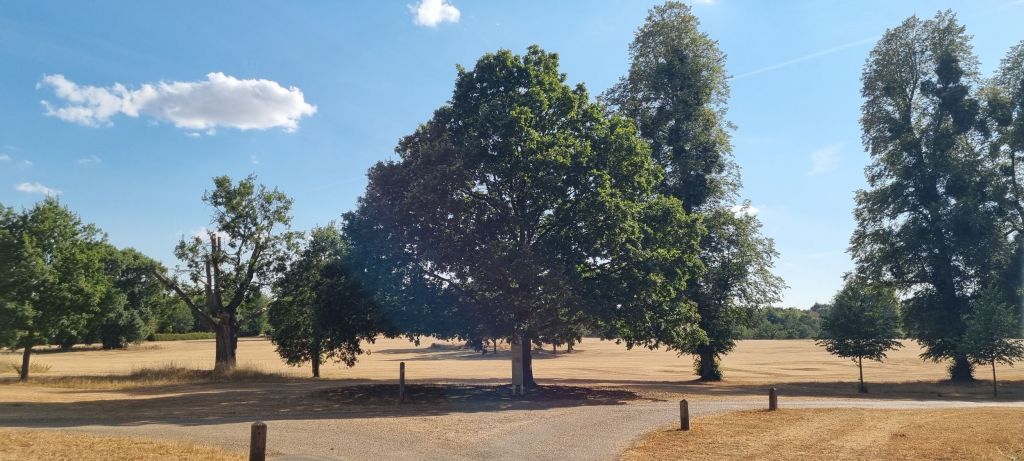
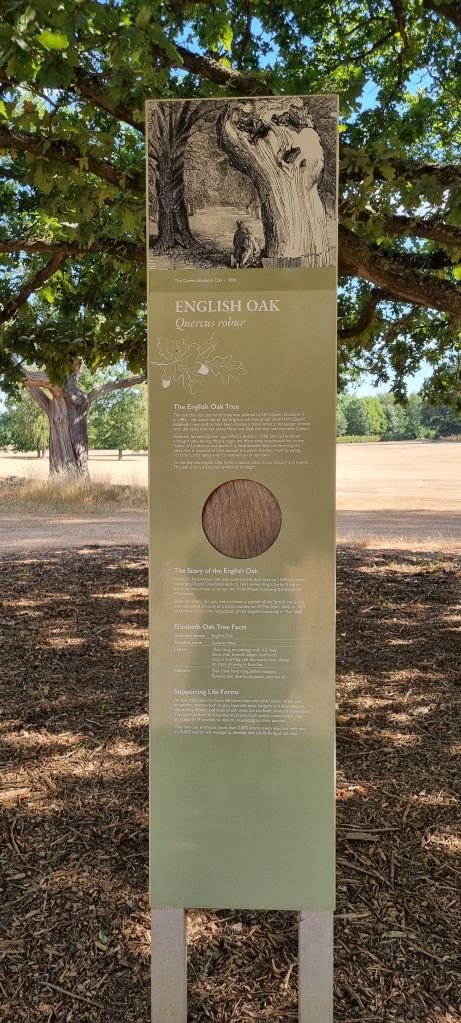
Time of course matches on. In 1607, King James I, Elizabeth’s successor, ‘traded’ the Old Palace to Robert Cecil (1st Earl of Salisbury) in exchange for his (by all accounts fabulous) country property, Theobalds. Now this was a bit of a cheeky move – the King having been a frequent guest at Theobolds and taking a fancy to it. Our guide suggests that it was lucky the Cecil’s were offered a swap as it could have just as easily been a case compulsory acquisition without recompense. A draft Parliamentary Act of exchange survives in the Cecil Papers at Hatfield, dated May 1607.
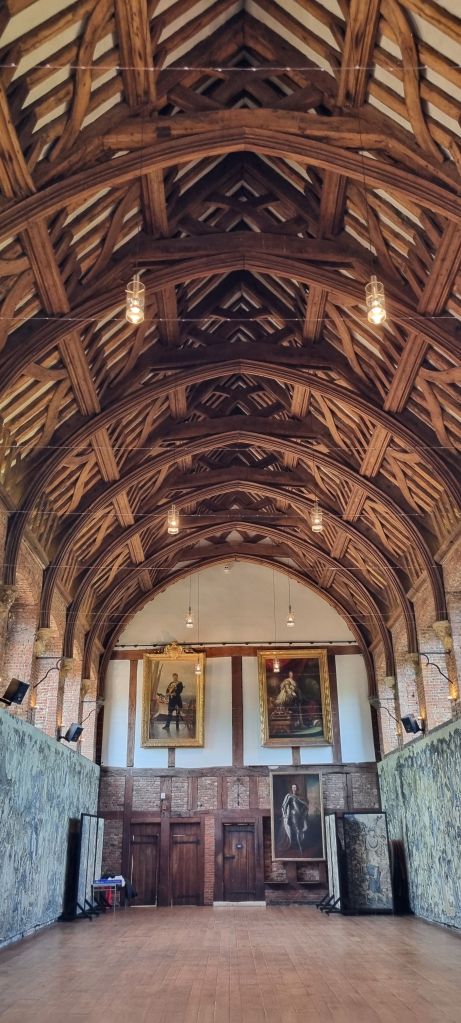
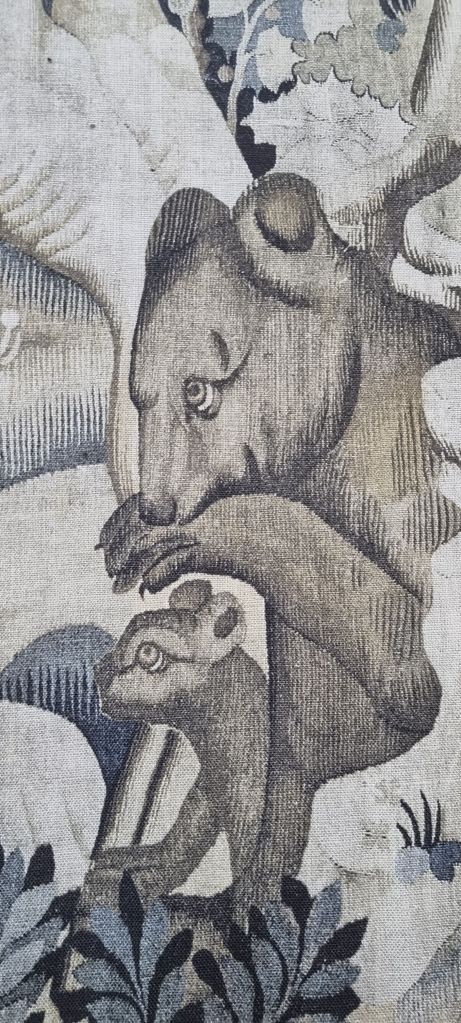
The Old Palace was rather run down by this stage and much it was torn down in preparation to build Hatfield House. What remains today is one section of what was once a rectangular building with a quadrangle Knot Garden in the centre. Of this section, a Great Hall is the key feature, hung with reproduction tapestries. The central garden remains – it’s small but exquisite. When the Old Palace was intact, all of the interior facing windows would have looked out onto it.
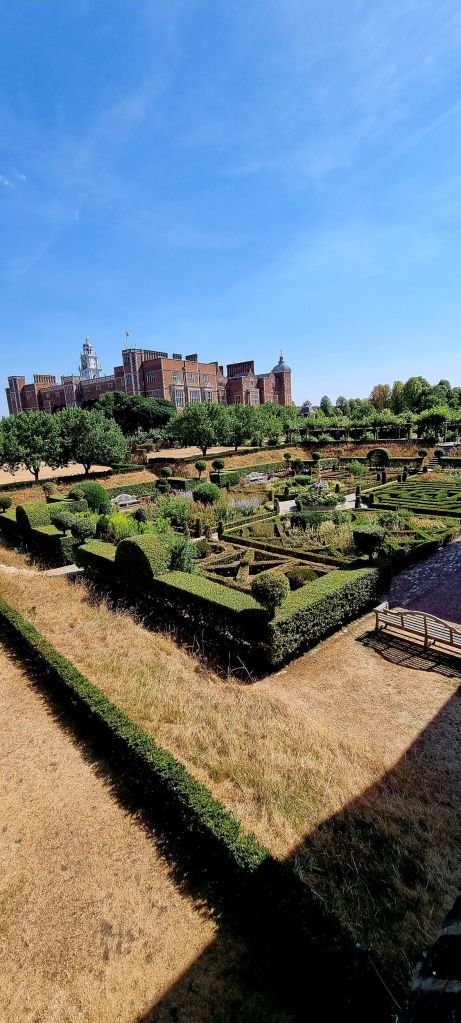

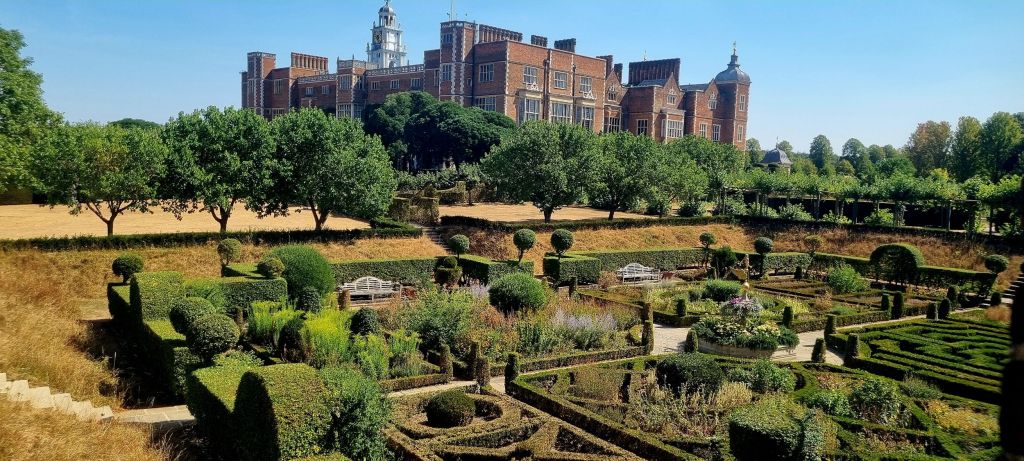

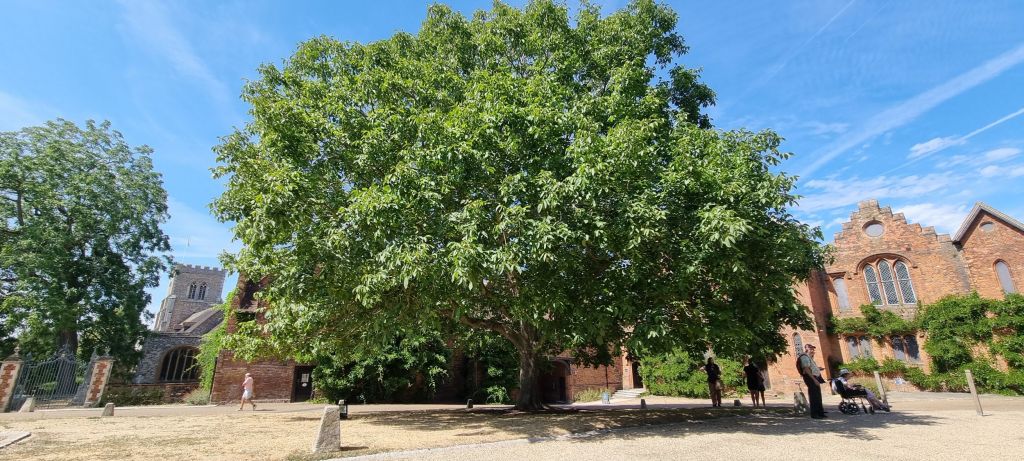
There’s a rather ancient walnut tree too, groaning with a promising autumn harvest.
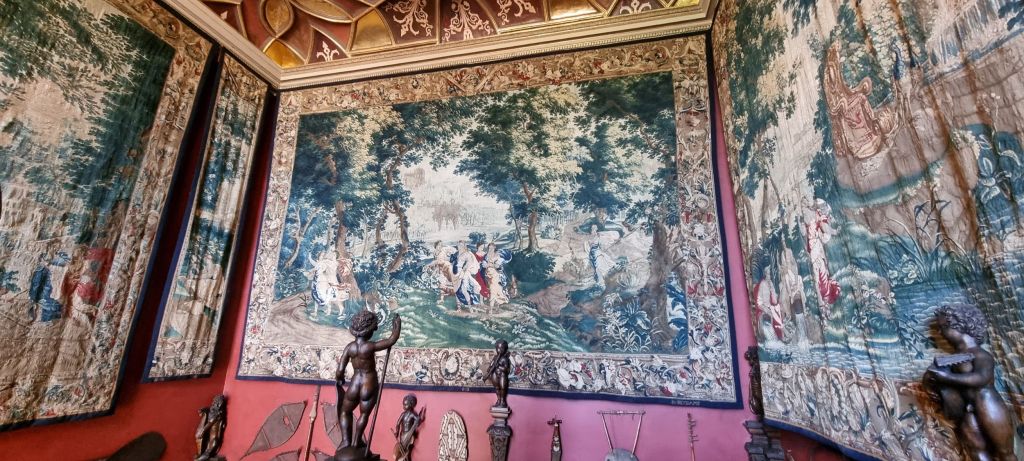
Works on the ‘new’ Hatfield began almost immediately on transfer, finishing in 1611. The House was richly decorated for entertaining the Royal Court with State Rooms lavishly appointed with paintings, fine furniture and tapestries.
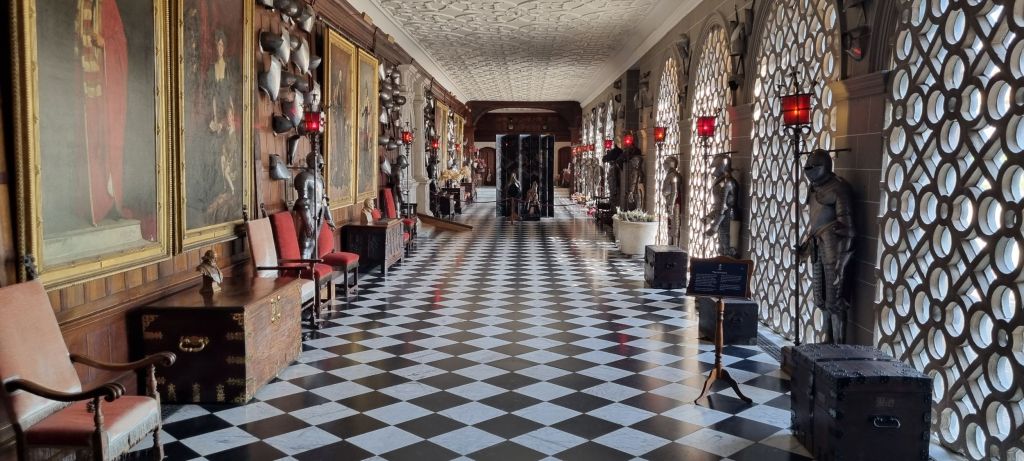
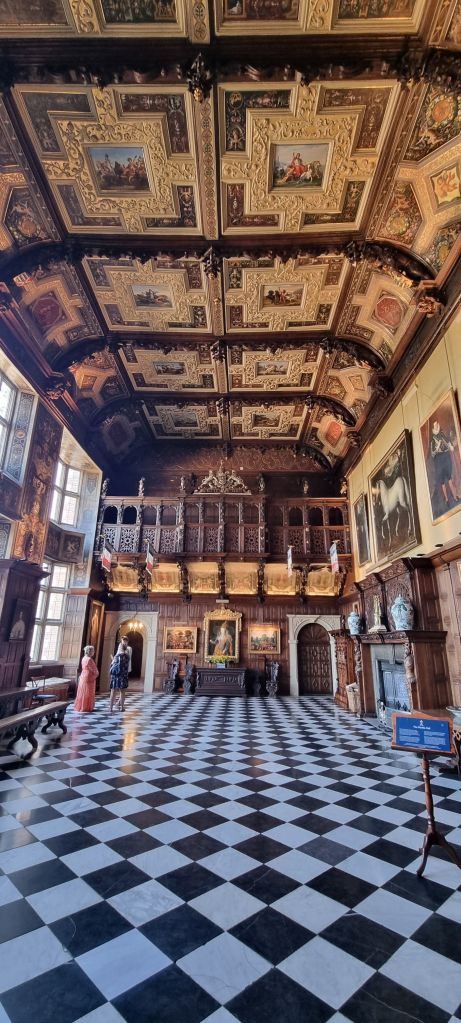
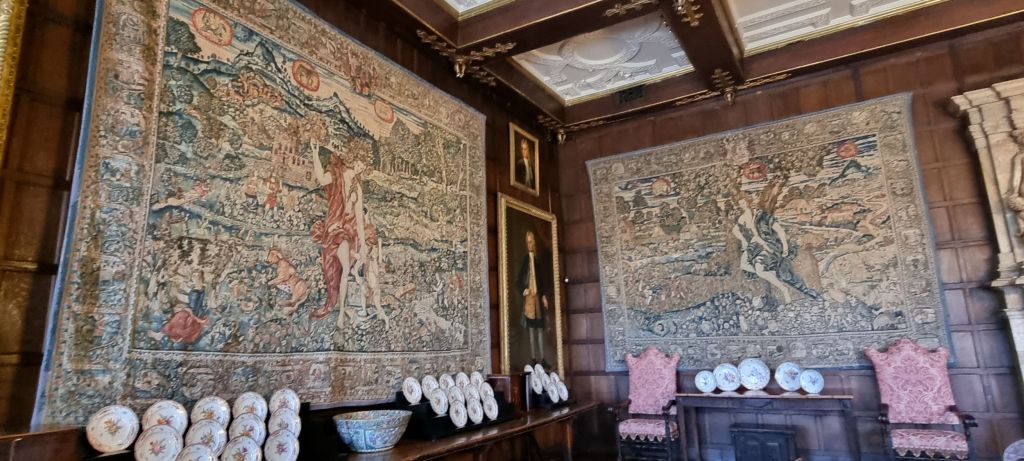
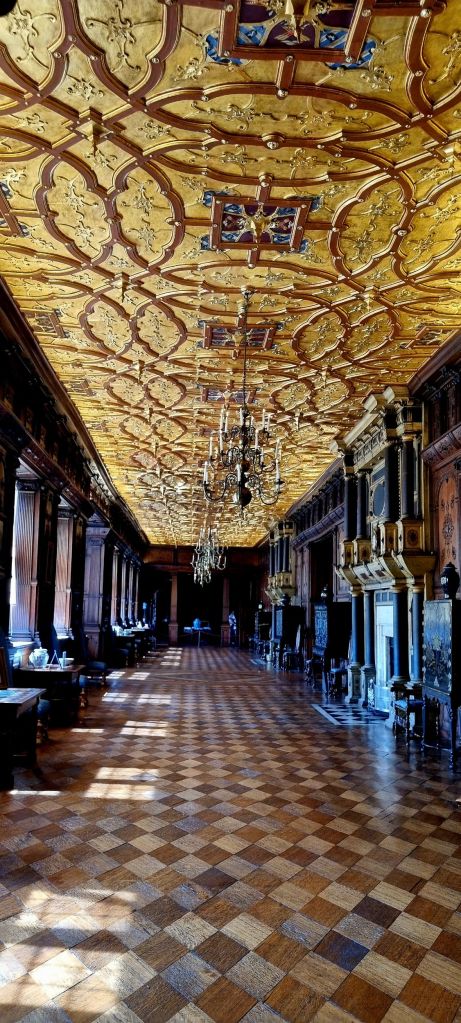

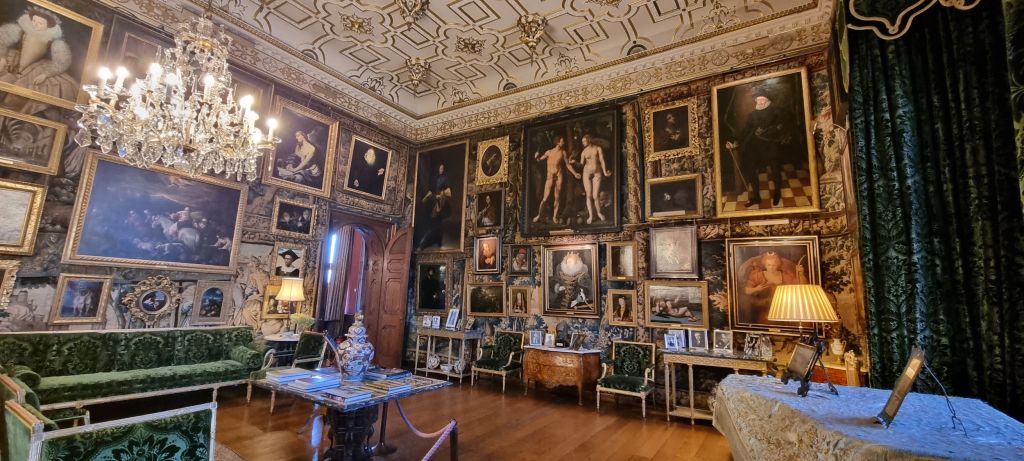
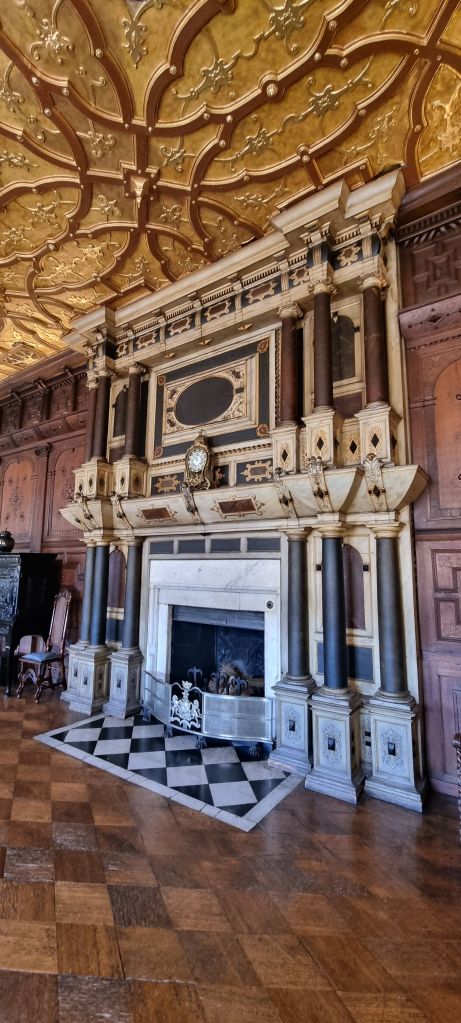
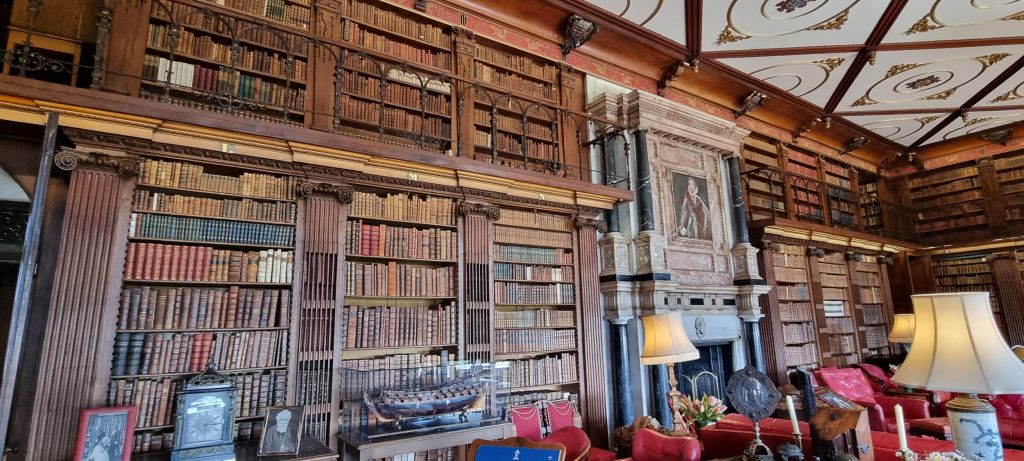
There’s an extensive library with an interestingly modified (once) gambling chair, now a comfortable reading spot.
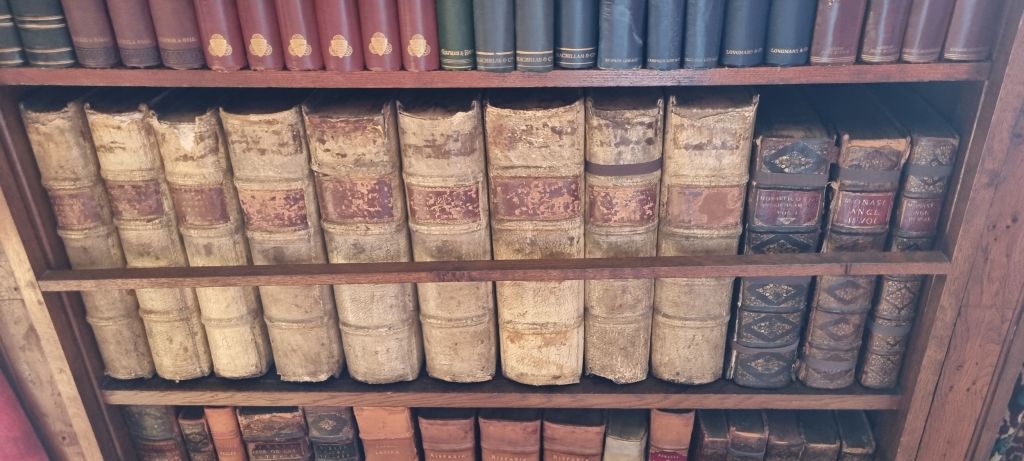
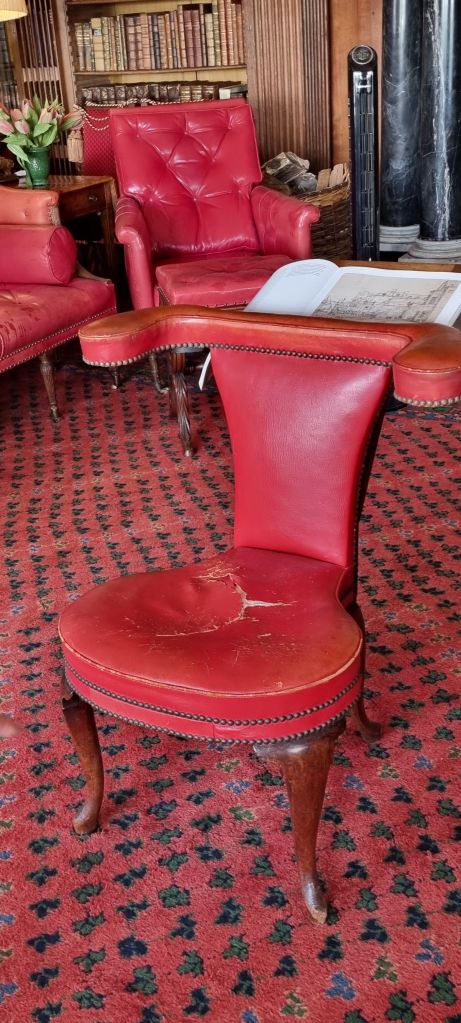
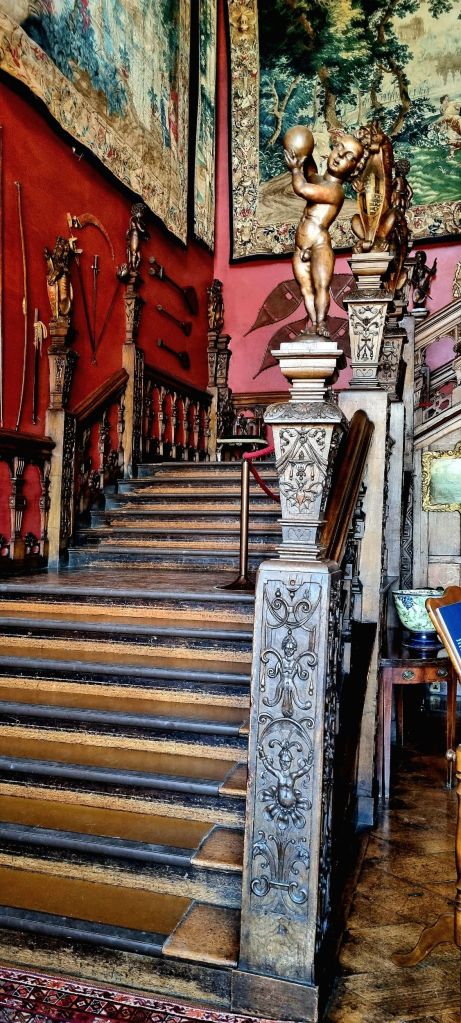
The ornate grand staircase with its fine carving was originally painted and the cherubs finished in gilt. I’m glad I didn’t get the job of stripping that paint job…
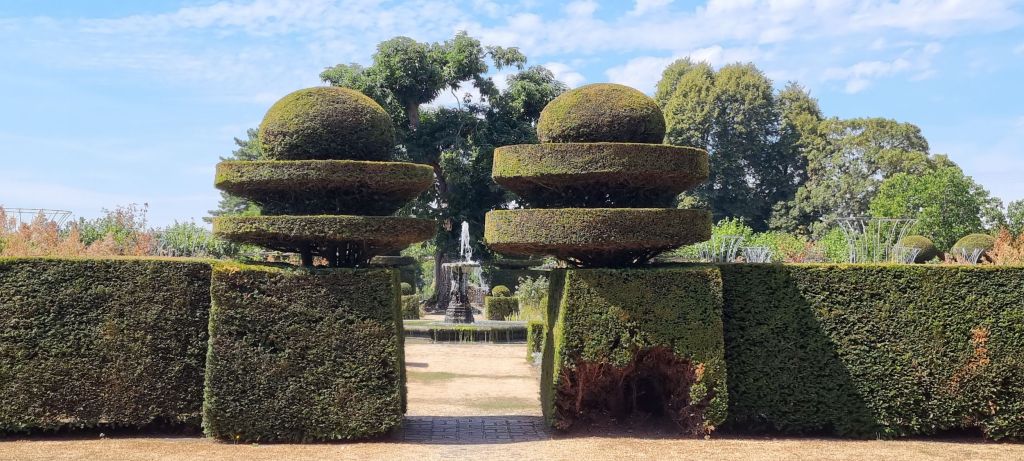
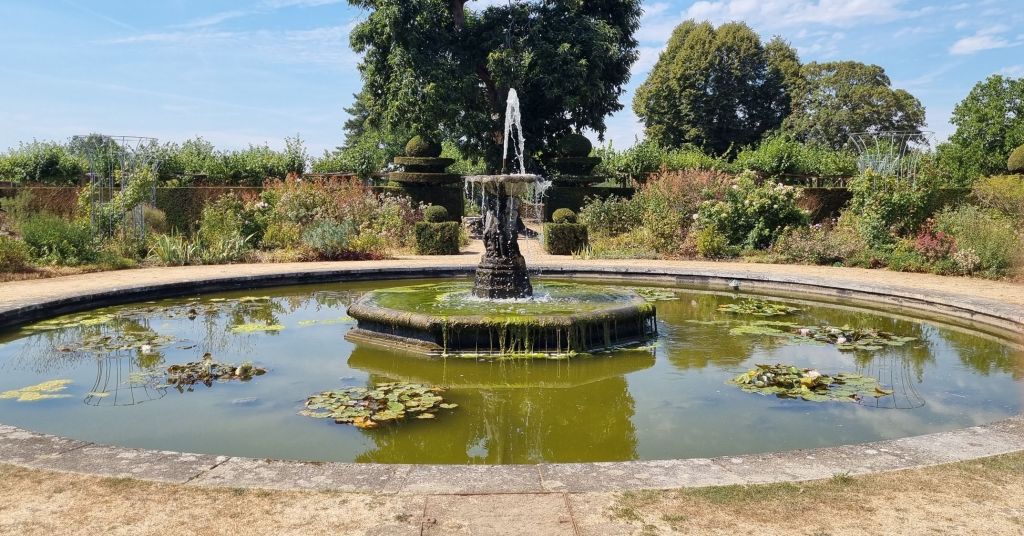
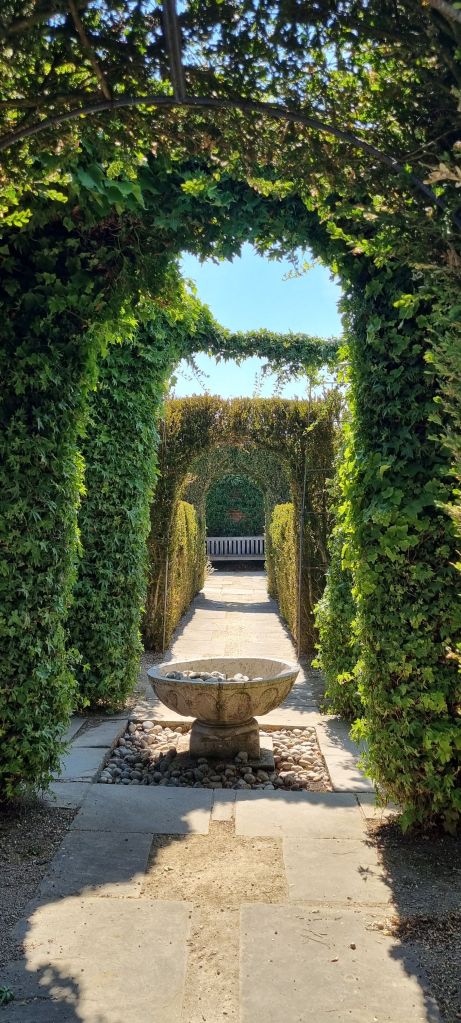
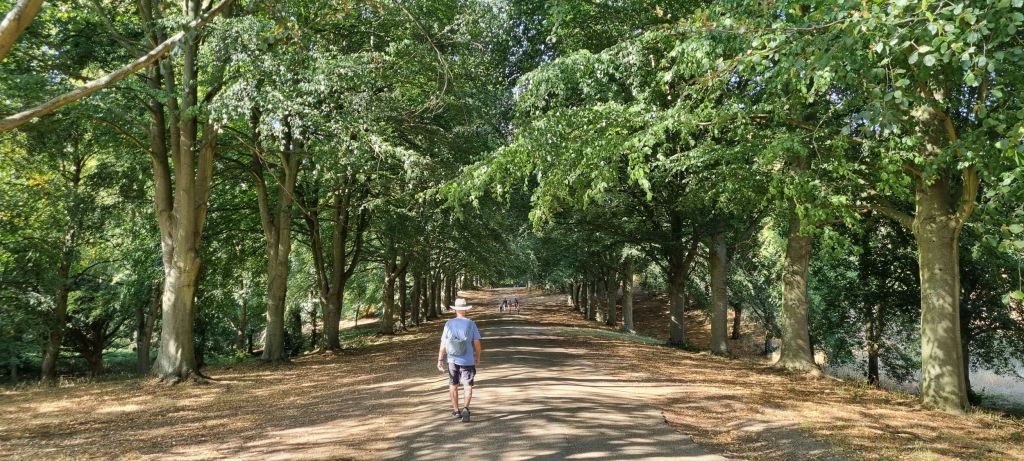
Hatfield’s grounds and topiary led formal gardens are extensive, if a little parched, and despite their scale offer many secluded shady nooks for peaceful reflection.

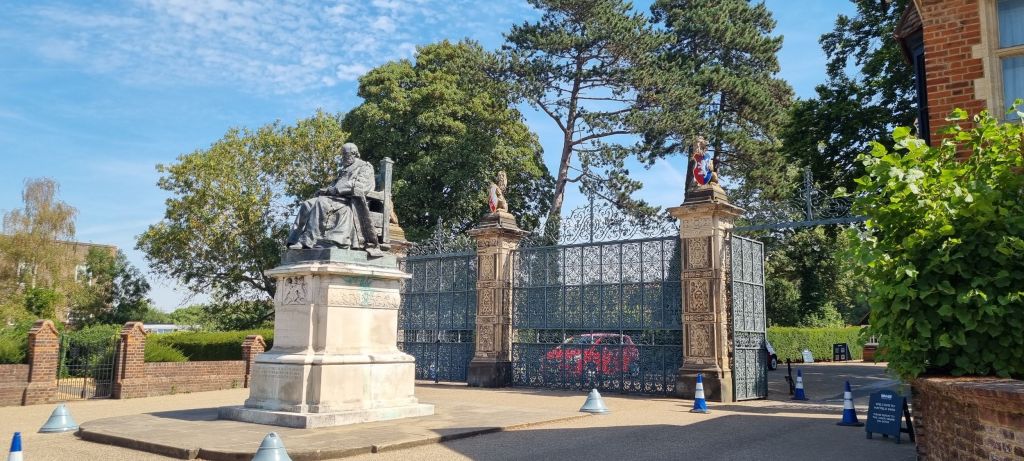
Descendants of Robert Cecil have managed the estate through centuries including the 3rd Marquess of Salisbury, who served as England’s Prime Minister in the late 19th century. It’s said that he agreed to a ‘new fangled’ train station moments from his front gate in order to be able to make it to No 10 in an hour. It helped that he was allegedly given right off way on the line!
The railway station is across the road from this grand entry gate. Grandeur came a long way from Tudor times, well at least in comparison to one of the Old Palace’s modest doorways below.

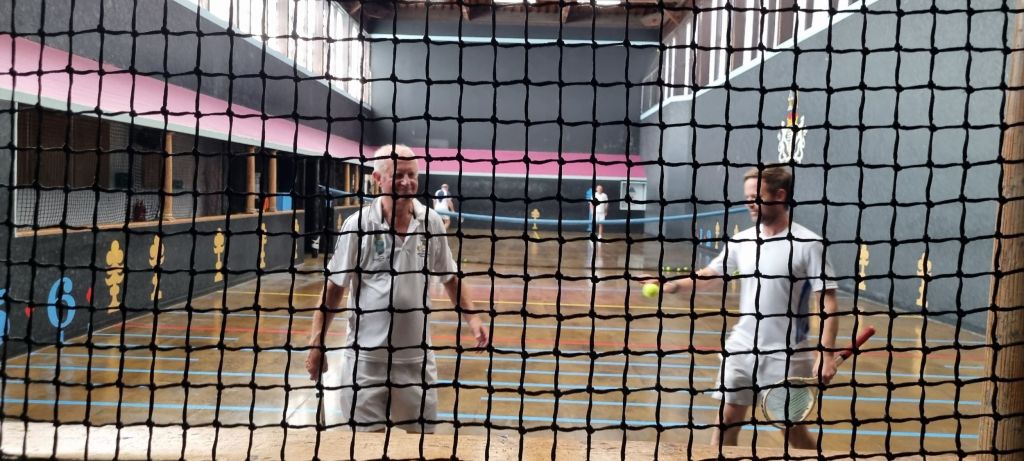
On our way out we get to see the original ‘real tennis’ court, still in active service today.
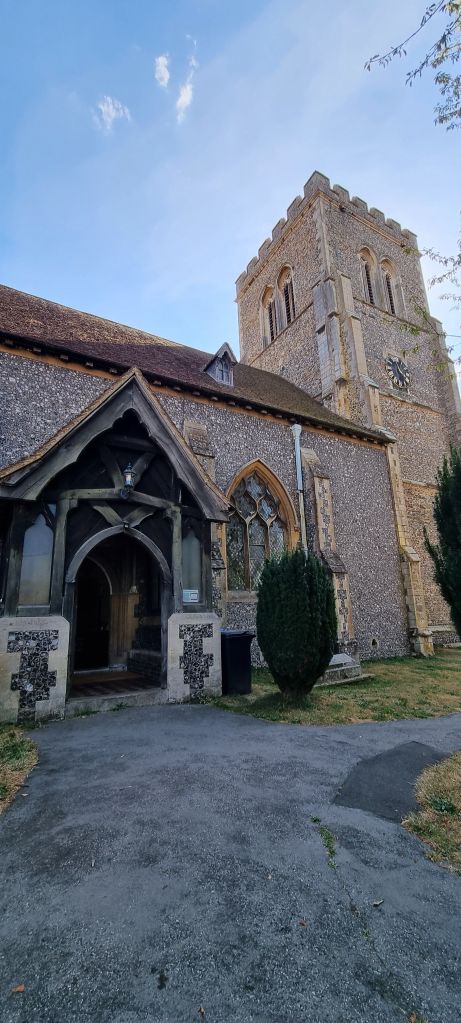
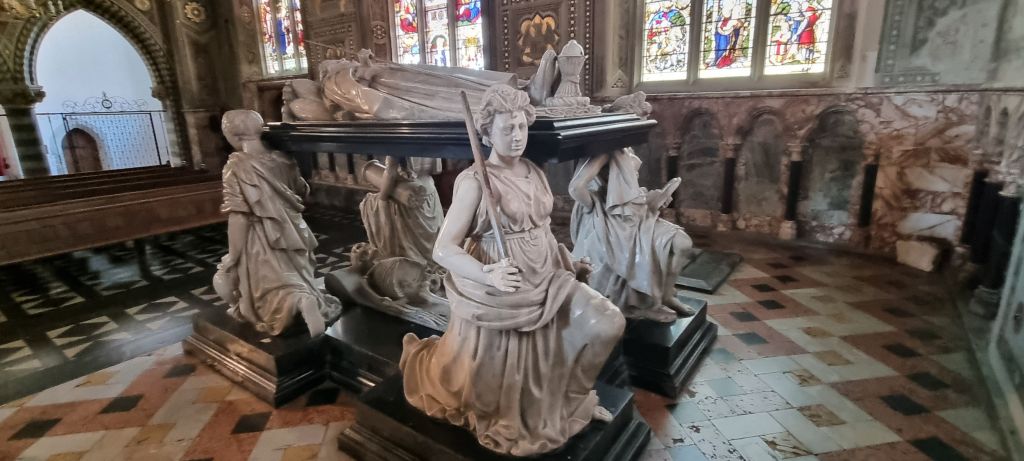
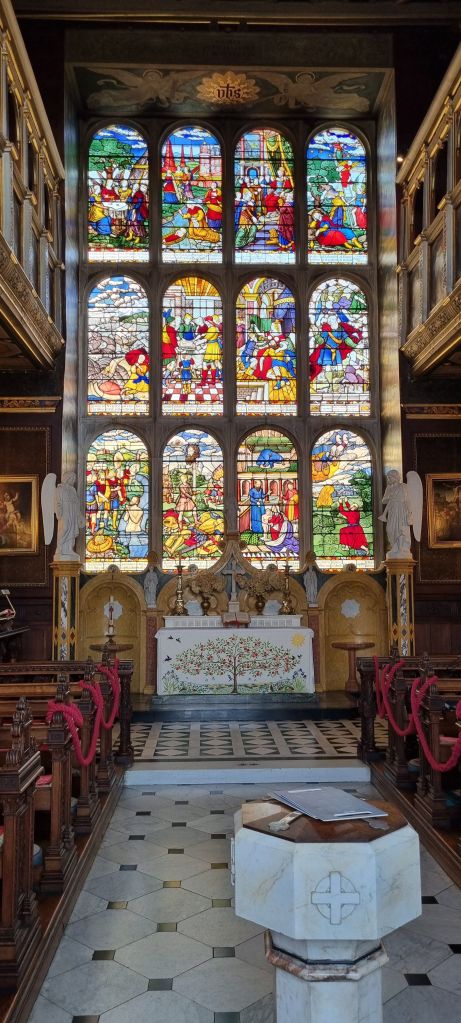
Sadly, the builder of all this magnificence, Robert Cecil, the 1st Marquess, never had the opportunity to enjoy it, dying at the early age of 48. He left on his own terms though, commissioning the same stonemason who carved the beautiful fireplaces in Hatfield to fashion his final resting place. He lies not far from home, just outside of Hatfield’s grounds in the church next to the Old Palace. A fitting end to an enduring legacy.