
Cambridge! We were meant to visit last year but 2025 travels were somewhat hijacked. 2026 however brings success – having whetted our appetite with a couple of Oxford visits, we’re keen to see what Cambridge has to offer.
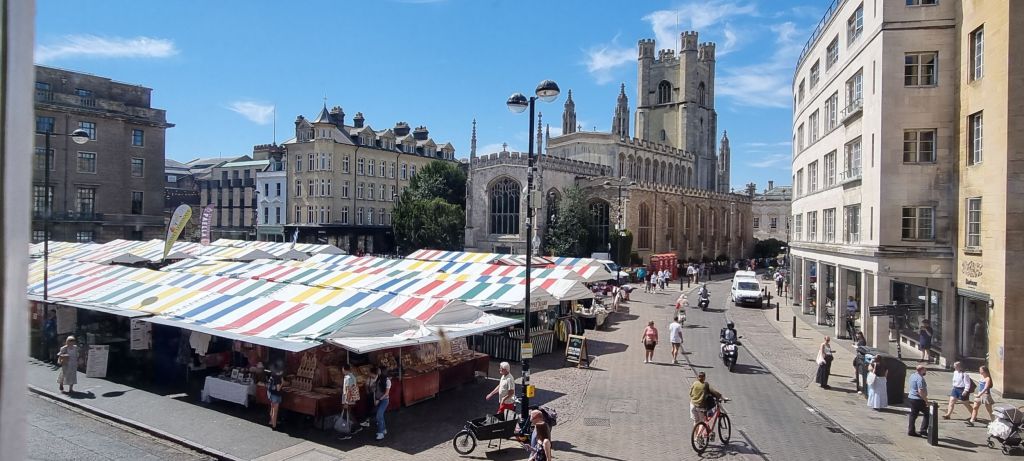
First impressions? It’s teaming with activity. With both tourism and summer break at their peak, Cambridge is bursting at the seams. A little overwhelming at first – it’s busy, busy, busy. There’s a bustling market square, a permanent fixture in the town’s centre. Cambridge was a market town long before it was a university town.
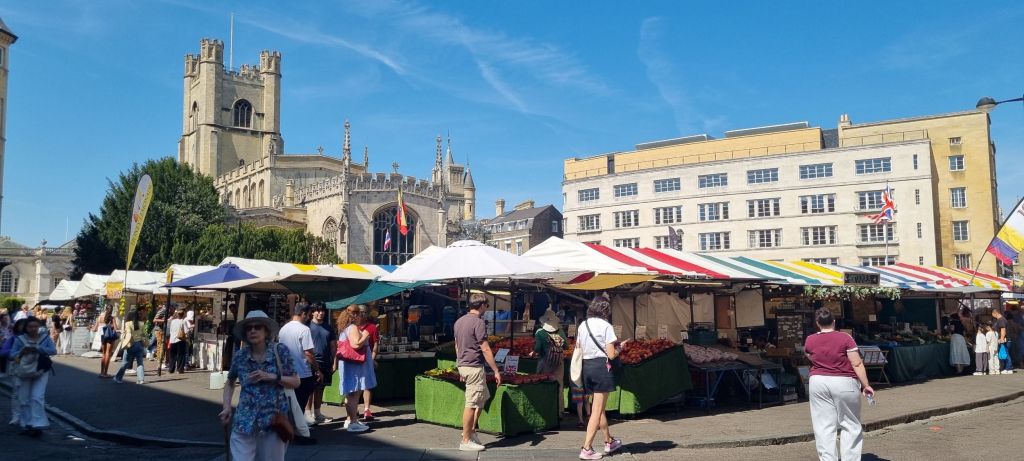
Gorgeous architecture greets us at every turn. It’s clear good map or guide is called for.
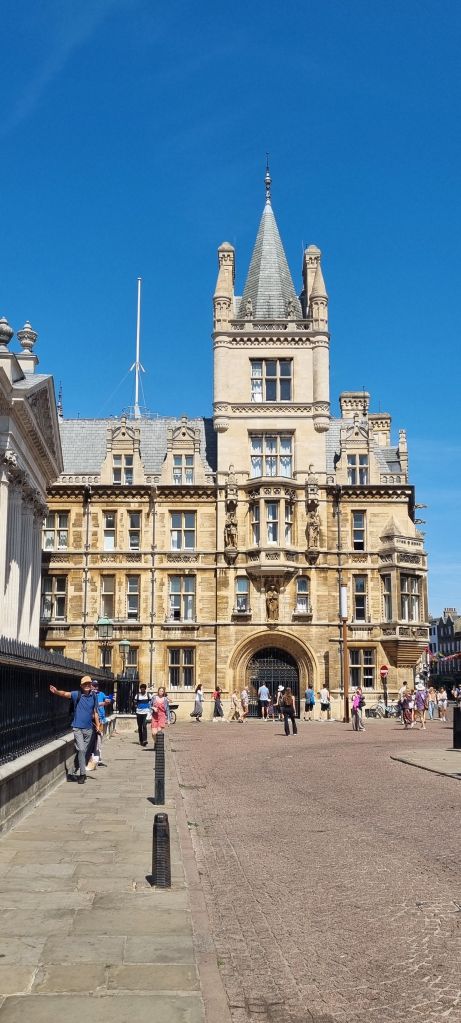
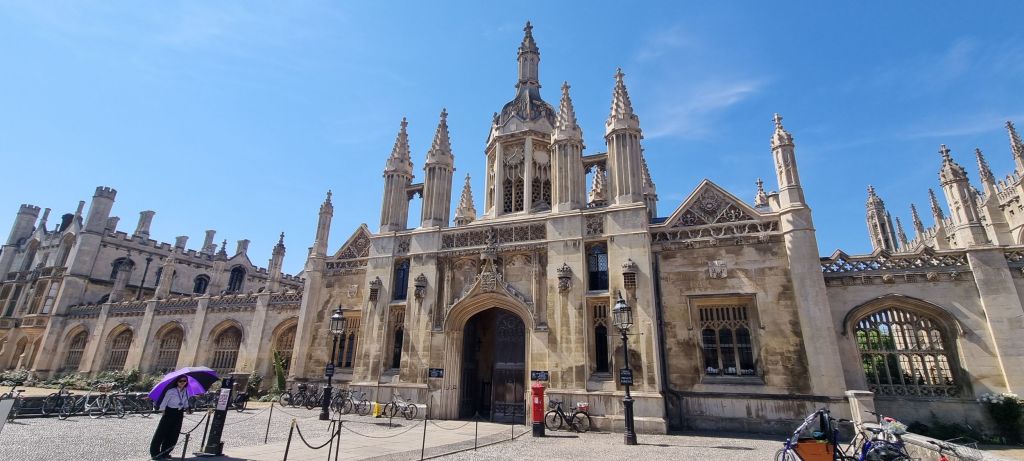
We decide an alumni led walking tour is the most sensible option. There are a number of commercial operators politely touting, but I suspect that Cambridge’s students will know it best. We opt for a combination ticket, the walking tour followed by a guided punt down the river Cam. Having set a course of action is a big relief – it’s beltingly hot and this alone demands efficient use of time. A hastily scoffed sandwich later, our tour starts at the back of King’s College Chapel, the grandest feature of the College.
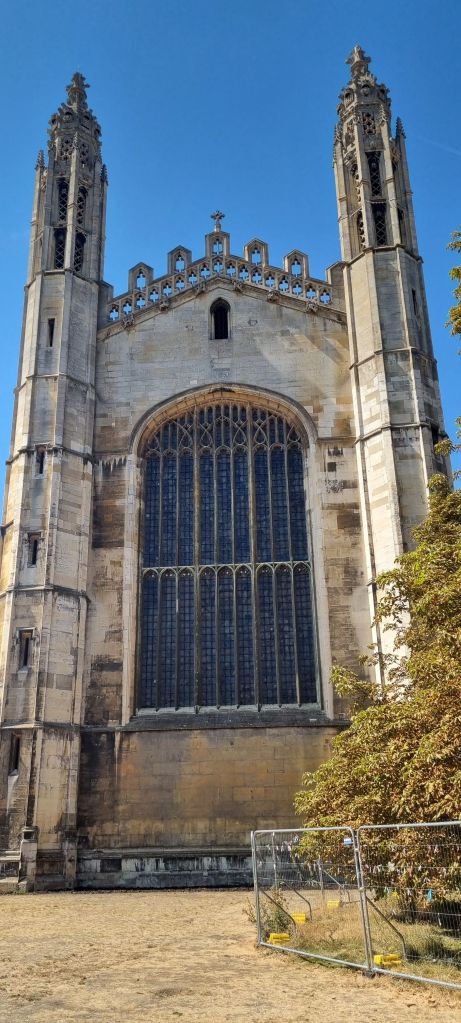
Our guide Alice has a wealth of knowledge and does a great job detailing the sights and their history as we wander the streets. We learn of the University’s grisly origins: following the death of an Oxford girl on a raucous scholars’ night out. In the 13th century scholars were typically priests and monks, to whom canon law applies. Consequently, locals were left without legal recourse for her death, leading to riots. Several scholars were hung, forcing others to flee – they settled in Cambridge in 1209.
Early scholars lived in rented rooms amongst Cambridge locals, creating new friction over tax exemptions and separate legal rights. Canon law doesn’t appear to be historically popular, does it? To seperate students from town folk Peterhouse was founded as the first College in 1284.
Later, I learn a bit of earlier history: Romans built the first strategic fortification on high ground near the (then) only river crossing. Danish Vikings followed, establishing a fortified burgh in 875 AD, naming the settlement Grantabrycge, being ‘bridge over the Granta’, as the river was then named. Over centuries, Grantabrycge shifted phonetically to Cam-bridge, prompting the river’s name to change backwards from Granta to Cam. Fascinating!
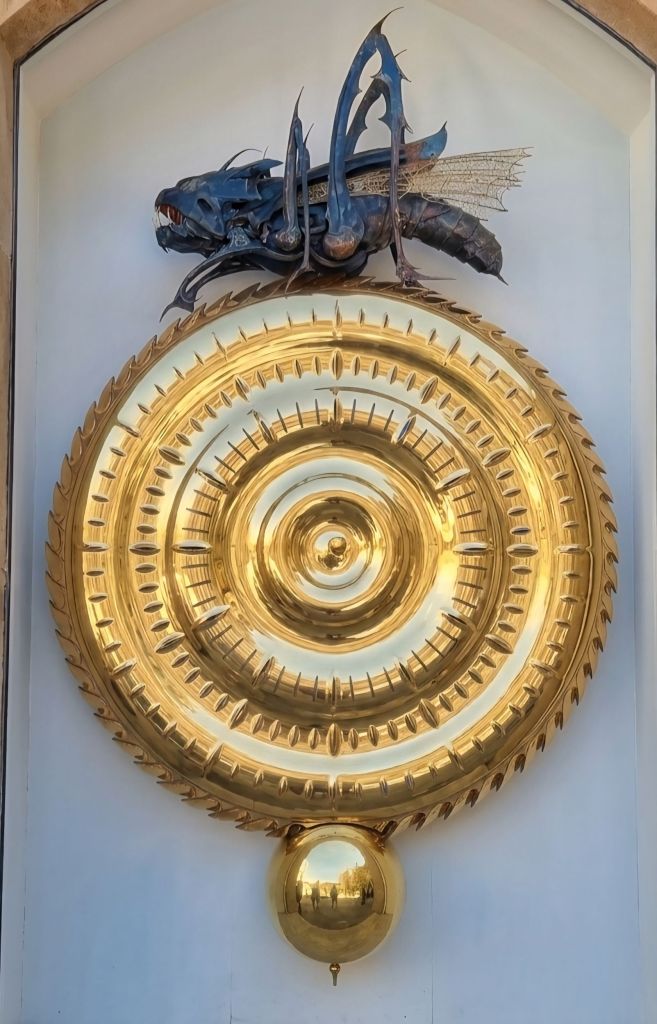
Our tour passes the Corpus Clock, a newish addition to Cambridge. Unveiled by Steven Hawking in 2008, it’s designed to depict the fleeting nature of time – that giant grasshopper ‘eats’ a second at a time as the giant gold clock face turns. He looks rather bitey and vicious….
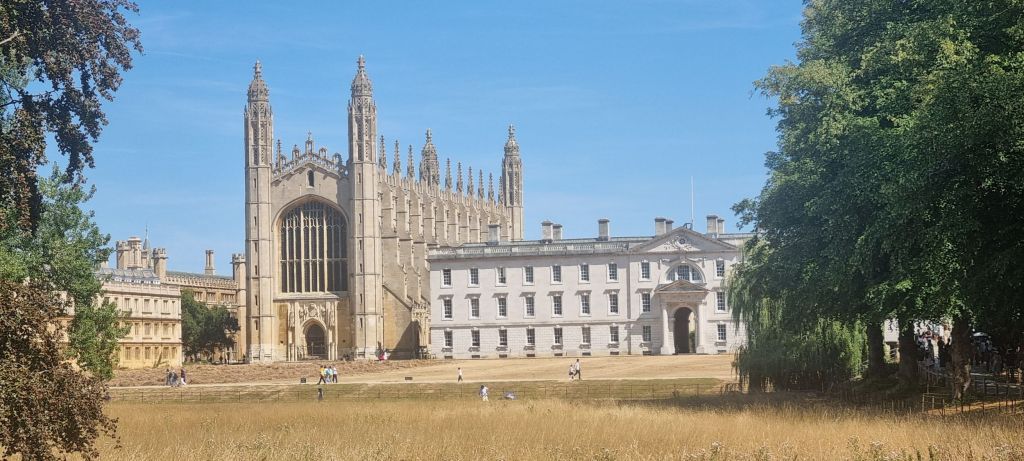
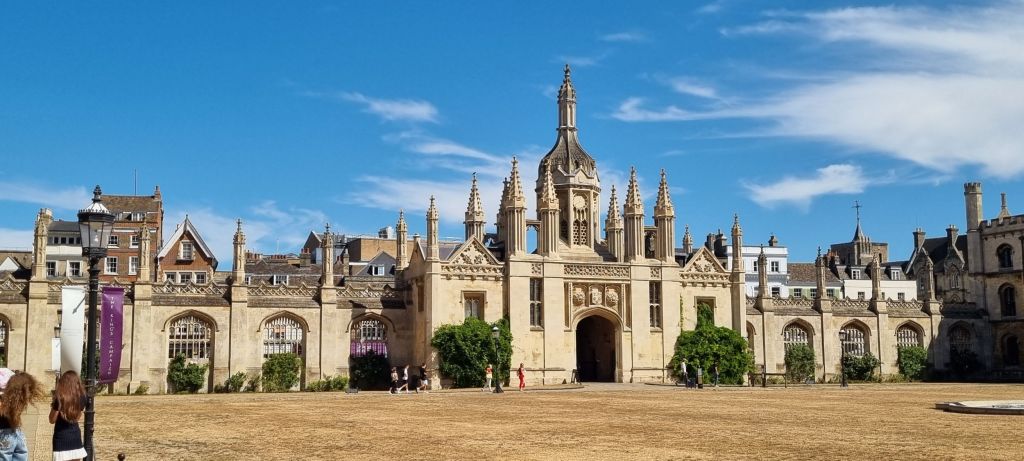
There are now 31 individual colleges in Cambridge, the most recent opening in the 1990s. Whilst originally male bastions, today most are co-ed with the exception of two that remain resolutely girls only. Our walking tour takes in the major ones: King’s College, Pembroke, St Catherine’s, Queens College, Trinity, St John’s and Magdalene College. Of these, King’s College is by far the most opulent with a strong history of royal support and significant land holdings – it’s said that the College owns so much land that it’s possible to walk from Cambridge to London without once leaving King’s College land. If any of my Business Manager colleagues are reading…look away now lest jealousy befell you – King’s College has a staggering £2 billion asset base. Gulp. Imagine the maintenance program! Of its many assets, the jewel in the crown is the King’s Chapel. We’ll be coming back to see it tomorrow, but here’s a sneak peek
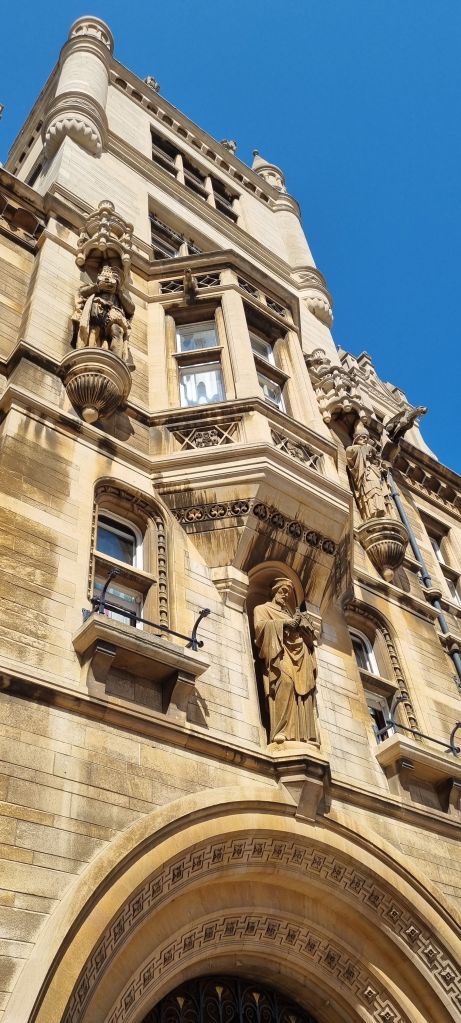
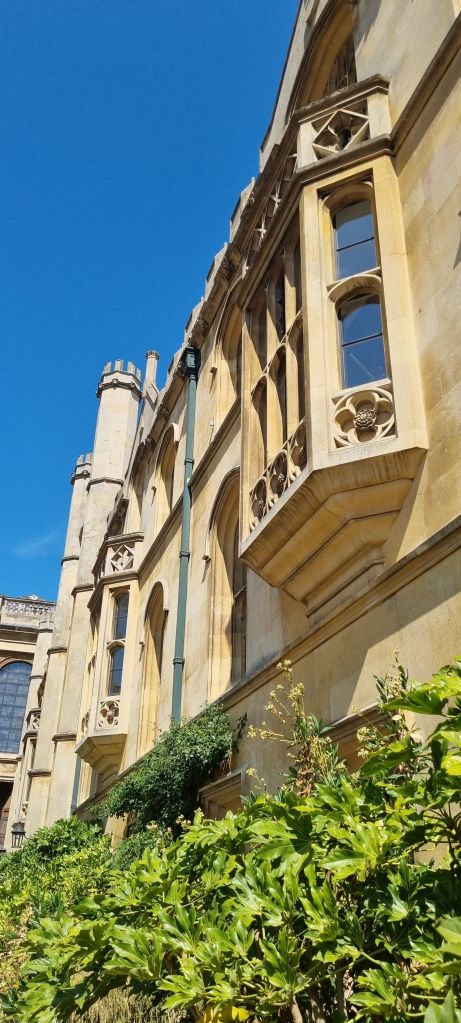
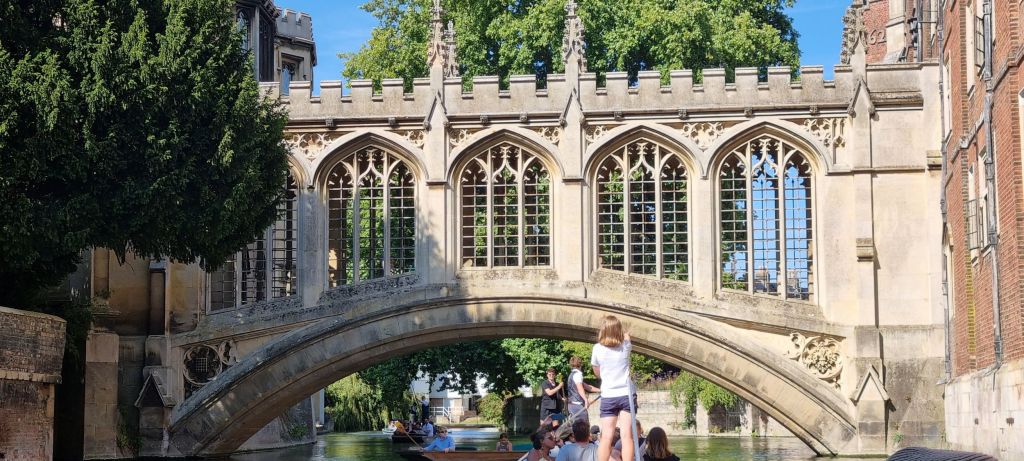
Other sights on the tour include the Bridge of Sighs, so named after the Venetian bridge, despite looking nothing like it. Apparently somebody pulled a fast one on Queen Victoria, telling her it was ‘just like it’ and the name stuck. It’s the bridge students cross to get to their exams – locals attribute the sighing thereto. Seems legit – Oxford has a similarly purposed and named bridge, although its it’s between two buildings.
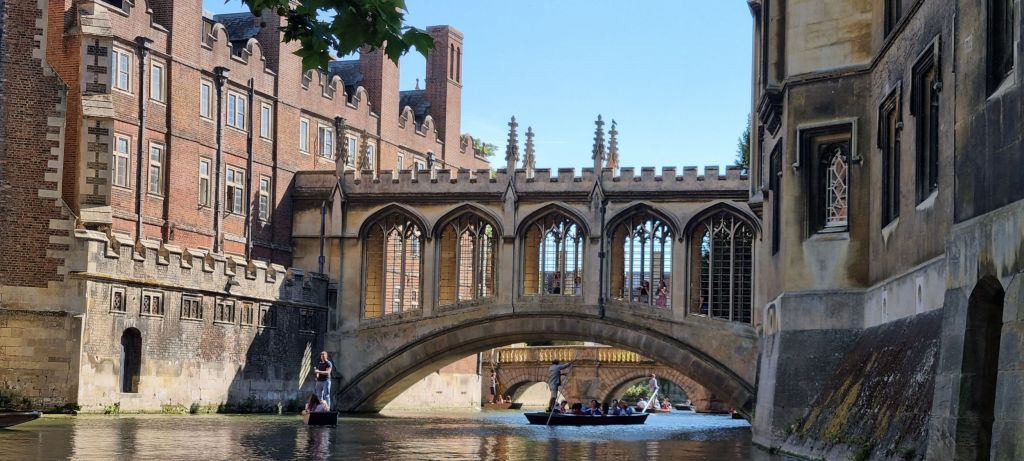
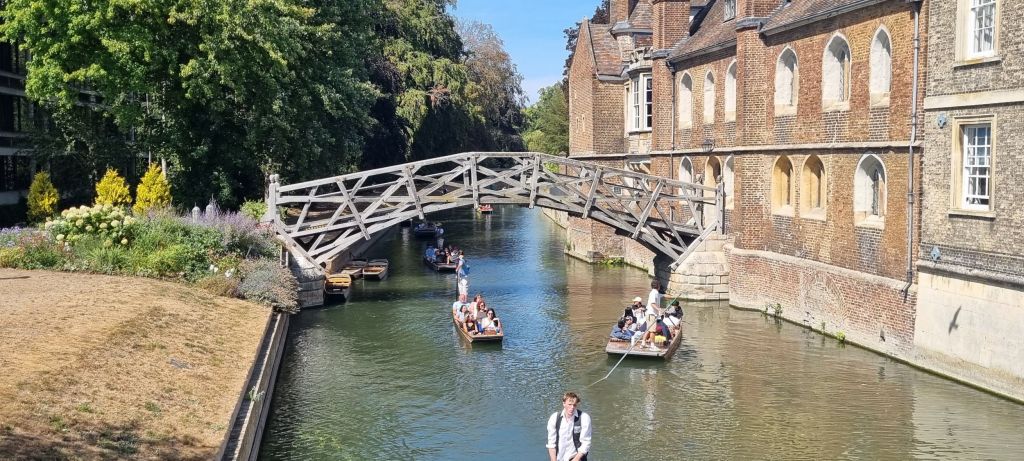
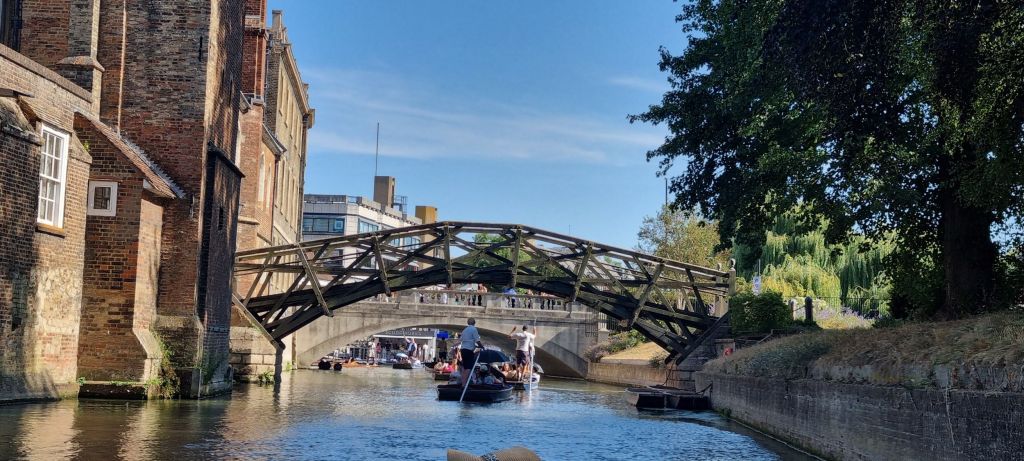
There’s also the mathematical bridge, but more on that from our punting tour
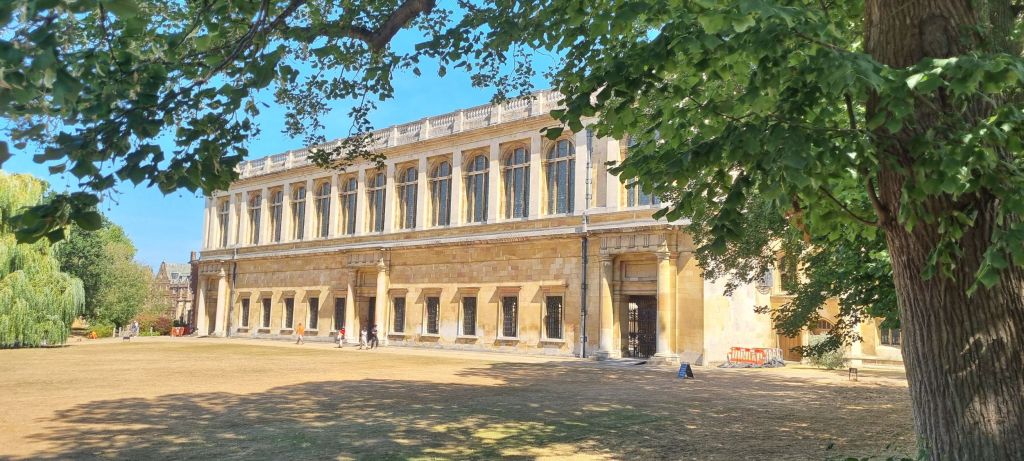
We see the Wren Library, home of the original Winnie the Pooh manuscript amongst thousands of scholarly tomes.
There’s Trinity College’s relatively modern library set on the rivers edge,
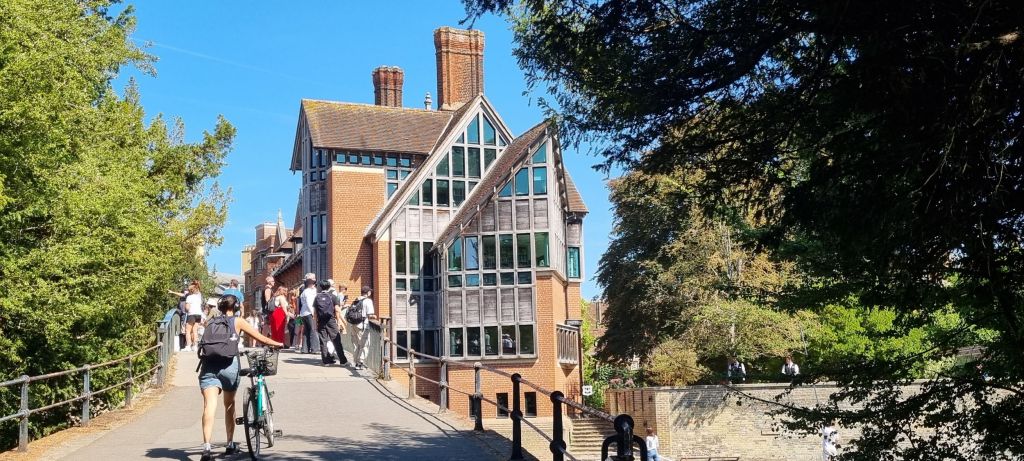
and we get a glimpse of the punts moored under Pink Floyd’s favourite pub (the white one on the right) – I should’ve taken notes as the buildings do become a bit of a blur. I’m blaming the heat…..
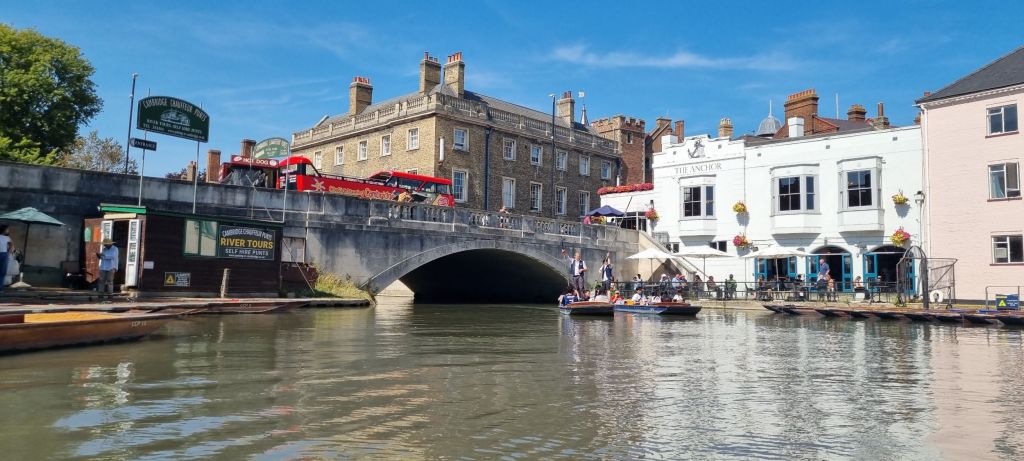
We pass the pub famous for the Double Helix DNA Eureka moment – apparently on discovery the responsible scientists rushed in to announce they’d discovered the very secrect of life.
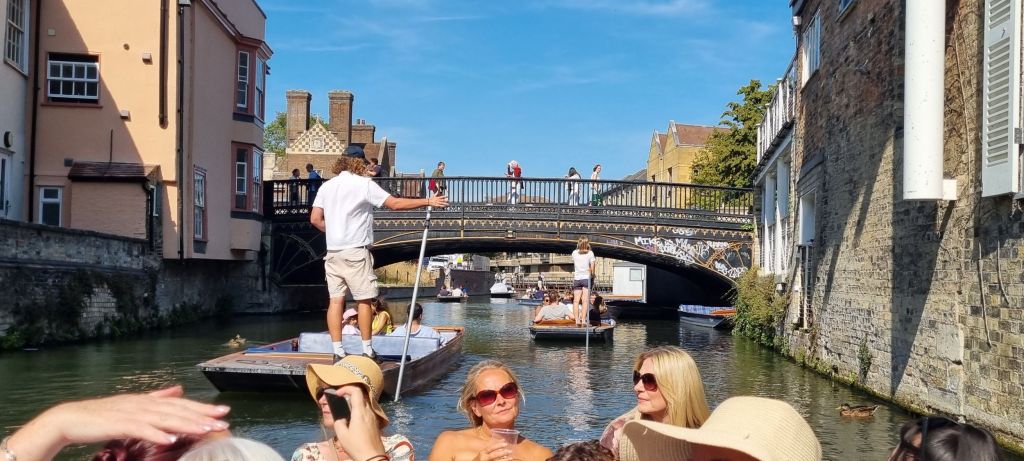
It’s not long before our tour is over and it’s time to cross Cambridge to punt down the River Cam. Punts are flat bottom wooden boats used in shallow waters, typically propelled from a standing position by pushing a long pole. First used in medieval times by fowlers, fishermen and reed cutters, punting became a popular activity in Edwardian times. Picture young men in striped jackets and boaters swanning about while young ladies with parasols peek under their lashes, pretending to not be impressed and you’re halfway there.
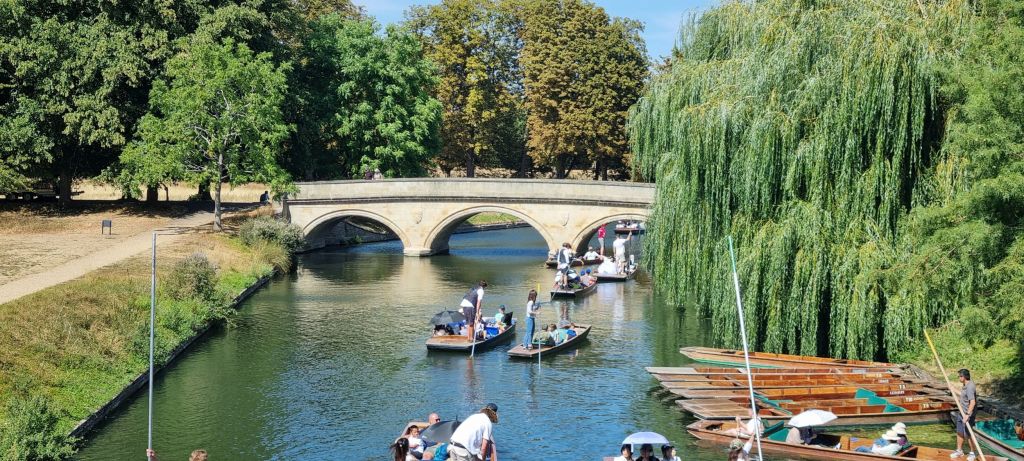
It’s mid afternoon by this stage and the water is a very welcome sight. Himself and I are joined on the Punt by a girls group, a few drinks in, determined to have a good time.
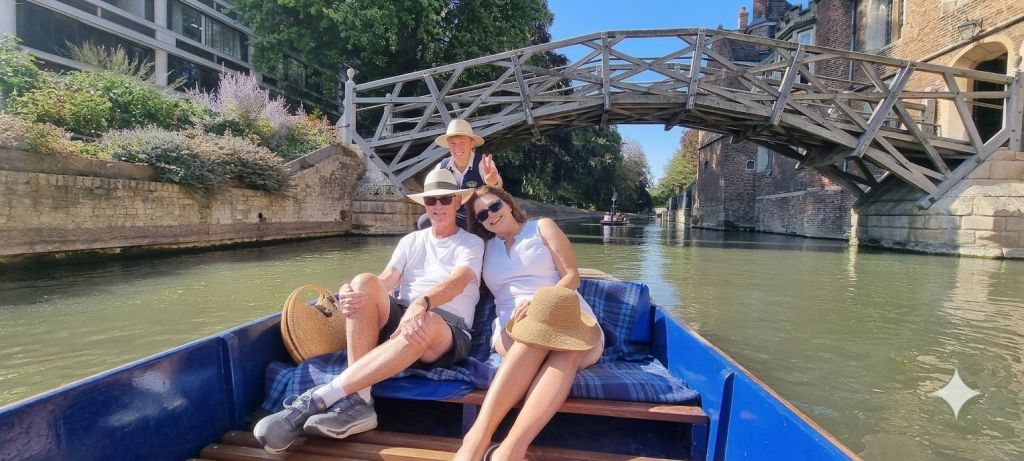
I feel for our young guide Alex – a quiet and compliant group they’re not, but they are fun. Alex is a delight – he’s anxiously awaiting tomorrow’s exam results to see if he’s going to be successful in gaining entry to Oxford. Young he might be, but he’s just as knowledgeable as our first guide as he steers us along the ‘The Backs’, a one mile stretch of the Cam that passes some of Cambridge’s finest buildings.
We see many of the same Colleges and sights as our earlier tour but from the cool of the water. We pass the Wren Library again, a better view this time. It was built in 1695 for Trinity College and designed by Sir Christopher Wren. In addition to its collection of 75,000 books and Winnie the Pooh, the Wren holds the largest collection of Issac Newton’s personal library.

We see New Court competed in 1831, the so called ‘wedding cake’ building, part of St John’s College,
and get up close views of both the Mathematical Bridge
and the Bridge of Sighs as we pass under them. We also learn that the bars serve a practical purpose, designed to prevent students climbing in or out of St John’s College at night.
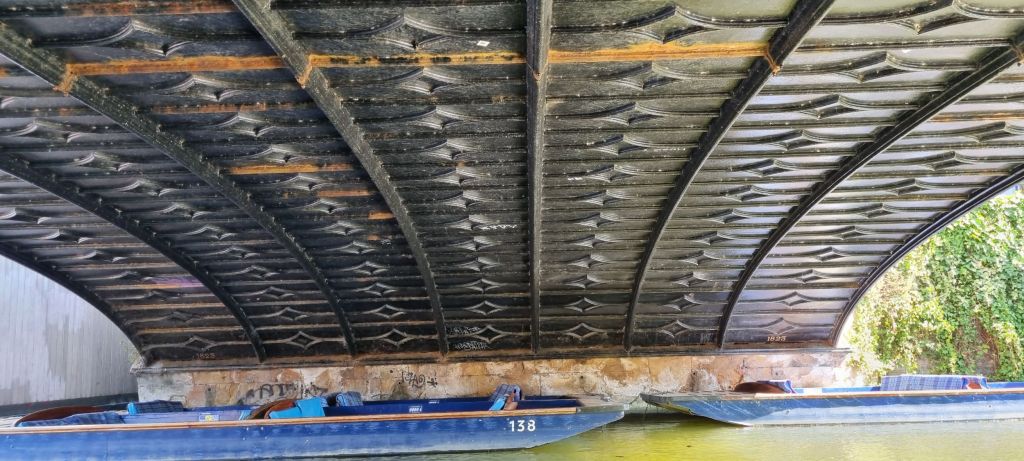
We also pass under Magdalene Bridge, once the city’s first wooden bridge, built in the 8th century. At the time, its commercial and strategic value was of such magnitude that it was called the Great Bridge or the Cam-bridge. There is some debate whether this or the earlier Viking story led to Cambridge’s name. The present cast iron version was constructed in 1823. We also see the front of King’s College Chapel – I’m very excited to see it tomorrow.
It’s over all too soon and we’re back to where we started. Here’s a tip for young players: if you’re going punting, a mini might not be your best option. Getting out of the punt without flashing anyone and not falling overboard takes a degree of skill.
Alex gets a rousing round of applause. He really was a sweetheart, sharing the spot where his father proposed to his mother, adding and they’re still happy 21 years later. Awwww.
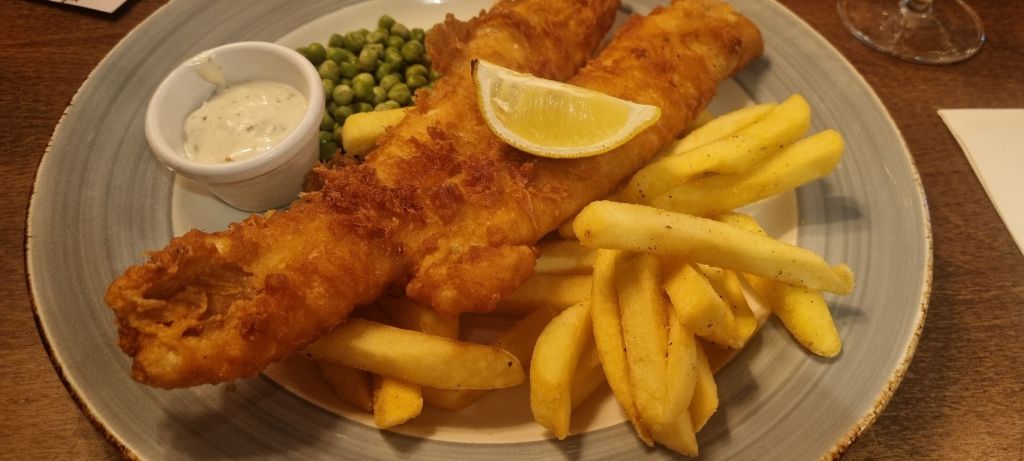
We toddle off home in a baking bus. Airconditioning people! Either that or make buses with windows that open for the love of God. . Neither of us could bear to cook so it’s fish and chips for dinner at the local pub. I’m not entirely convinced about the peas, mushy or otherwise – I prefer a salad.
Our second day in Cambridge starts at a slower pace. A good deal of pressure is off now that we’ve toured the main sites. Instead we start with a leisurely lunch. Himself has spotted the Market Inn, a central spot within unusual menu twist. While most pages detail Michelin worthy European standards, tucked away is a small Asian menu that looks mouth wateringly delightful. We start with tempura prawns and pan fried dumplings followed by unctuous pork belly and Korean fried chicken. Yum.


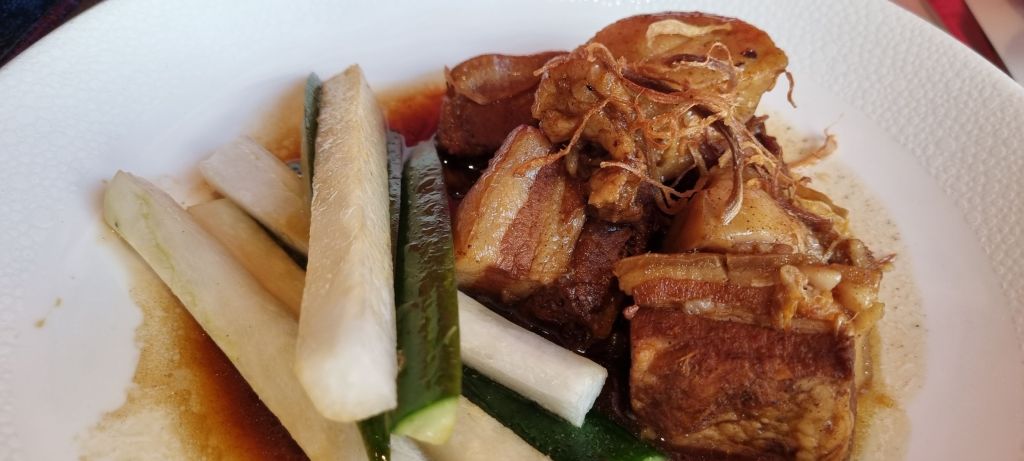
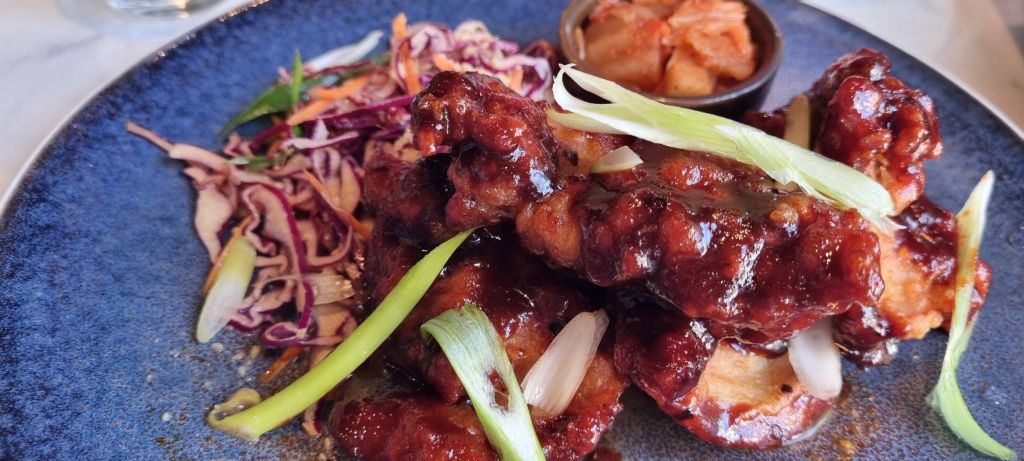
And the view’s not bad either…
Tummies suitably sated we make our way to King’s College Chapel. We learn that the the Chapel was created under five Kings, four master Masons and an army of craftsmen, taking over a century to build.
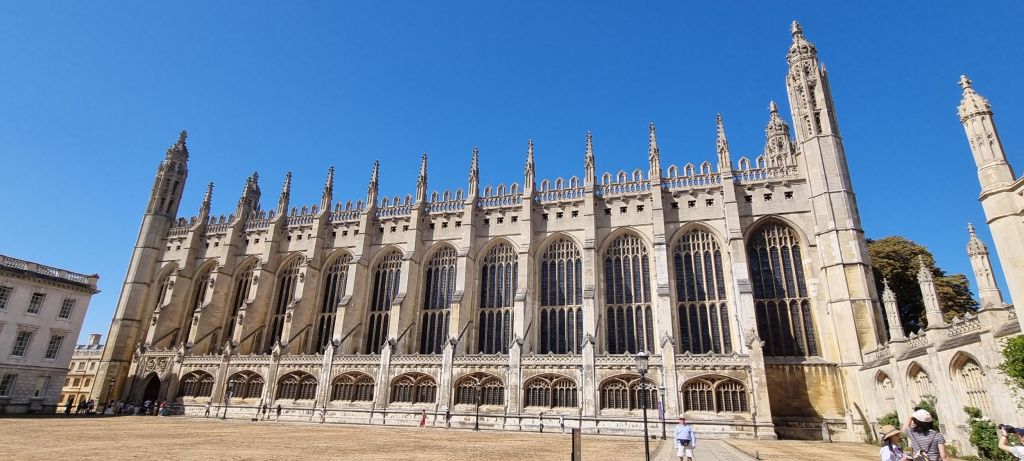
The Chapel’s foundation stone was laid by Henry VI in 1441. At the time it was intended for 12 impoverished students, extending to a grand plan of 70 students. By anyone’s measure, it’s a very grand plan for so few students. To facilitate the Chapel, a number of compulsory acquisitions were made in medieval Cambridge, leveling houses, shops and even a church between the river and the High Street. It took three years to purchase and clear the required land. Red tape was alive and well even then it seems, even if you were King.
The initial design was designed with grandeur in mind. The King was determined that no other College Chapel would be equal in size or beauty. Construction continued through the 1400s under the war of the Roses and the Tudor Dynasty under Henry VII and Henry VIII. King’s College Chapel was only completed after Henry VIII died in 1547, marking 100 years since the laying of the foundation stone. It was recognised as one of Europe’s finest late medieval buildings very much the ‘work of Kings’. Indeed.
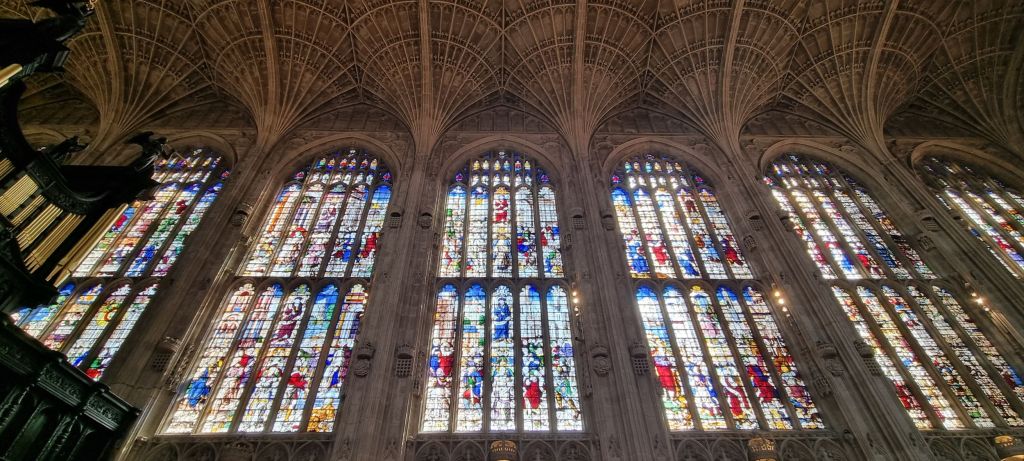
The Chapel’s most striking feature is the fan vaulted ceiling designed by Master Mason John Wastell. The ceiling was constructed between 1512 – 1515 and it’s absolutely magnificent. I’d happily lie on the floor and stare at it for hours.
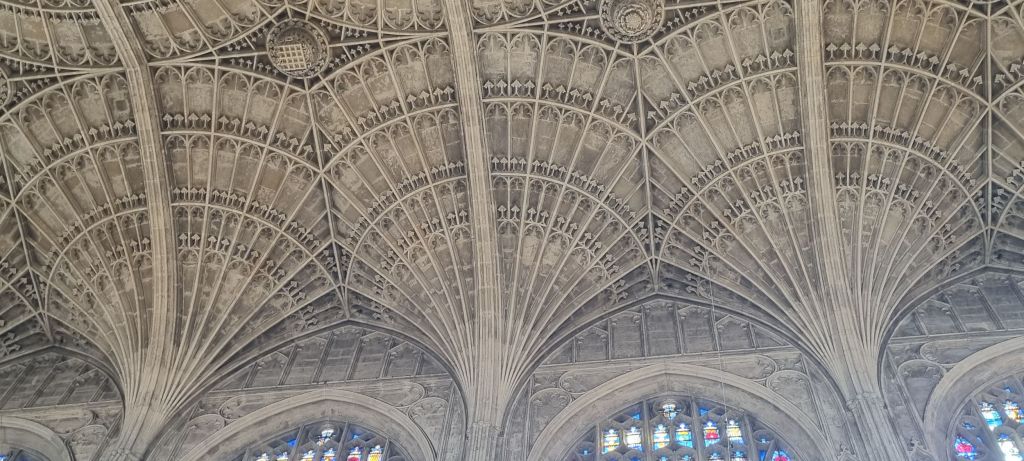
Wastell was the last of the Chapel’s Master Masons, the others being Reginald Ely, credited with much of the early design of the Chapel, followed by John Woolrich and Simon Clerk. Imagine a 100 year timeframe as a project management exercise…under five Kings,each determined to leave their individual stamp.
We see the Chapel organ, housed in an elaborately carved oak screen. It’s so dark I though it ebony at first but oak it is. The screen was commissioned by Henry VIII, to commemorate his marriage to Anne Boleyn. Who he went on to execute three years later. And they say hell hath no fury like a *woman* scorned. Oh really? Whoever coined that phrase clearly hadn’t considered Henry.
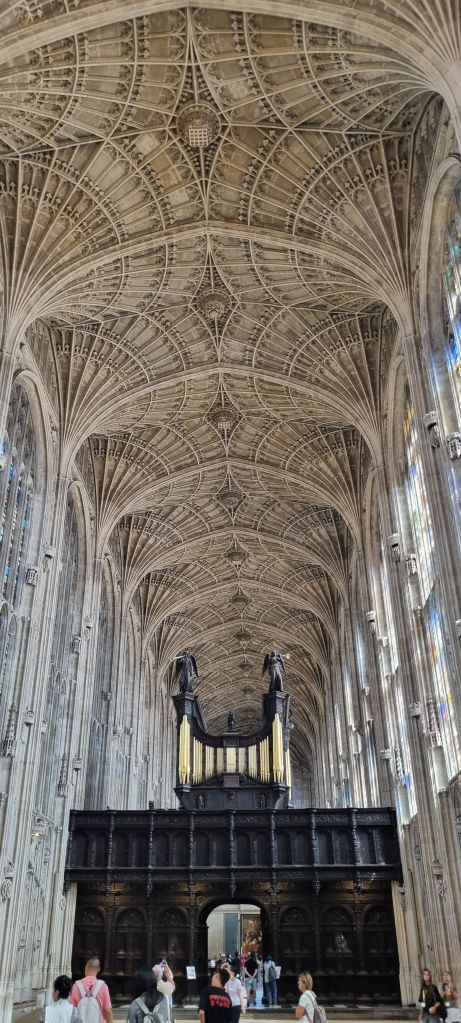
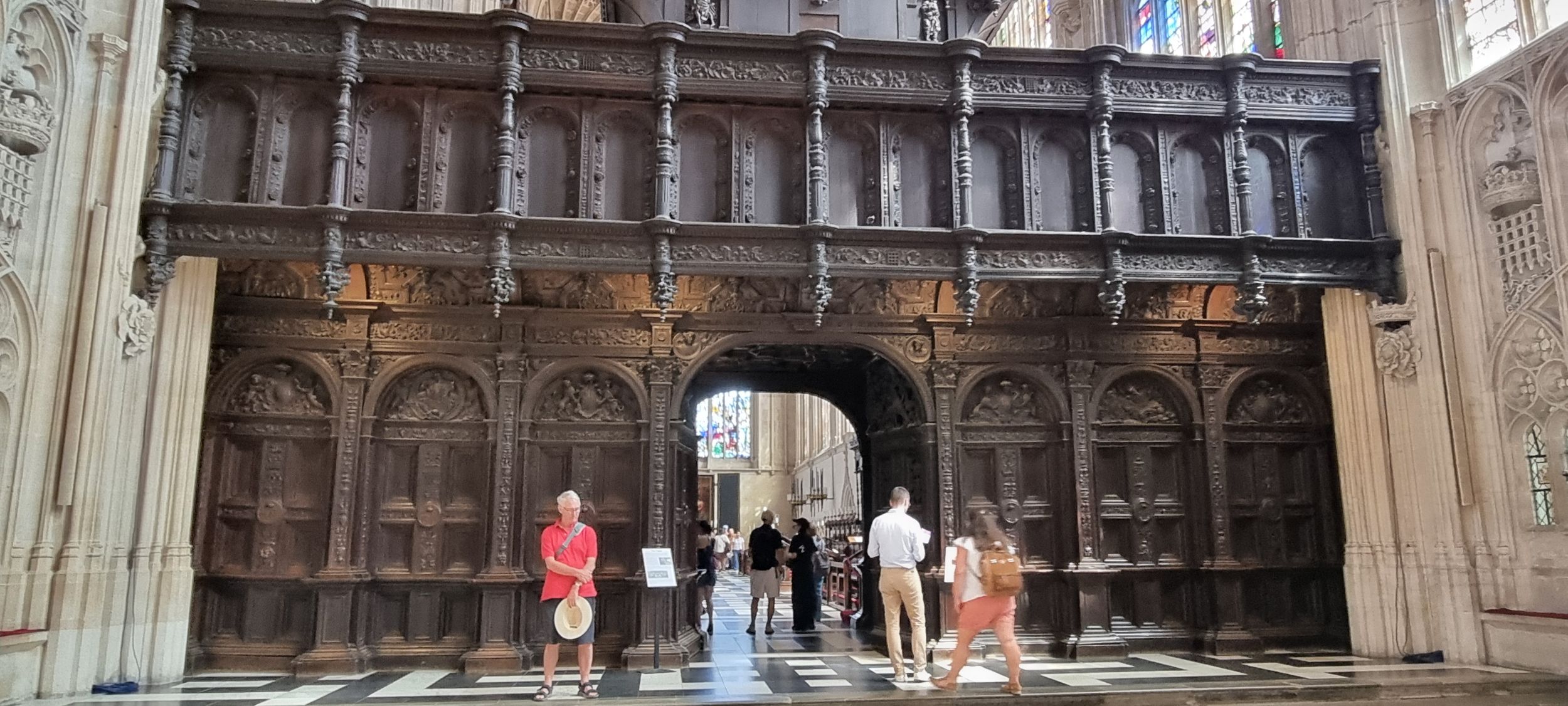
We tour the length and breadth of the Chapel learning more of its construction and history, see the baptismal font reserved for Alumni, the choir and a series of private chapels. It’s all very beautiful. The Tudor Rose features prominently.
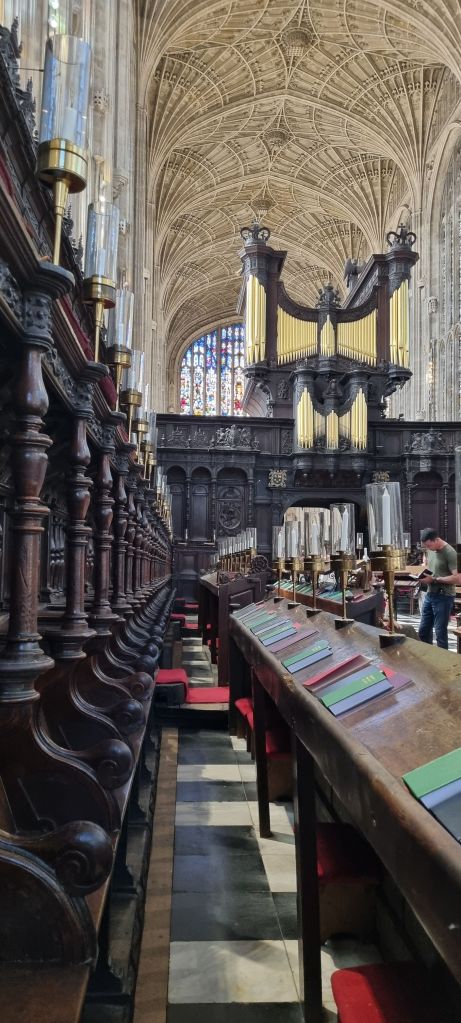
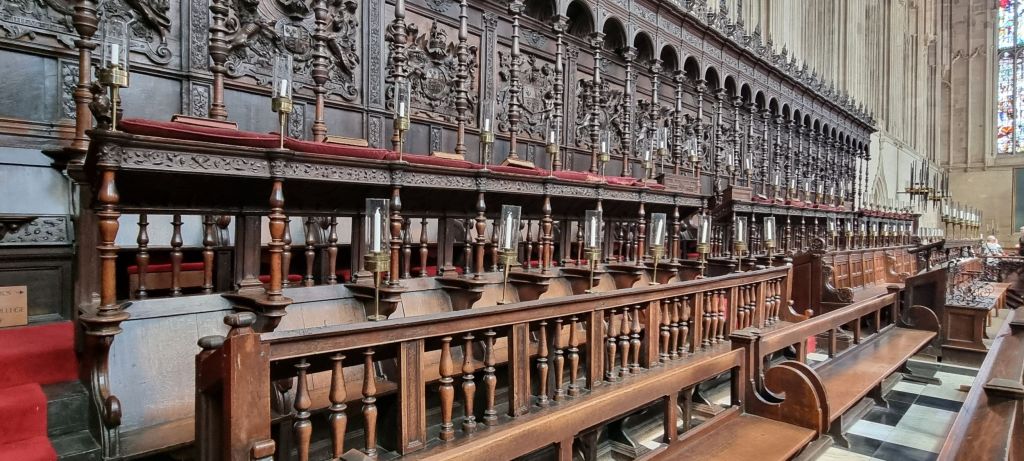
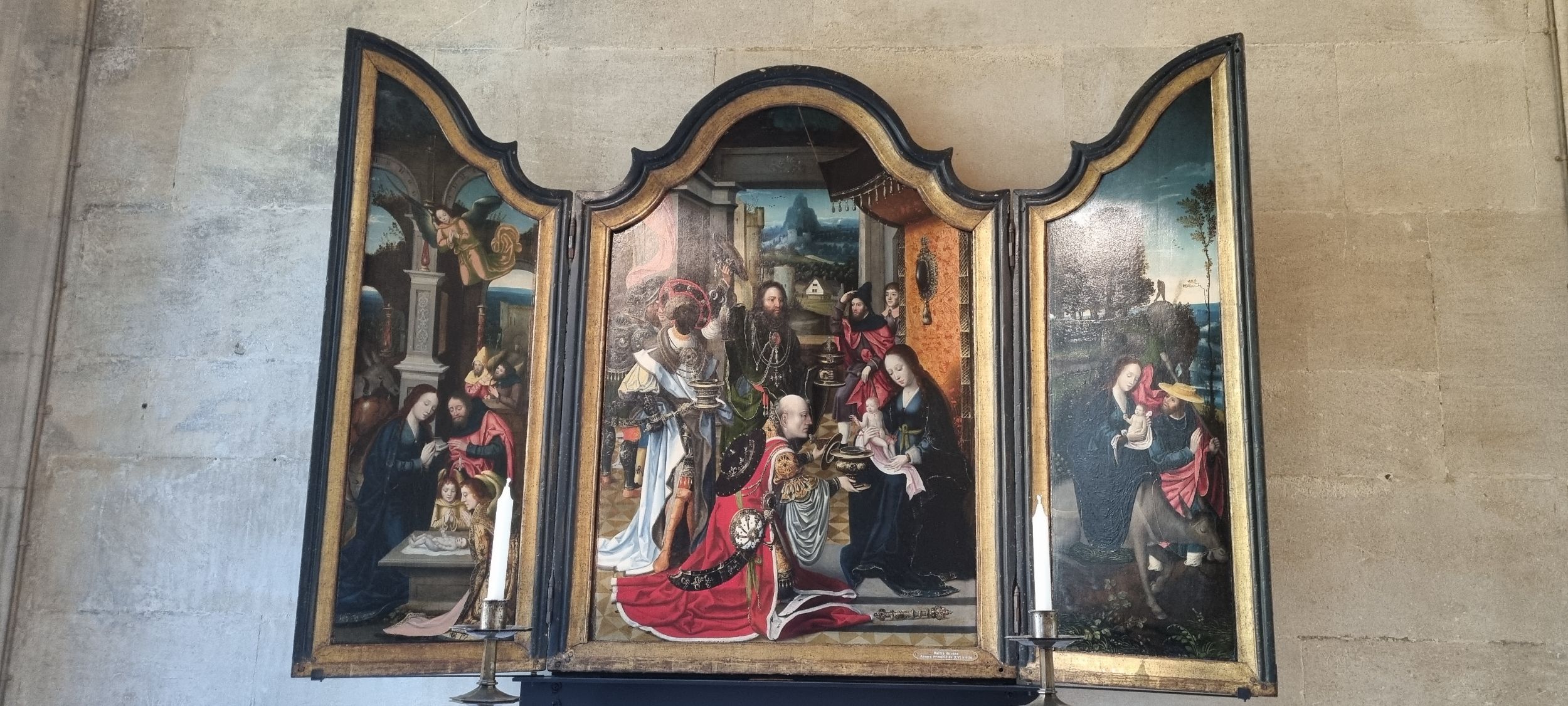
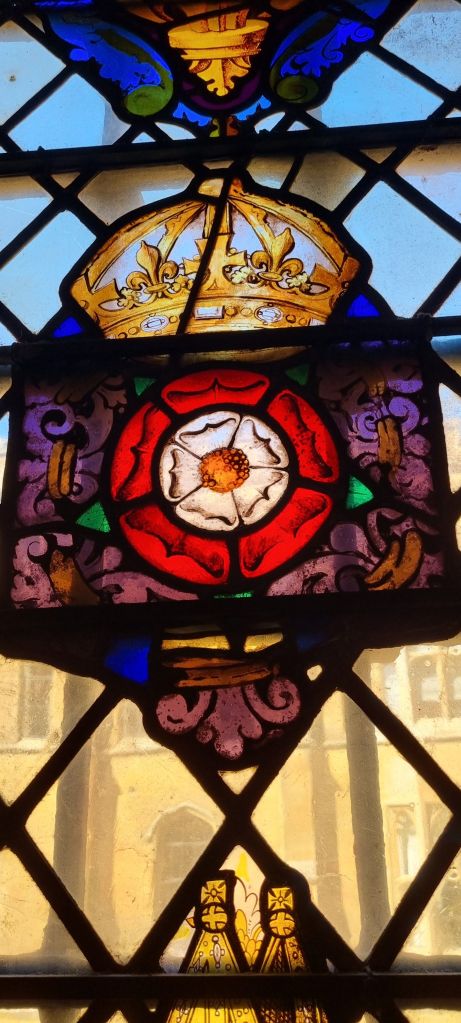
Great care was taken in WWII to protect the stained glass windows. Every single panel was removed and stored for safety to protect from the risk of bombing. The work this would’ve taken is extraordinary – the Chapel is enormous.
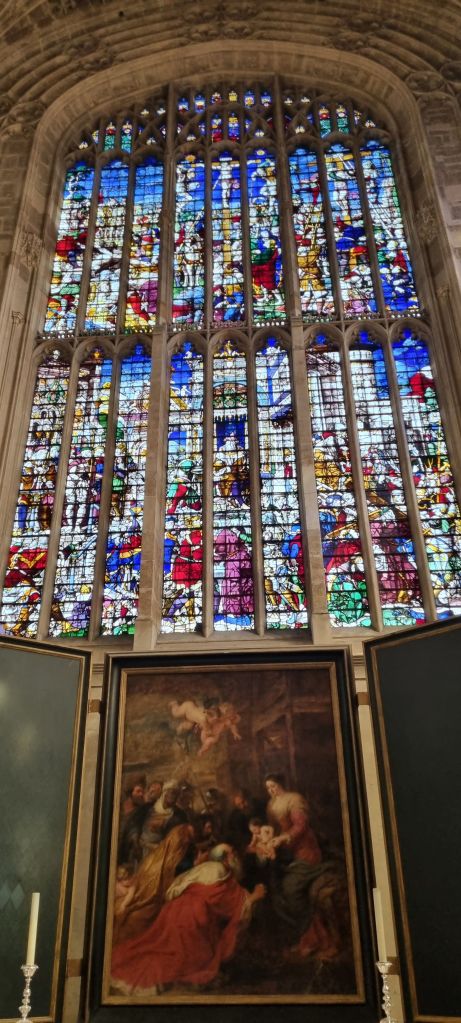
Oh and did I mention the Ruebens? The altarpiece features in magnificent Rubens, purchased for what was then a record price and donated to the Chapel.
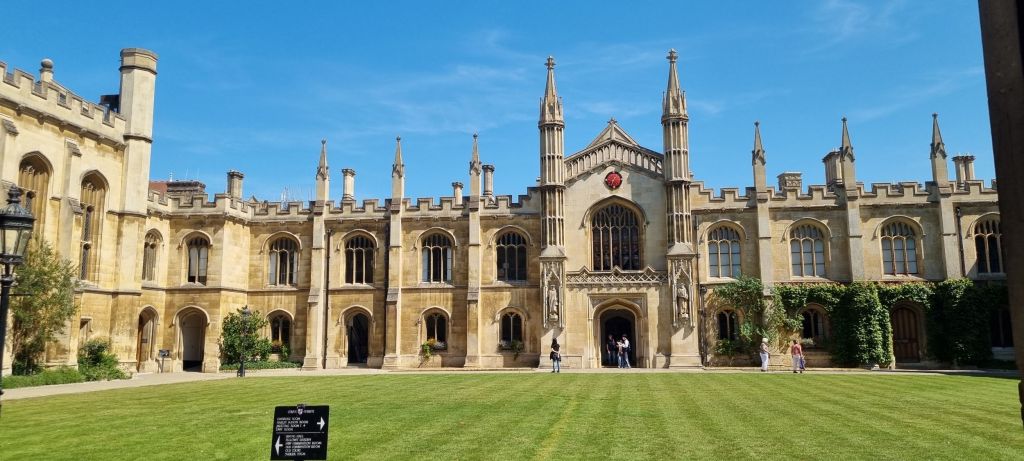
We’re also treated to a peek at the internal courtyard.
It’s another scorching day. Himself has been bestted by the heat and can’t be tempted to tour any of Cambridge’s very fine museums, wander though the libraries, churches or botanical gardens. *Sigh* Instead we catch the bus from hell back to the motorhome – its interior so intensely hot that is makes yesterday’s ride feel like a picnic under the shade of a willow tree.
Cambridge was a delight – well worth a visit and very possibly deserved a third day. Alas, an appointment the following day beckons us away. That grasshopper had a point – there’s just never enough time.

