
We’re off, by all accounts, to the glorious perfection of Jardin de Marqueyssac, aka The Hanging Gardens of Marqueyssac. The gardens are are betwixt Beynac-et-Cazenac and La Roque-Gageac, within the clifftop Chateau de Marqueyssac, one of five key chateau that overlook this section of the Dordogne river.
But first, we have to get there. Whilst there’s motorhome parking, it’s understandably at the base of the cliff. It’s a blindly steep, aerobic climb up. I’ve never been more grateful for having a house with stairs – there’s fit, then there’s ‘hill fit’. Running up and down stairs frequently certainly helps with ‘hill fit’.
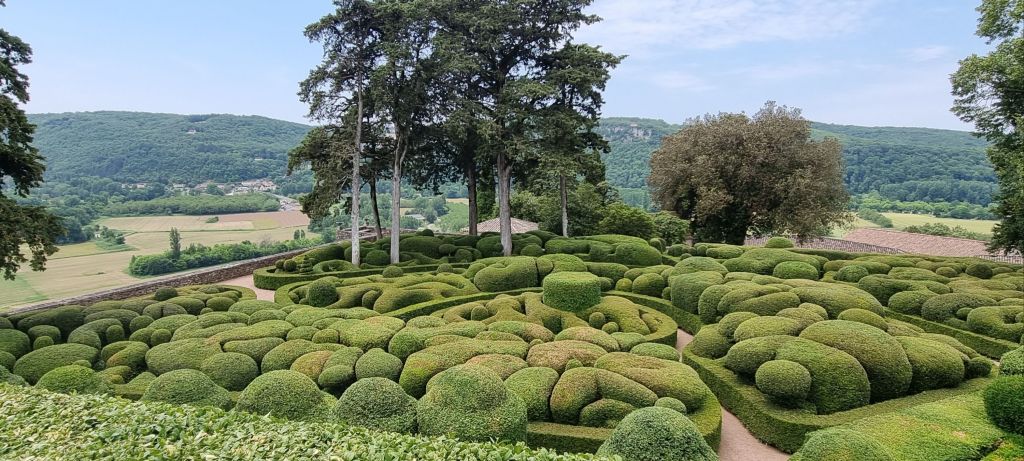
We eventually get to the top and can I just say, if you ever wanted a case of garden envy, this would surely be the place to catch it. The chateau grounds span the whole cliff top offering spectacular views on all sides. They’ve been awarded three stars by the Michelin Guide.


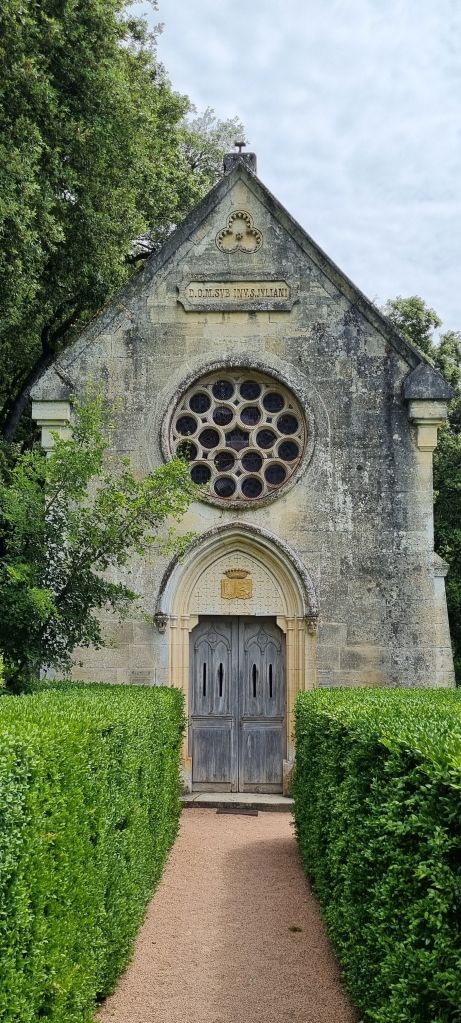

There’s an aviary, chapel taxidermy creature display, free ranging fancy peacocks and extraordinarily intact 150 million year old enormous dinosaur skeleton that’s been turned to stone over millennia. Because who doesn’t want their very own dinosaur skeleton? This one came all the way from America – there’s a documentary waiting to be made, right there.


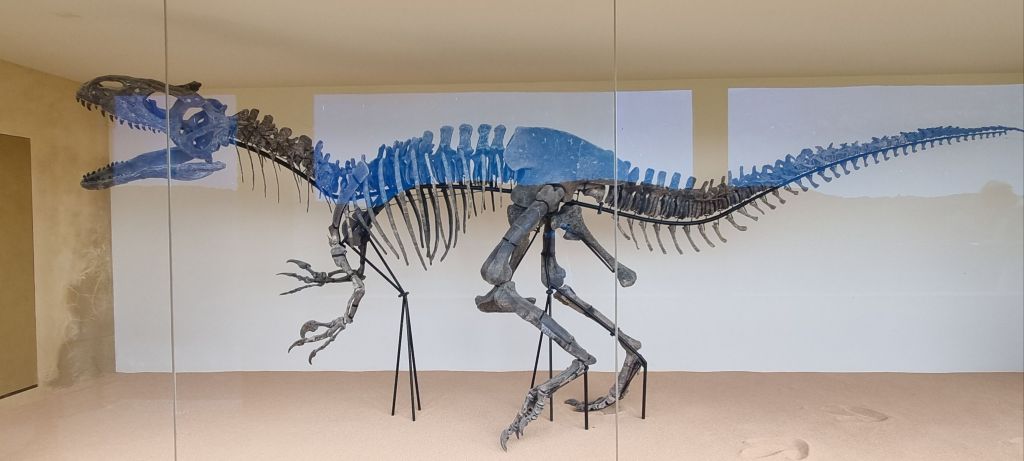
Marqueyssac is a private estate, held by the family since 1692. A series of terraces were established at the time of building, but the garden we see today is largely thanks to the vision of Julien de Cerval who inherited the property in 1861. A passionate devotee of gardens, following a trip to Italy, he spent the last 30 years of his life focused to the beautification of the grounds initially planting tens of thousands of boxwoods and ornamental species including limes, laburnum, Cypress and umbrella pines, elms and plantains. Later, he redeveloped the southern side of the gardens adding belvederes, pathways, staircases, a rotunda and redeveloping the chapel. Extraordinarily, all of this work was undertaken whilst the estate maintained an agricultural focus as a fully working estate.

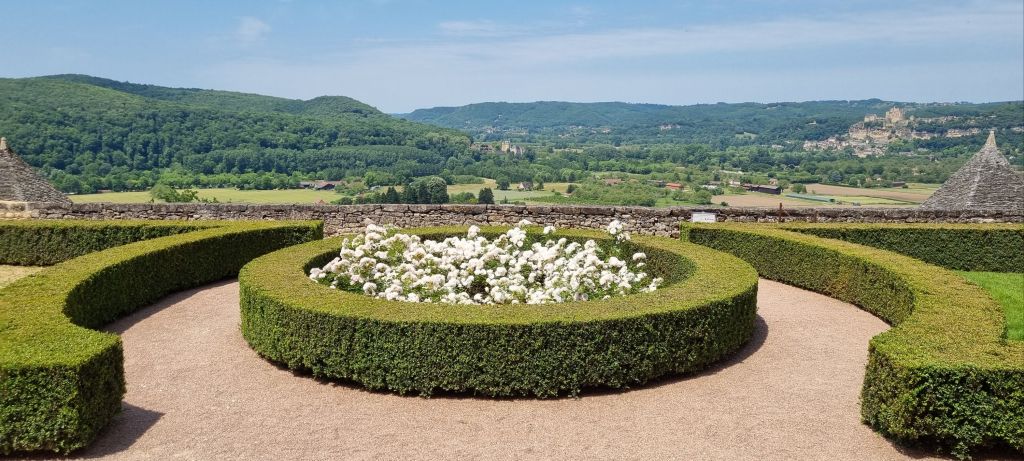
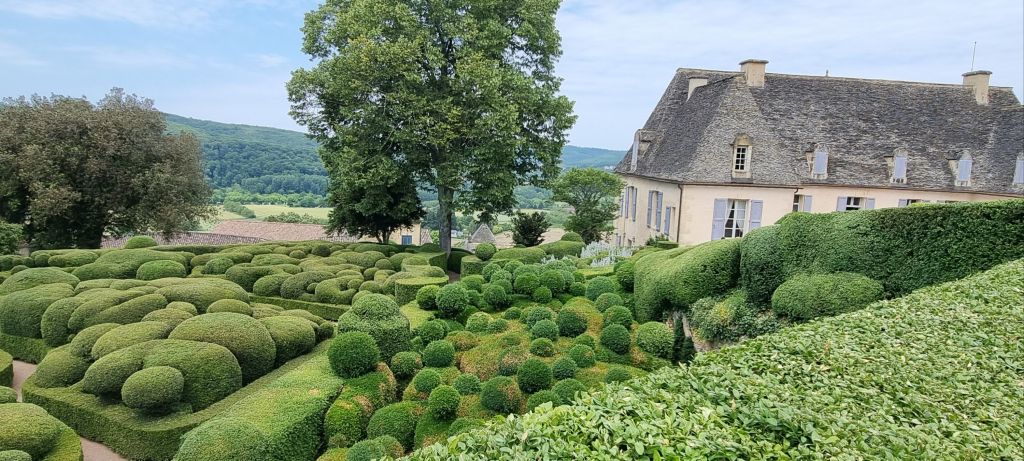
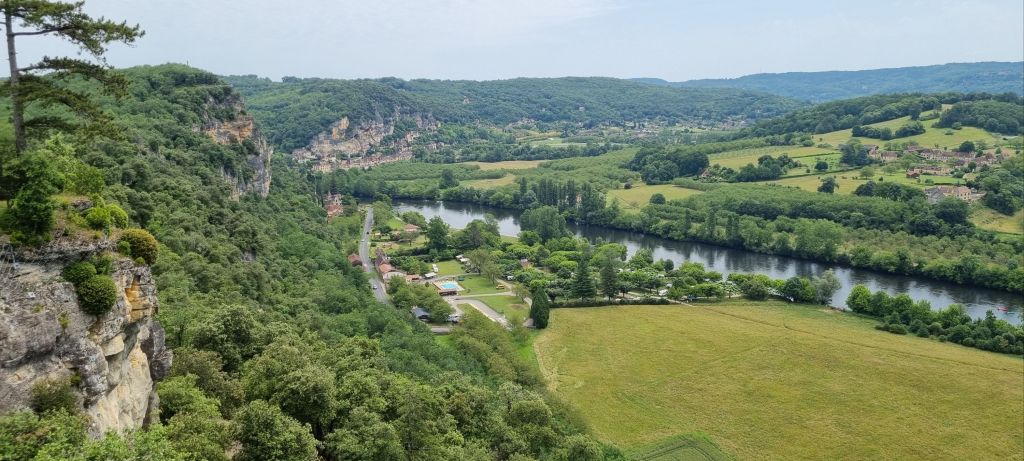

At the advent of the 20th century the family inhabited to chateau less frequently and the agricultural activity of the estate came to an end. It wasn’t until 1996 that the gardens were restored by a descendant of the Marqueyssac family. It took over a year with 60 companies and ten gardeners working full time. Part of their work was safety driven, installing barriers to ensure visitors didn’t inadvertently plummet off cliffs. Since then, various modern sculptures and plantings have been added but the garden’s heart clearly still beats in tune with Julien’s vision.
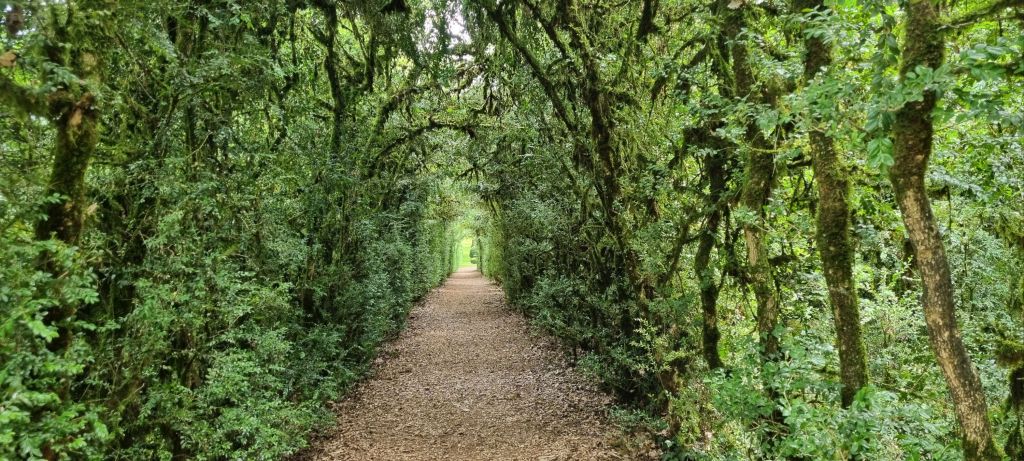
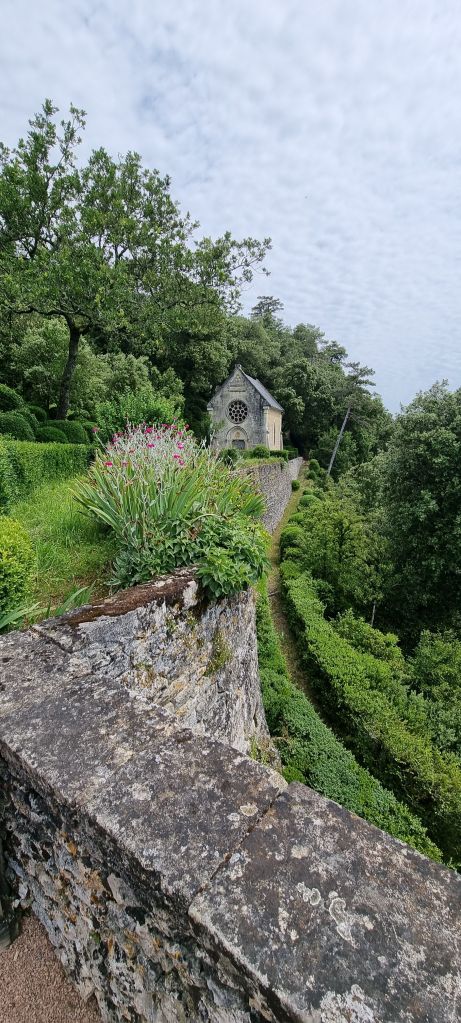


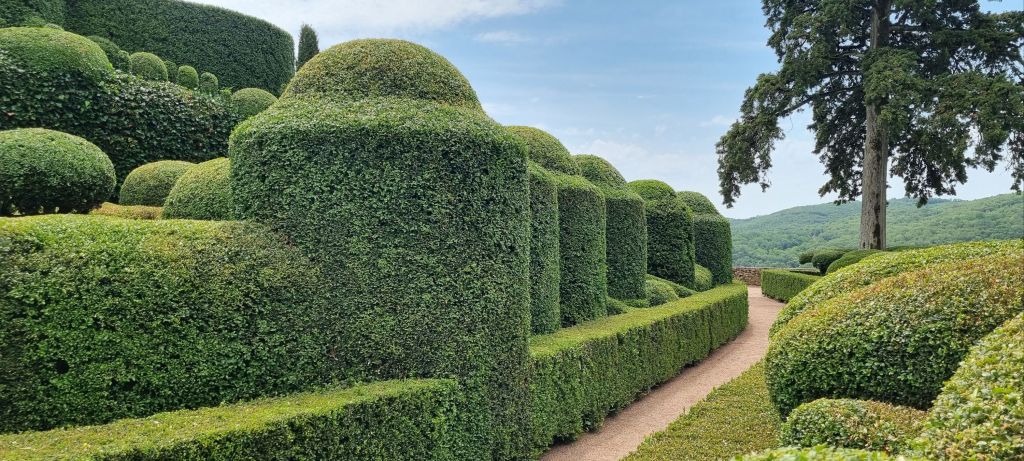
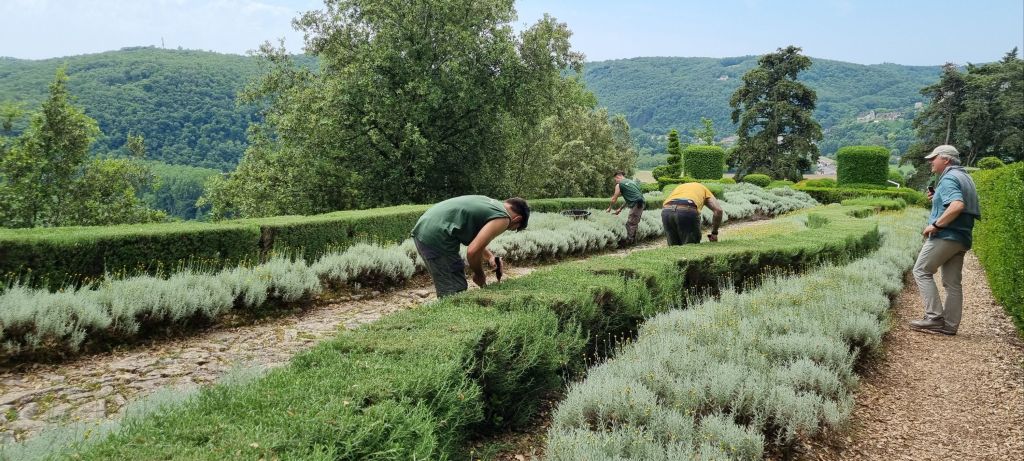
To say that the boxwoods are manicured to perfection would be an extraordinary understatement. It’s awe inspiring to learn that all of this work is conducted by hand, that’s right, no power tools. Shaping of 150,000 boxwoods is executed by garden shears, twice a year, by a team of six gardeners, increasing to 10 in peak pruning season. Even more extraordinary, most of the shaping is done by eye. Other than the formal edging paths which are aligned using plum lines and then cut by hand, everything else is a judgment call, one careful snip at a time. And in case that’s not impressive enough, some of the boxwoods are planted over the cliff face – these are shaped by abseiling to them. With a sheer 200 metre fall below it would take nerves of steel. We’re lucky enough to see some of the team at work and film of how they go about their work through the seasons.
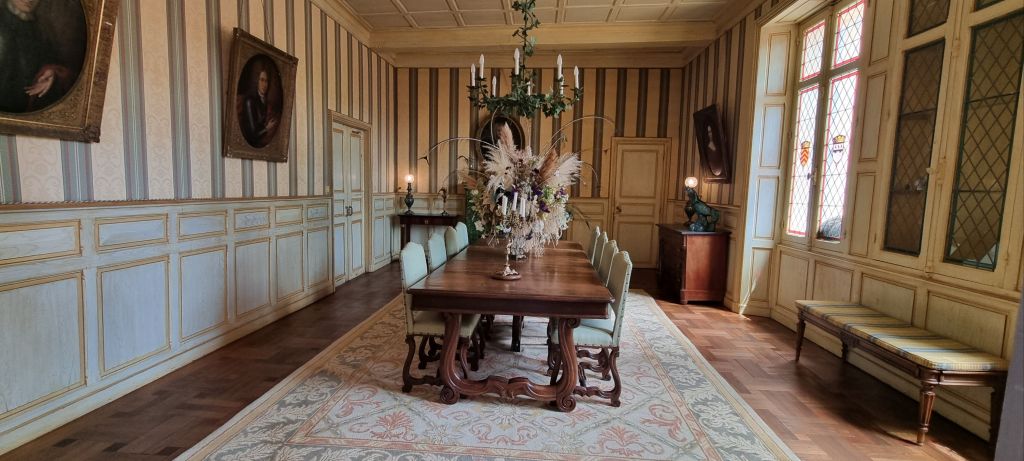
The Chateau was built in the early 19th century and has been recently restored – we learn that the slate roof weighs over 500 tonne. Our tour offers a glimpse of how life was lived in Julien’s time – a decidedly elegant affair. A beautiful display of water colours painted by a Marqueyssac descent is on exhibit and we learn that one of the family came up with the concept of the Michelin Man – a pioneer in what would go on to become modern advertising.



After several hours of scaling each of three steep pathways along the cliff faces, we’re both ready for a rest. Luckily there’s a terrace saloon with spectacular views. It’s too late for lunch, but drinks are what’s called for. Rose petal and violet icecreams, house specialties, round out the day – delicious with crystallised petals throughout. A pea hen drops by for a thorough inspection to ensure we’re happy with our selection.


Refreshed, I’m tempted to set off and explore again, but Himself is done. It’s back down the steep climb the and on to our next Les Plus Beaux Village, Beynac-et-Cazenac. As usual in any garden or creature setting, I have to be dragged away. There’s only one cute for it – come back at twilight when the gardens apparently look like this: bliss!

 Miss Baci Travels