
It’s a gloriously sunny day as we drive down the cliffs into the the Dordogne Valley. Spring has finally turned a corner – the sky is an endless blue.
It’s our third time in this area, the first more than 20 years ago on our first trip to France (well my first trip anyway) when everything was bright, and shiny and new. I walked the soles off a new pair of shoes that first time, literally, determined not to miss a moment of it. The second time, more recently, meandering at a slower pace through the villages dotting the river’s bends.
What we didn’t manage on either of those trips though, is a ride on the Dordogne in one of the flat bottomed wooden barges, once the main form of transport in the 19th century.
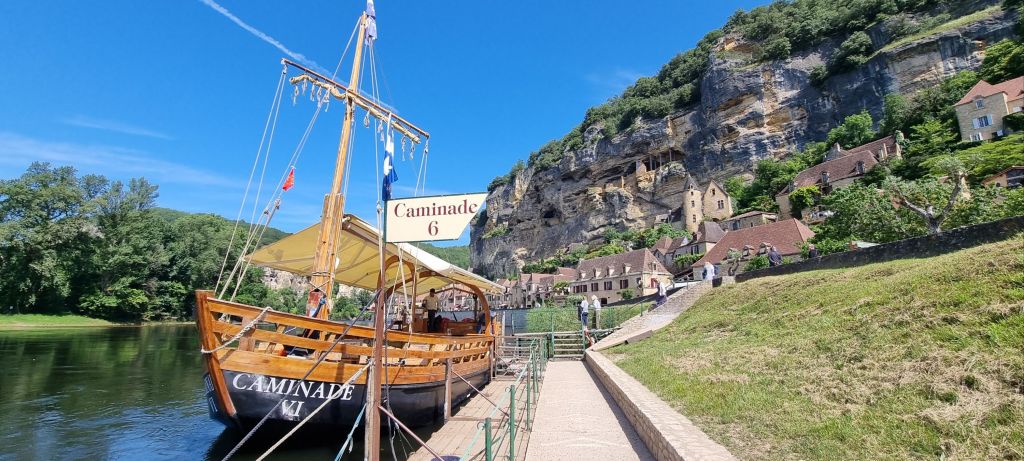
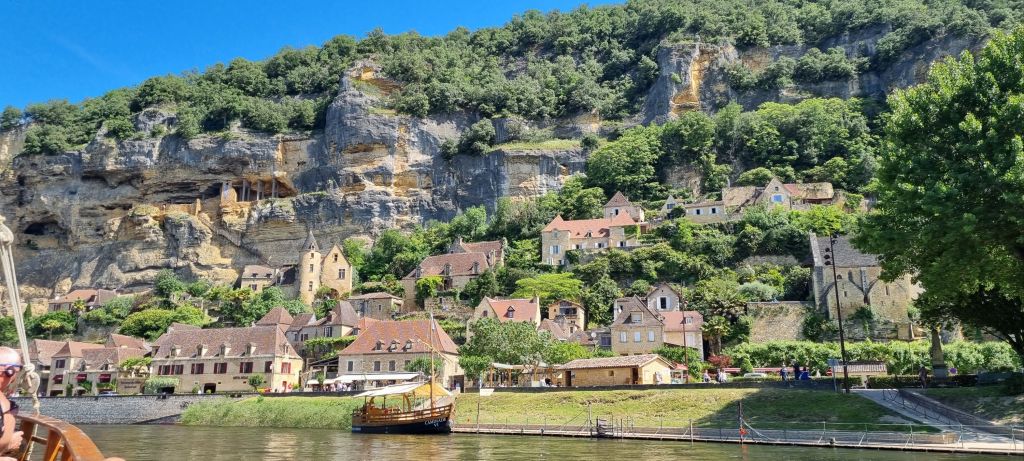
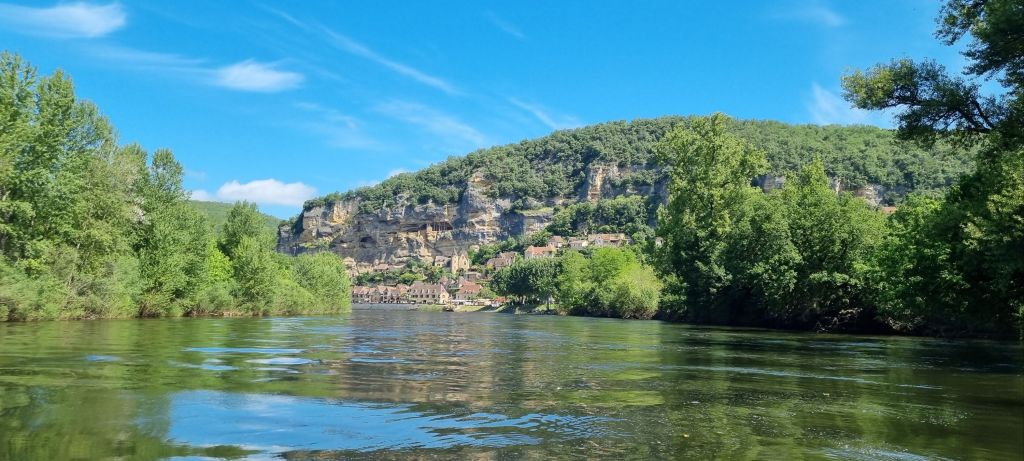
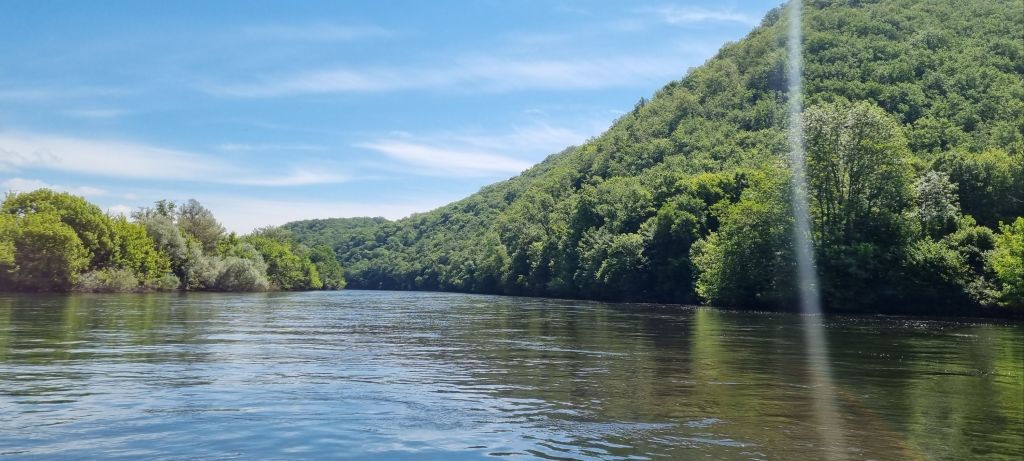
We set off from La Roque-Gagaec, impressively set into the surrounding limestone cliffs. It’s clear why it’s considered one of France’s most beautiful villages.
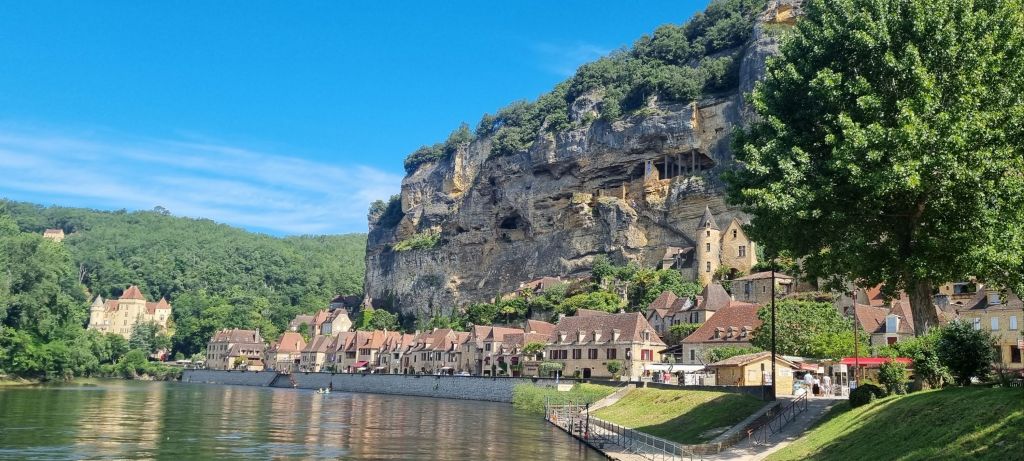
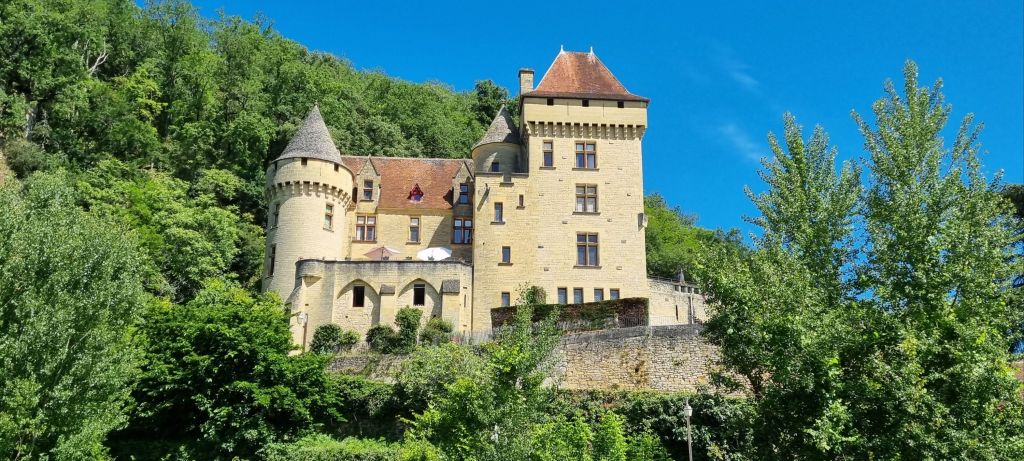
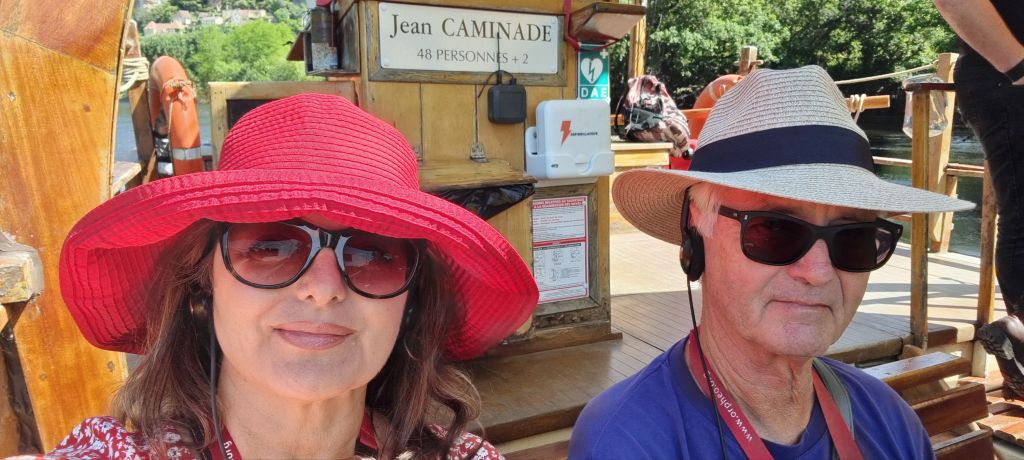
Our boat is thoughtfully equipped with an English version of the skipper’s narrative and very informative it is too. We learn of the river’s mercurial nature – despite it once being the main transport route, it’s only navigable for relatively short periods throughout the year. Spring floods, droughts and many other factors render it impassable for up to a third and sometimes two thirds of the year. We learn that when the river was tough going, boats were dragged up and down by teams of men, called ‘the arms’. It was hard work (no kidding!) so they were periodically rested and replaced with a fresh team….every 5 km. 5 km!!! Extraordinarly, they weren’t paid for their work, with payment going to the local Viscount instead A bold move, post the Revolution.
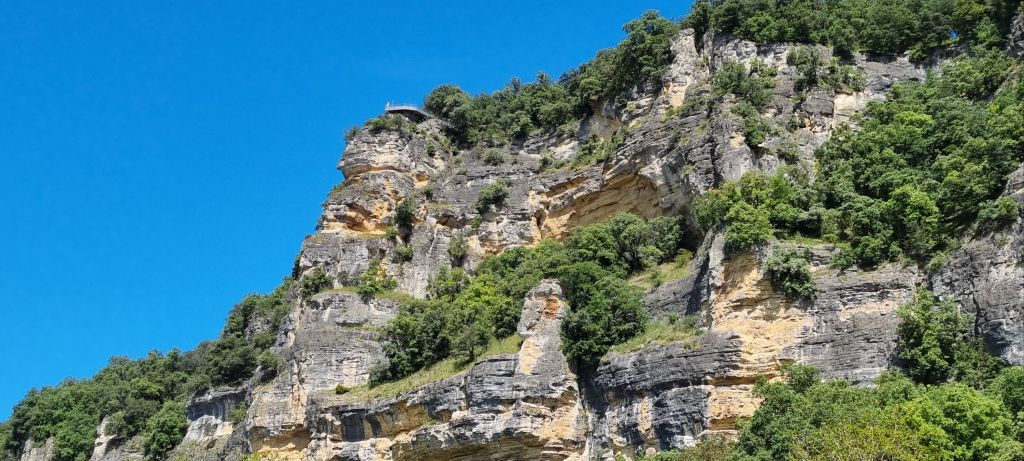
As we pass La Roque-Gageac we’re told of a massive rockfall in 1957, when part of the cliff collapsed, crushing a series of houses and killing three people. The clean up kept the main road closed for 2 years. Over 60 years on, it still looks like a fresh scar in the stone.
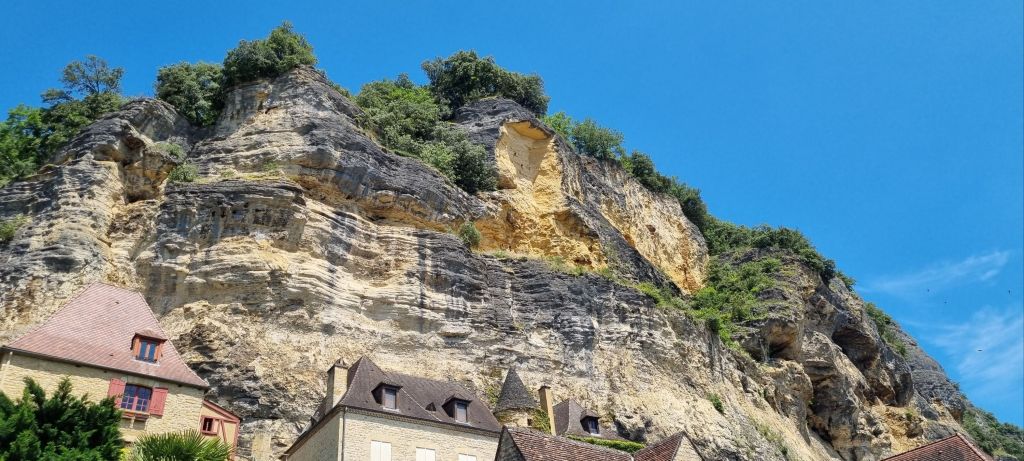
At the time it was thought the villiage might not survive the disaster. These days, the limestone cliffs are assessed for risk annually. Weaknesses are underpinned by enormous stabilising steel rods, driven 8 metres into the cliff. We’ve seen evidence of these as we weaved our way down. It’s a sobering sight – whilst the 1994 collapse was the worst, it’s not the first, with collapses in 1920, 1994 and as recently as 2010.
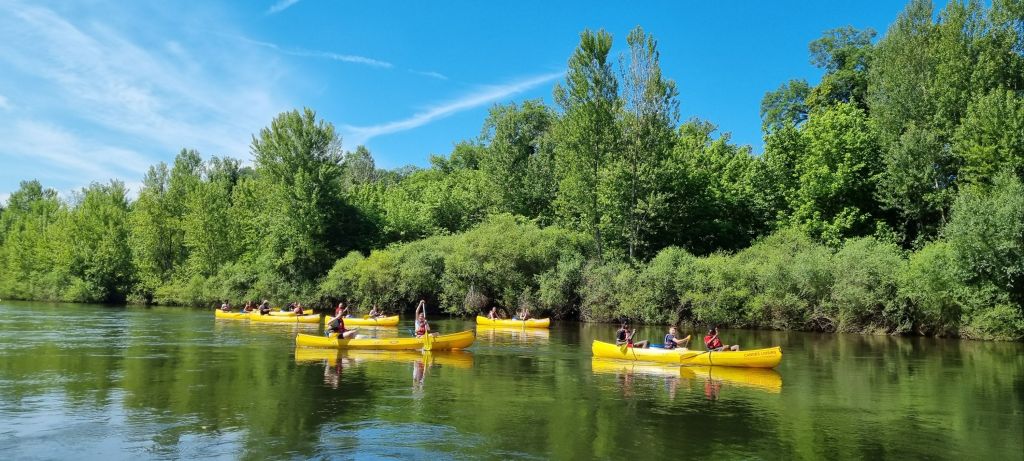
We see canoes and kayaks zipping downstream at a fast clip – the current is pretty frisky here. Occasionally there’s a determined soul battling upstream against it. There are three canoe rides on offer, ranging from 2 hours to just under 5, depending on where you start and end.
Our narrative speaks of the area’s defensive past, the cliffs providing shelter and protection from marauders. High above the village are fortifications carved out of the limestone in the 12th century and extensively redeveloped in the 17th century. It’s thought that this region has been settled since prehistoric times, flourishing as a defensive fort during the Gallo-Roman period and during Viking invasions.
Just before our boat turns for the journey back, we pass a natural spring bubbling up near the bank. It’s the source of the village’s drinking water and has been for centuries.
The views from the water are stunning and we’re surrounded by birdsong. I go cross eyed looking for a kingfisher, but instead see ducks and a pair of white swans.
We learn of La Roque-Gageac’s southern aspect and lack of wind creating a true Mediterranean climate which supports surprisingly tropical plants including bananas, bamboo and palms.
Seven kilometres up and then back, it’s over all too soon. It’s wonderful that these boats have been preserved and their use reinvented.
As tempting as it is to explore the village afterwards, we’ll save it for tomorrow. Instead, Himself finds a perfect riverside campsite. If we were any closer, we’d be in the water.
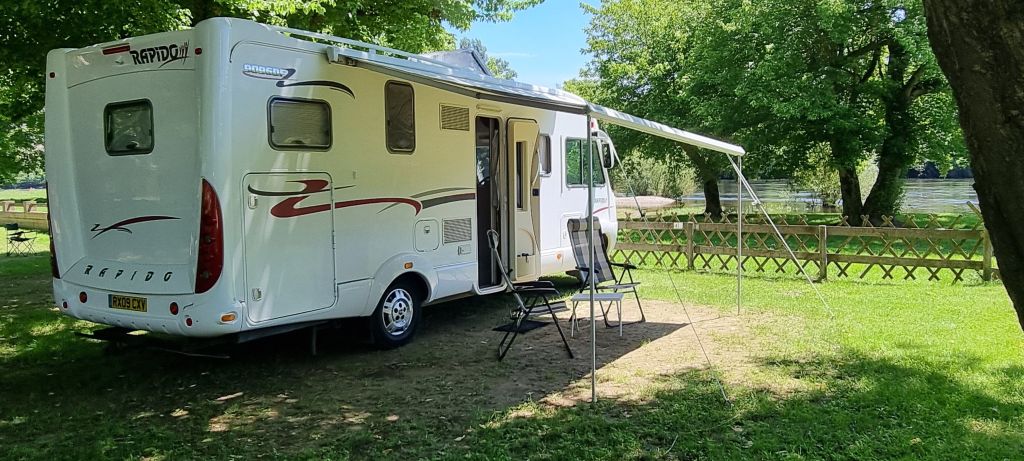
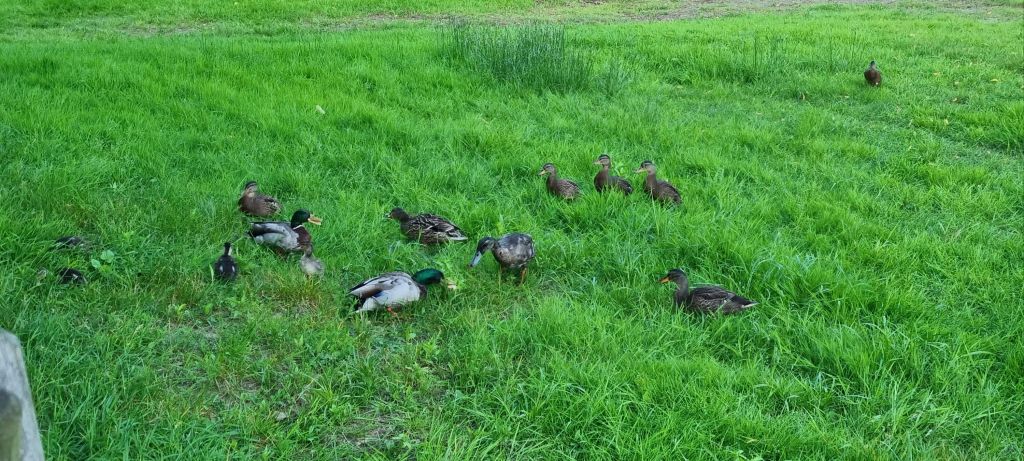
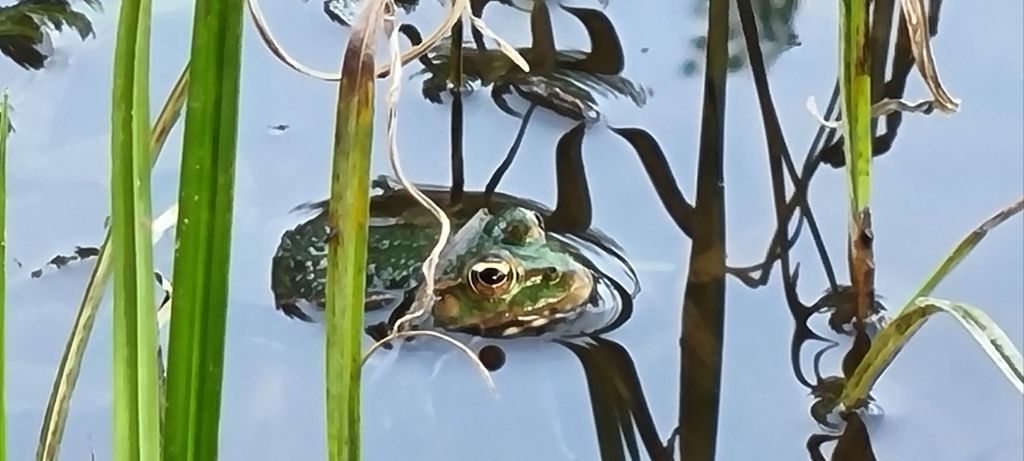
A relaxing afternoon passes, accompanied by the trill of bird song, cheeky local ducks and later, a frog chorus. A closer look reveals that they’re going about the froggy business of making little frogs. They’re happily croaking about it too – for a tiny little creature they certainly have a very large voice.
 Miss Baci Travels