

We’re back doing what we love most, using our Les Plus Beaux Villages book as a guide through France’s wildflower bedecked countryside. I can’t express how grateful I am that I randomly spotted our book in a Carlton bookshop years ago. It’s proven to be an excellent guide. I’ve learnt since that there’s an Italian (and Japanese) version both on my acquisition hit list once home. As good as the book is though, the last fortnight has served well as a reminder to not solely focus on it, as there’s a great deal to explore and enjoy elsewhere. We would have missed out on Pompadour and those magnificent stables, for example.
Today’s focus is the Les Plus Beaux russett coloured village of Collonges-la-Rouge, set on the border of the Limousin and Quercy regions. It too was once a seat of judicial power in the 13th century. Quite the fiefdom the Viscounts of the day had, truly masters of all their domain.
Collonges-la-Rouge was established in the 8th Century, built around a Benedictine priory. The village owes both part of its name and russett hued stone to a geological quirk dating back millions of years. The Meyssac Fault which passes through the village was formed when the sandstone of the Massif Central slid beneath Aquitaine’s Limestone creating a geological Jenga, making Correze’s sandstone an uncharacteristically oxidised iron red.
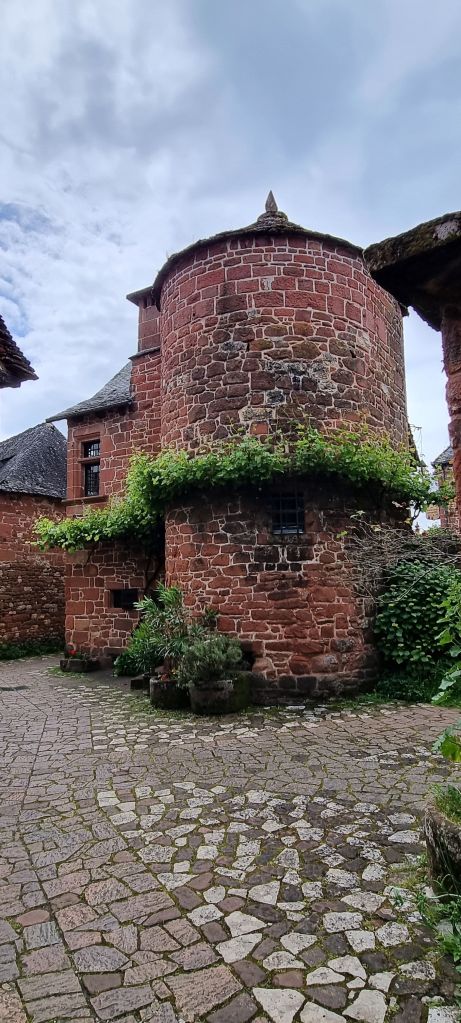
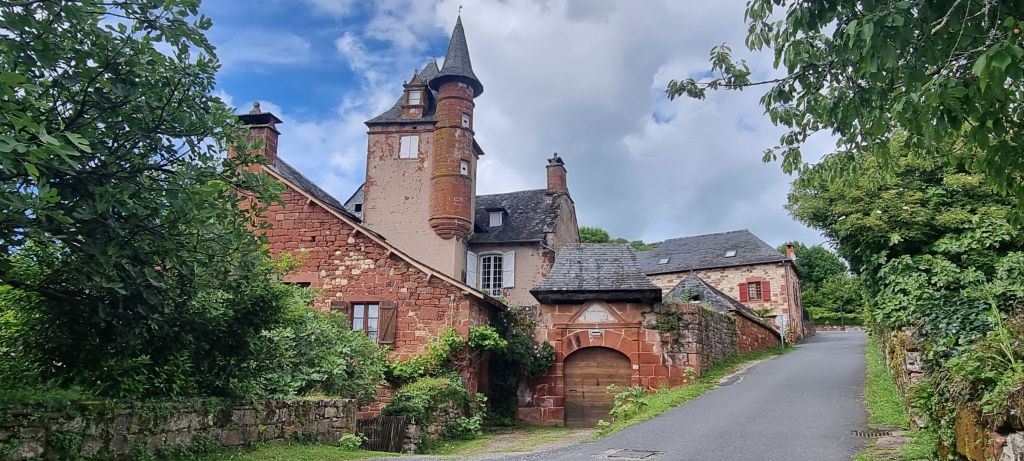
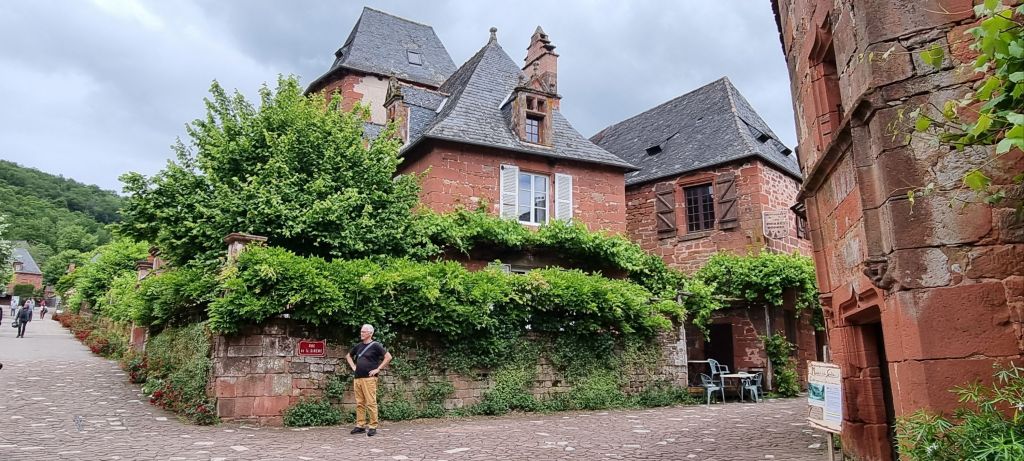
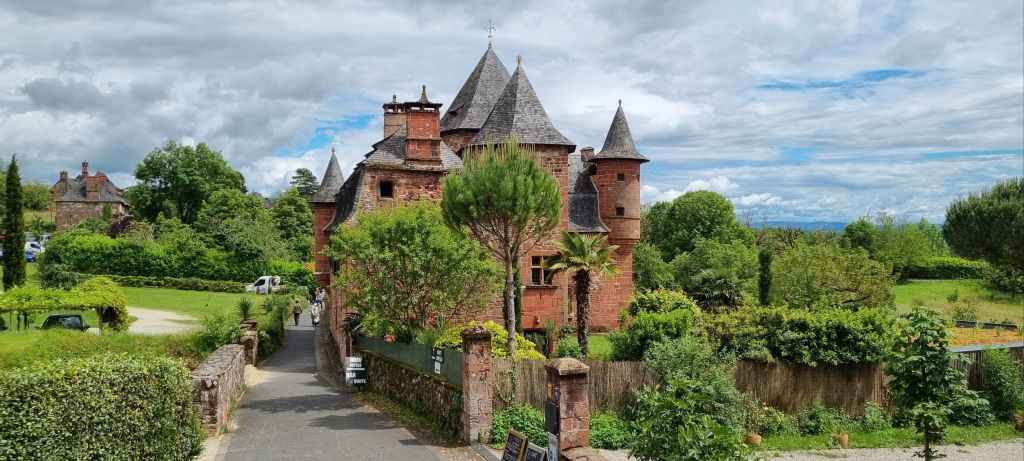
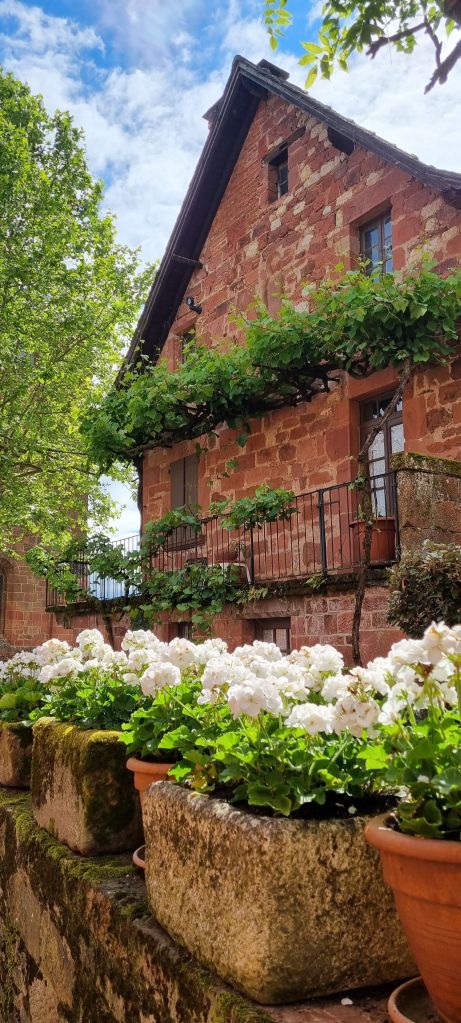
And red it is, truly unique amongst the villages we’ve seen thus far. Beautifully preserved, it’s a step back in time though centuries of building styles and commerce. We make our way to the central square, once a 16th century wine and grain market and stopping point for pilgrims enroute to the nearby Rocamadour. Now there’s a hike for anyone so inclined. We walked up those many, many steps some years ago and whilst we huffed and puffed our way up on a hot, hot day, there were those doing it on their knees. Particularly penitent, they must have been very naughty indeed.
We learn of Chapelle des Penitents (below) history. Home to the Brotherhood of the Black Penitents from 1765 to the end of the 1800s, their good works included burying the dead free of charge. It’s very hard to acquire this knowledge and not hear the Python Holy Grailers calling to “bring out your dead”. Much amusement? Party of one. As I say to Himself endlessly, at least I amuse myself. 😂
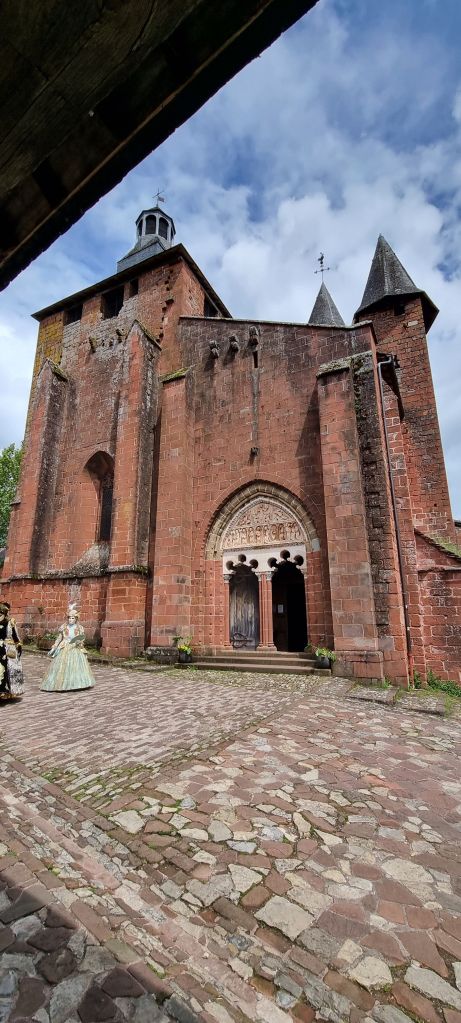
Adding to the atmosphere, there’s a festival in progress which involves very elaborate masked period costume. Try as I might, I can’t quite work out what it’s about. Perhaps it’s a local weekend custom to entertain the tourists?
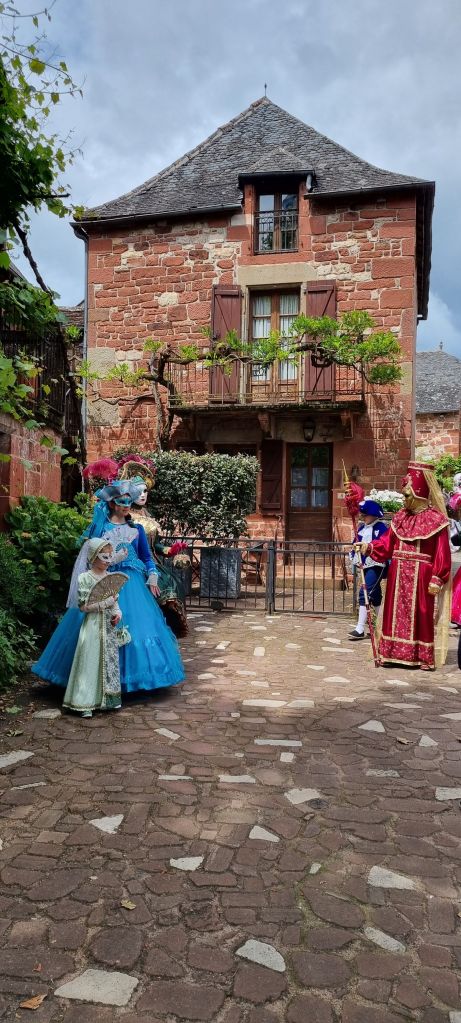
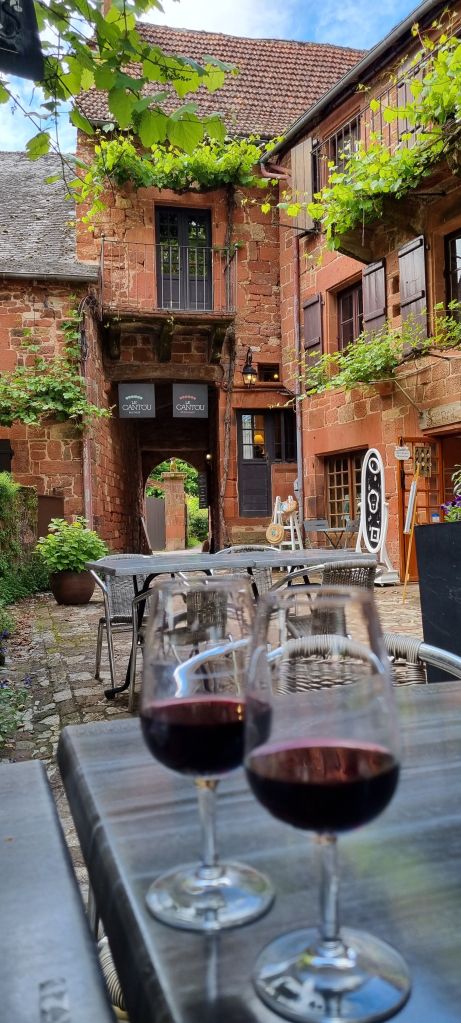
Unlike most Les Plus Beaux Villages, this one is heaving with visitors. We had intended to stay and lunch here tomorrow (lots of restaurants), but it’s just too busy. Instead we settle in the square for drinks under the watchful eye of the world’s cutest shopkeeper.

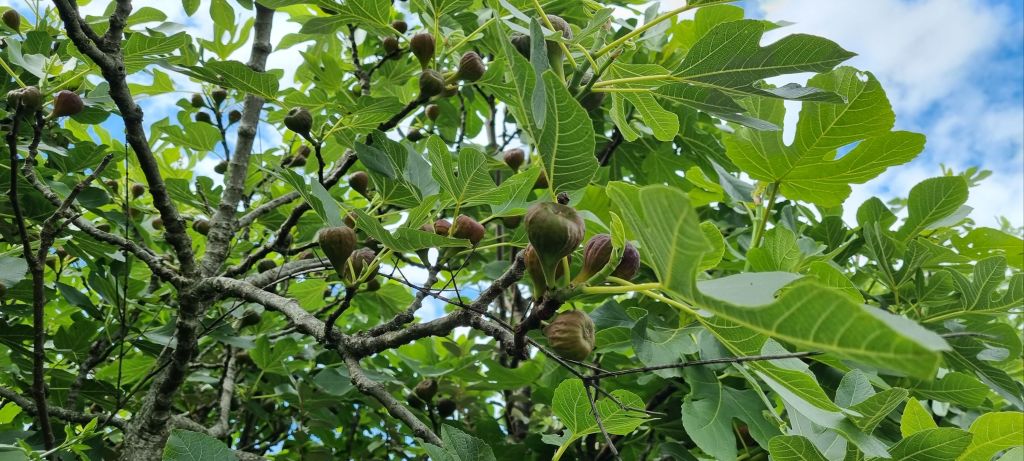
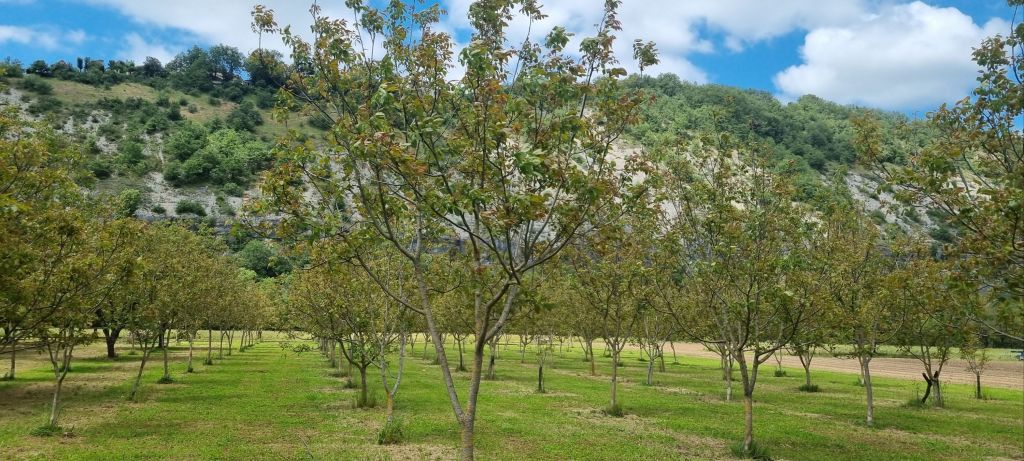
The following morning we set off in search of a gentler pace. A pity. I was looking forward to trying the purple mustard, a local specialty along with walnuts and figs – endless orchards line our way.
 Miss Baci Travels