
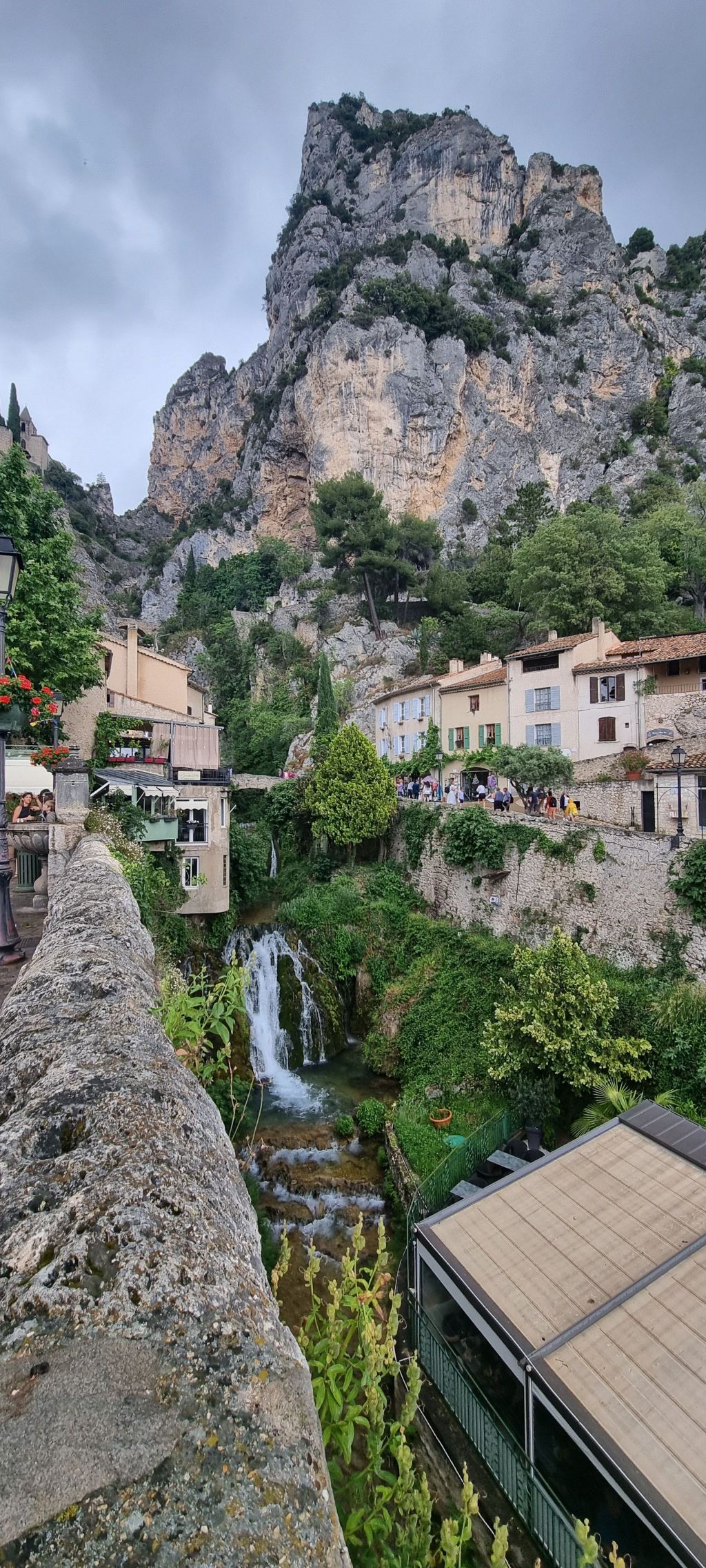
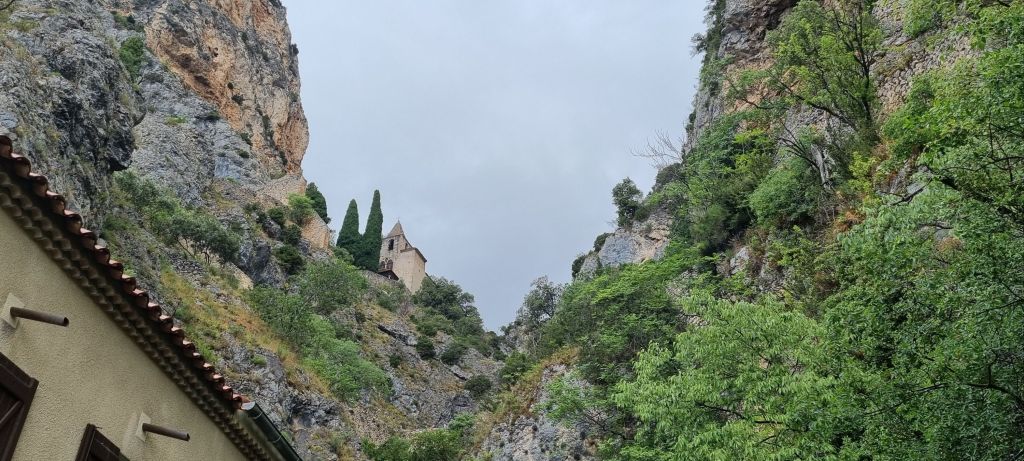
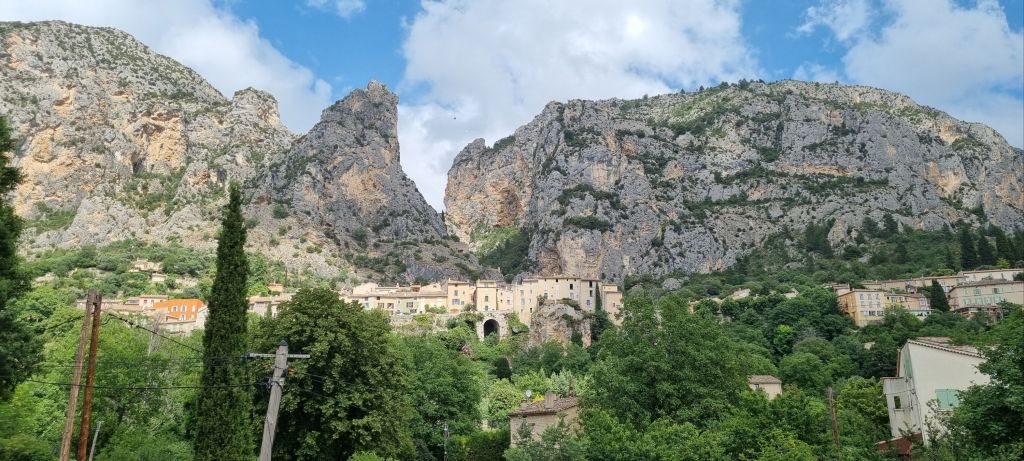
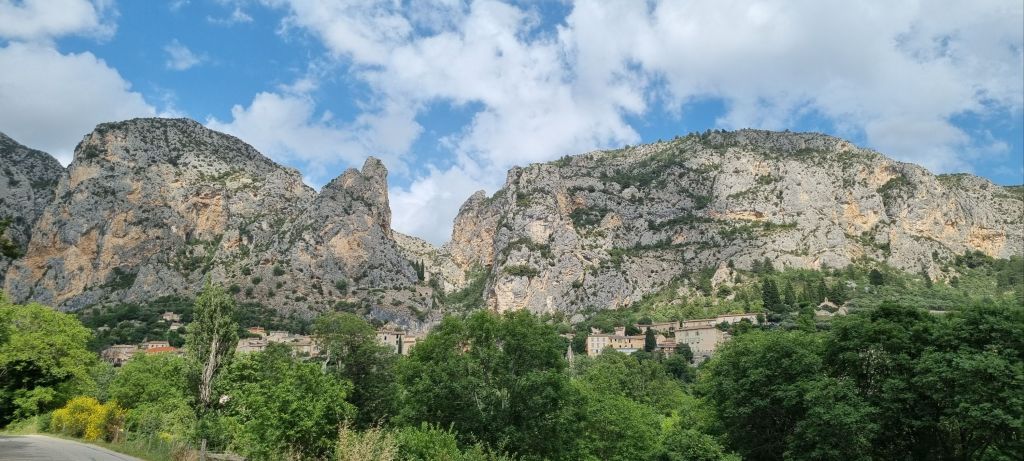
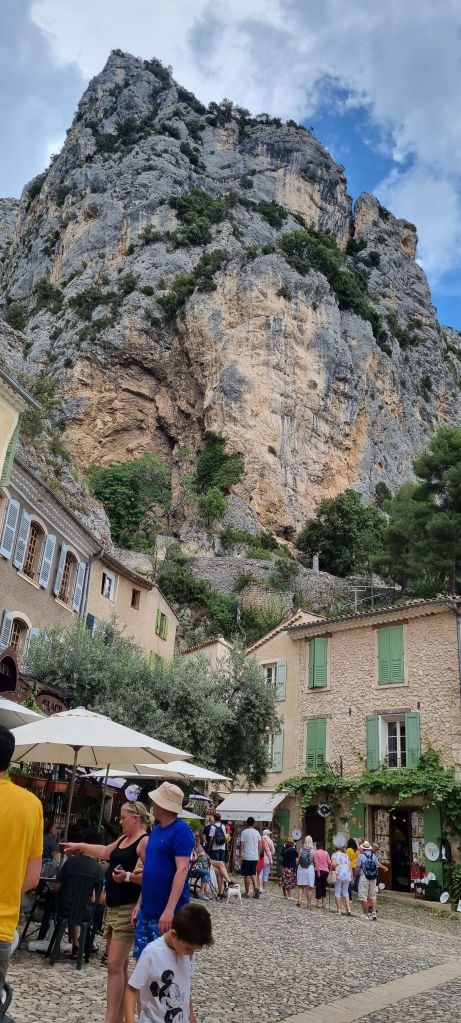
We’ve quite inadvertently landed in the spectacular mountain setting of Moustiers Sainte-Marie. The village sits at a 640 metre elevation, impossibly perched between two vertical rises.
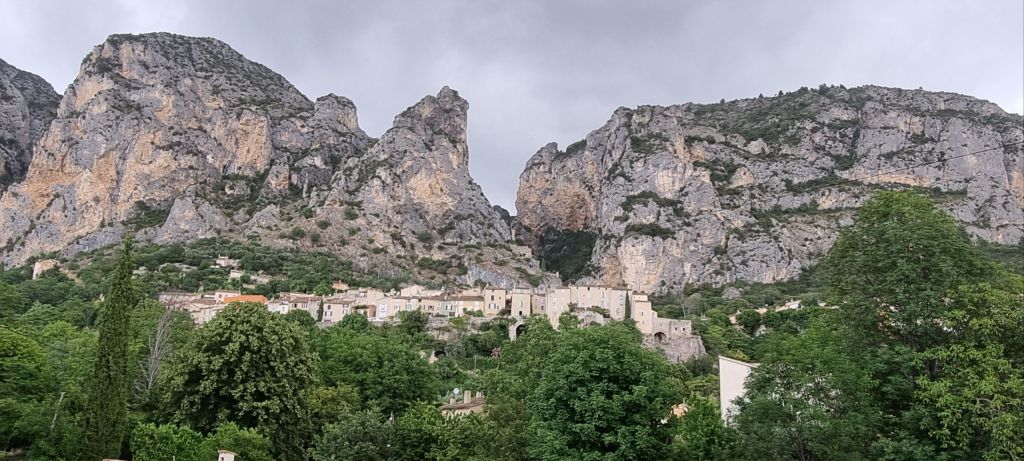
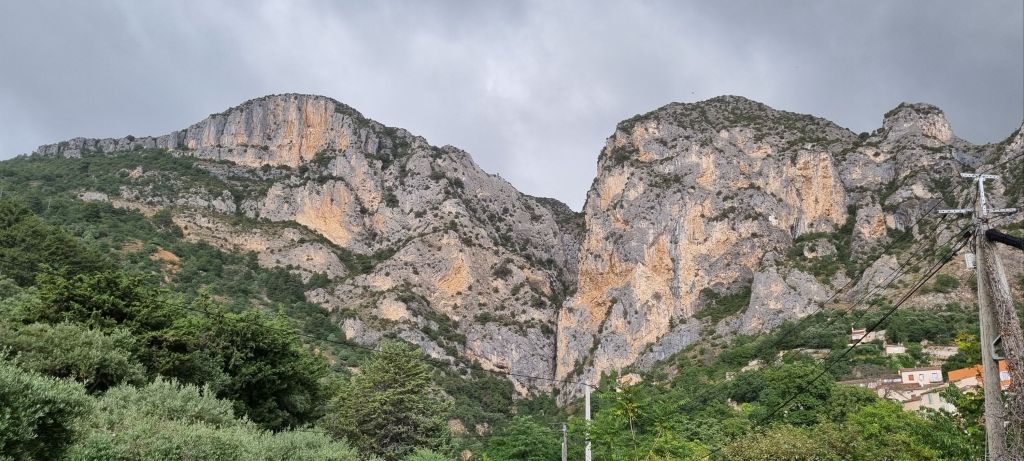
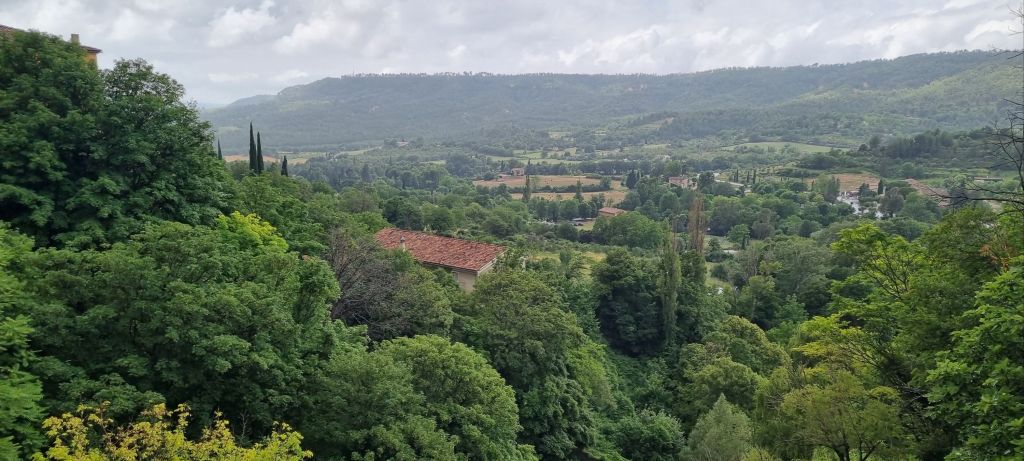
Being Provence, the only way to it is up a very, very steep hill. Not that I’m complaining. The weather is rather delightful and if Himself insists on endless lunches, steep hill climbs will do very nicely in lieu of a hamster wheel and a lettuce leaf. There’s nothing like a soaring mountain to make you feel like the absolutely insignificant little dot you are on this planet. The walk up is breathtaking in every sense.
It’s soon clear though, that this is no well hidden gem. Tour buses. Lots of them, and a tourist train – heaven forbid that anyone should walk up that hill – tourist buses have to stop about 500 metres up from where our walk starts. 😂 Thankfully Moustiers Sainte-Marie is quite a bit larger than the typical Les Plus Beaux Village. Winding its way into the mountains, there’s plenty of space for everyone.
It’s an excellent workout, endlessly wending and winding up hill through tiny mediaeval paths. The heart of the village is the oldest, with buildings dating back to the 13th and 14th centuries. From the highest point, we can just glimpse the impossible blue of Lac de Sainte-Croix, home to Le Grand Canyon du Verdon.
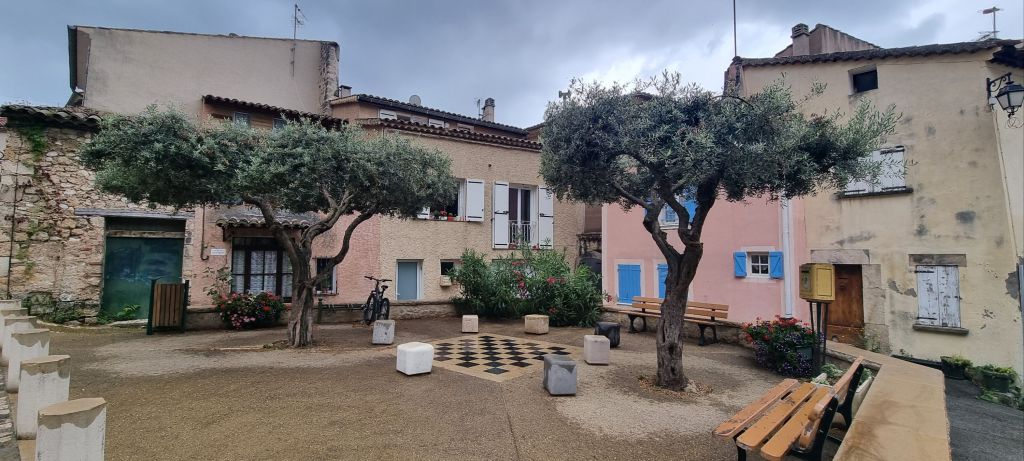
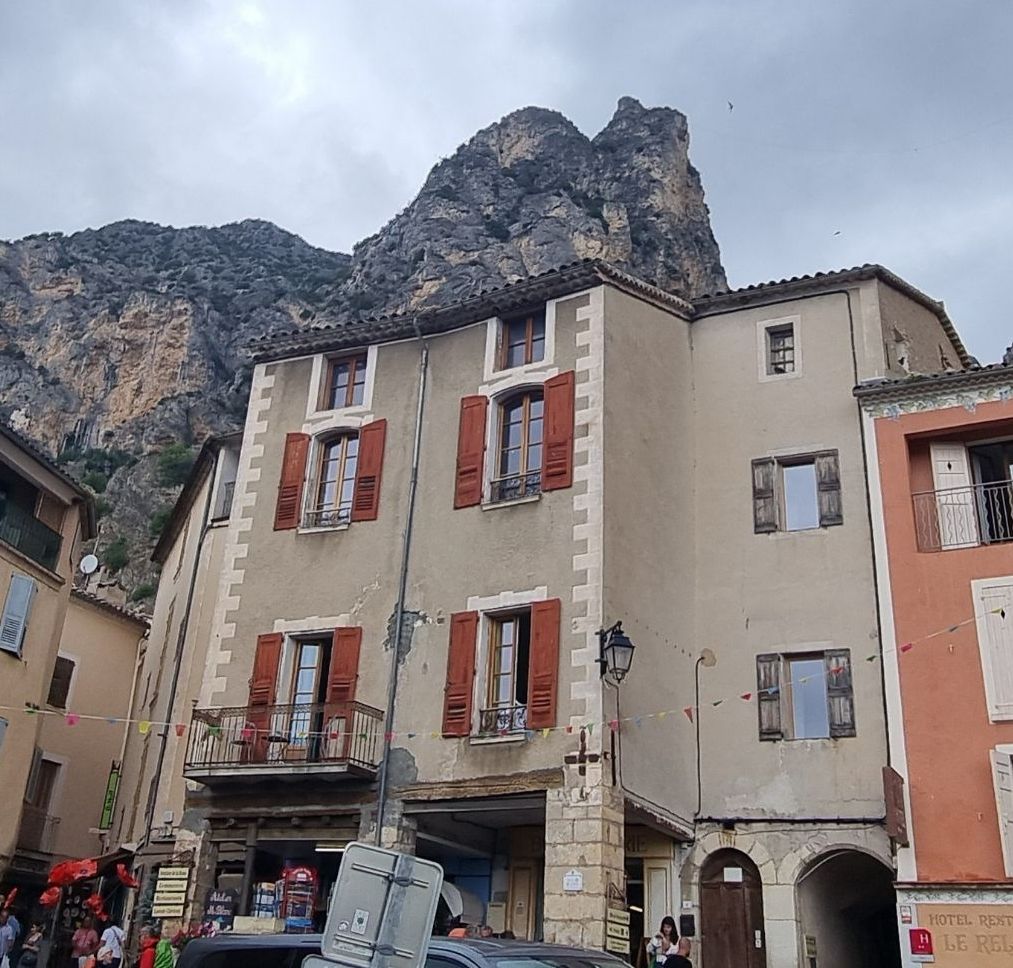
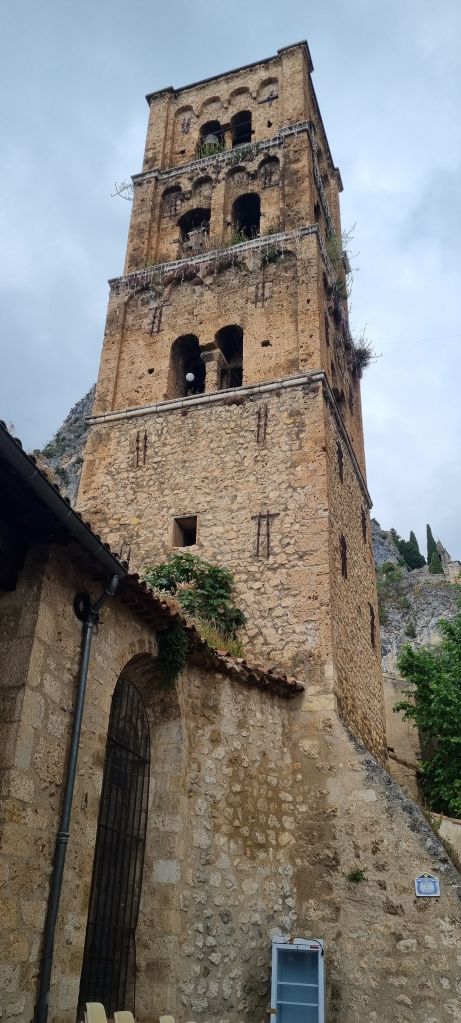
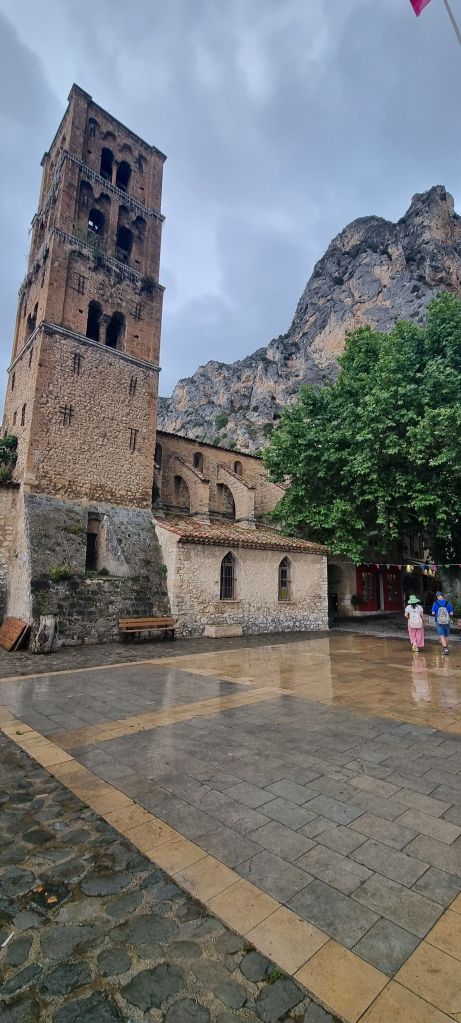

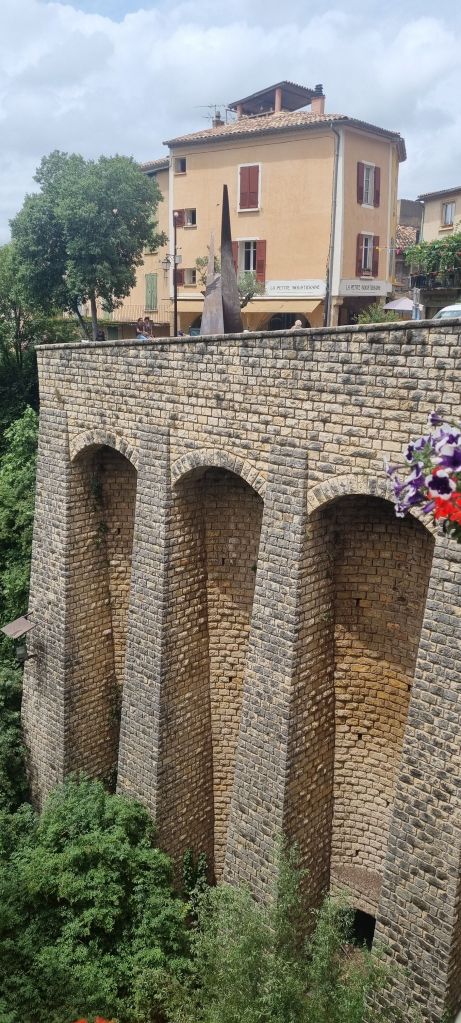
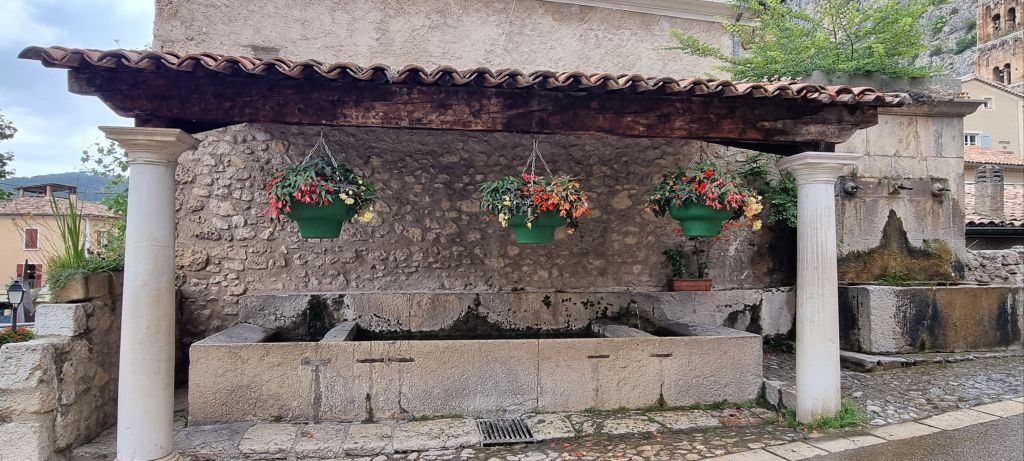
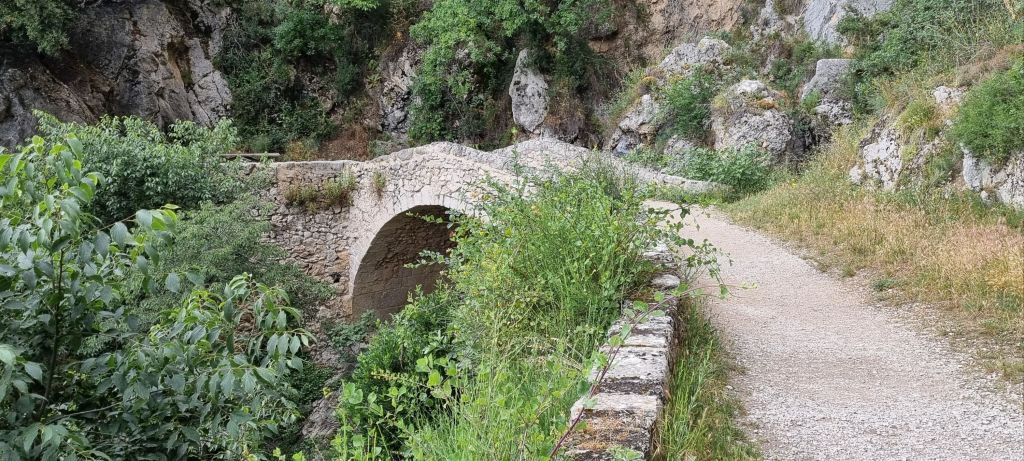
The Adou river forms a cascade of waterfalls, topped by stone bridges at key points. The river supported an industry of stationers, potters and drapers up until the 17th century when an Italian monk introduced process of tin enamelling earthenware to Moustiers Sainte-Marie, creating a new focus on ‘faience’ production. The village became the premier faience producer earning a lnational reputation. Despite the industry declining in the 19th century, tourism has brought it new life with a wide array of enamelled earthenware on offer.
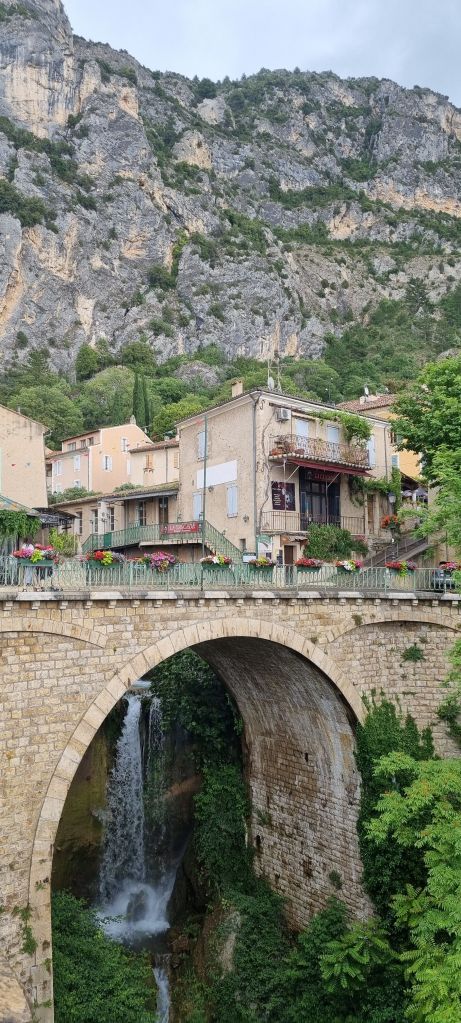
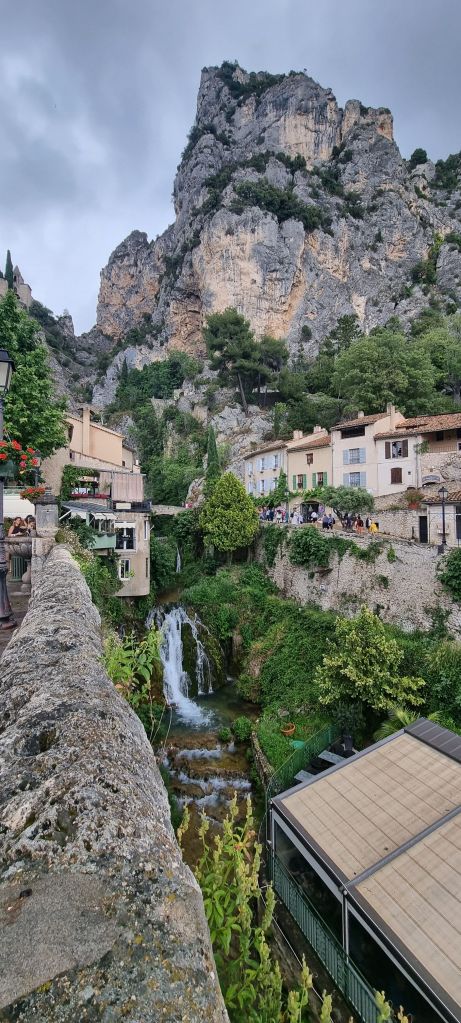
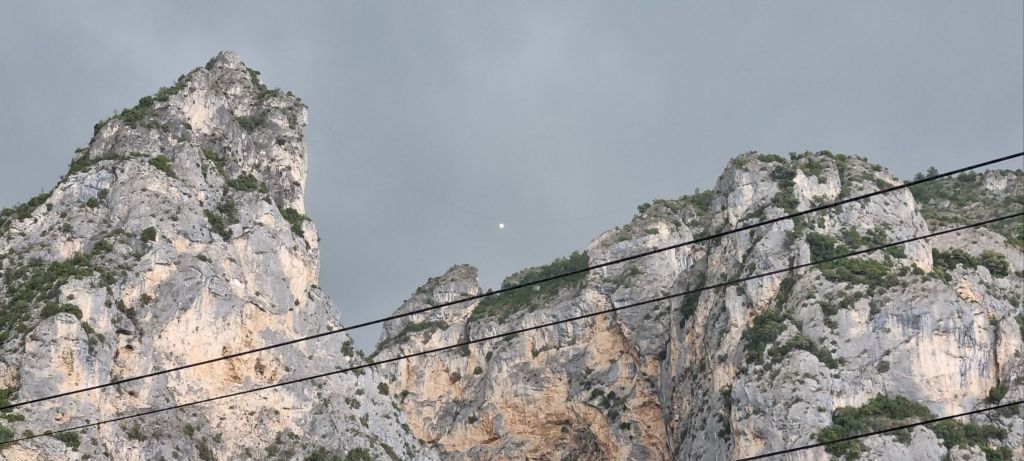
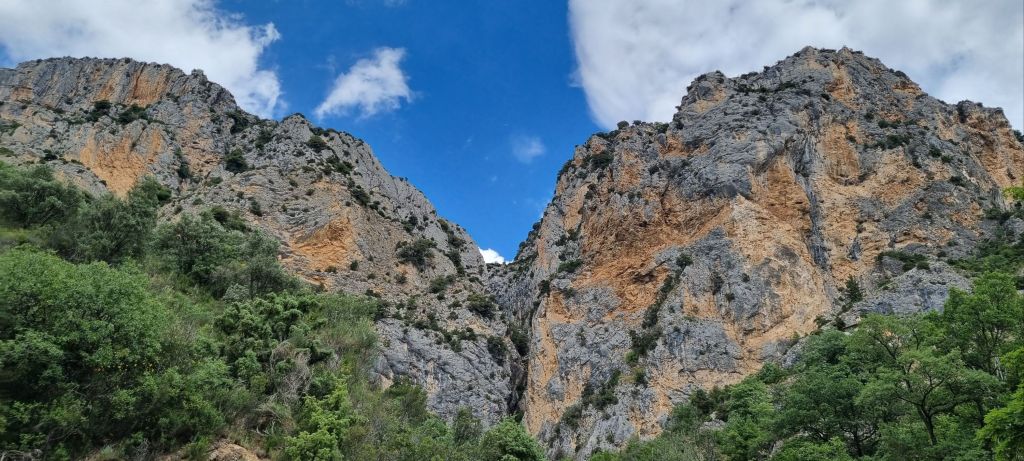
High above the village between two mountain peak hangs a gold star – glimpsed in the picture below. Legend has it that it was hung by a crusading knight in gratitude to the Virgin Mary for his answered prayer to come home safely. Himself is fascinated. He determines that it could have only been launched by arrow – the mountains are practically vertical on both sides with no visible means of access.
We stop for a burger but Himself has a hankering for a fancier lunch – he’s decided we’re staying another day to facilitate.
The following day we front to his restaurant of choice but they’re fully booked. Whilst we speak a version of restaurant French, we haven’t quite mastered the art of reservations over the phone. In person yes, over the phone, much harder. Tricky too, that restaurants are only open between 12 and 2 and then from 7 pm onwards and won’t answer the phone outside of service hours. Disaster is imminent (Himself not best pleased – his phone took us on a wild goose chase for directions too, costing time) but I find another with beautiful views over the river and an equally impressive menu. A very special meal follows. A mousefull of vichyssoise to start. Himself has redfish rillettes followed by a crispy guinea fowl and a Franco/Japanese souffle cheesecake doused in caramel.
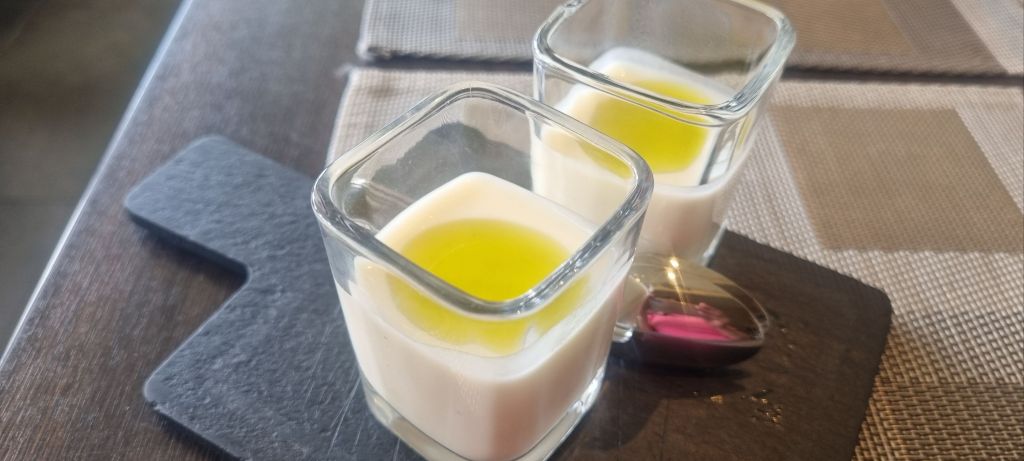

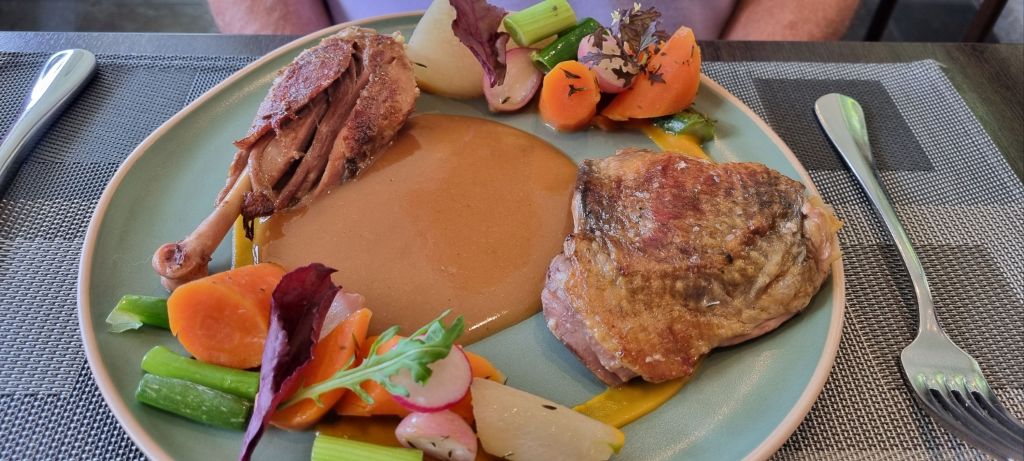
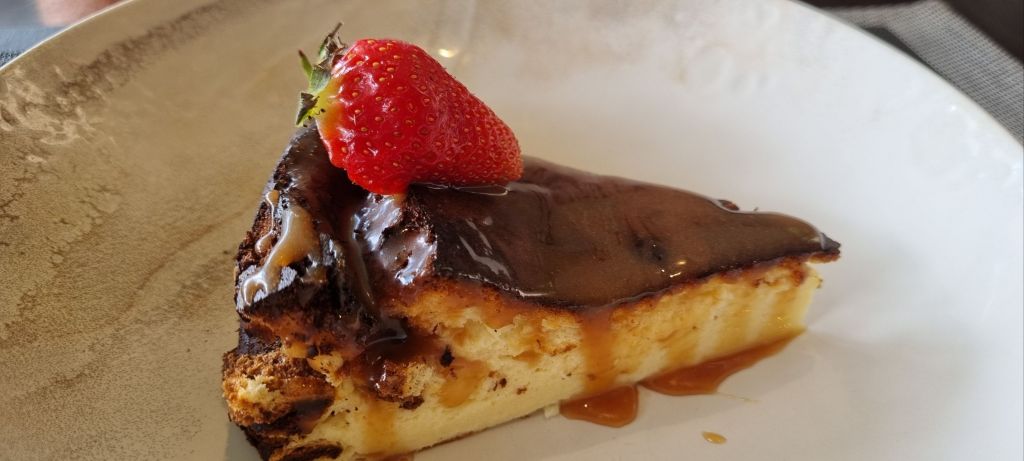
He’s practically purring at this stage.
I opt for an asparagus salad, sweet potato gnocchi and and apricot panacotta. Excellent local wine rounds out the meal nicely.

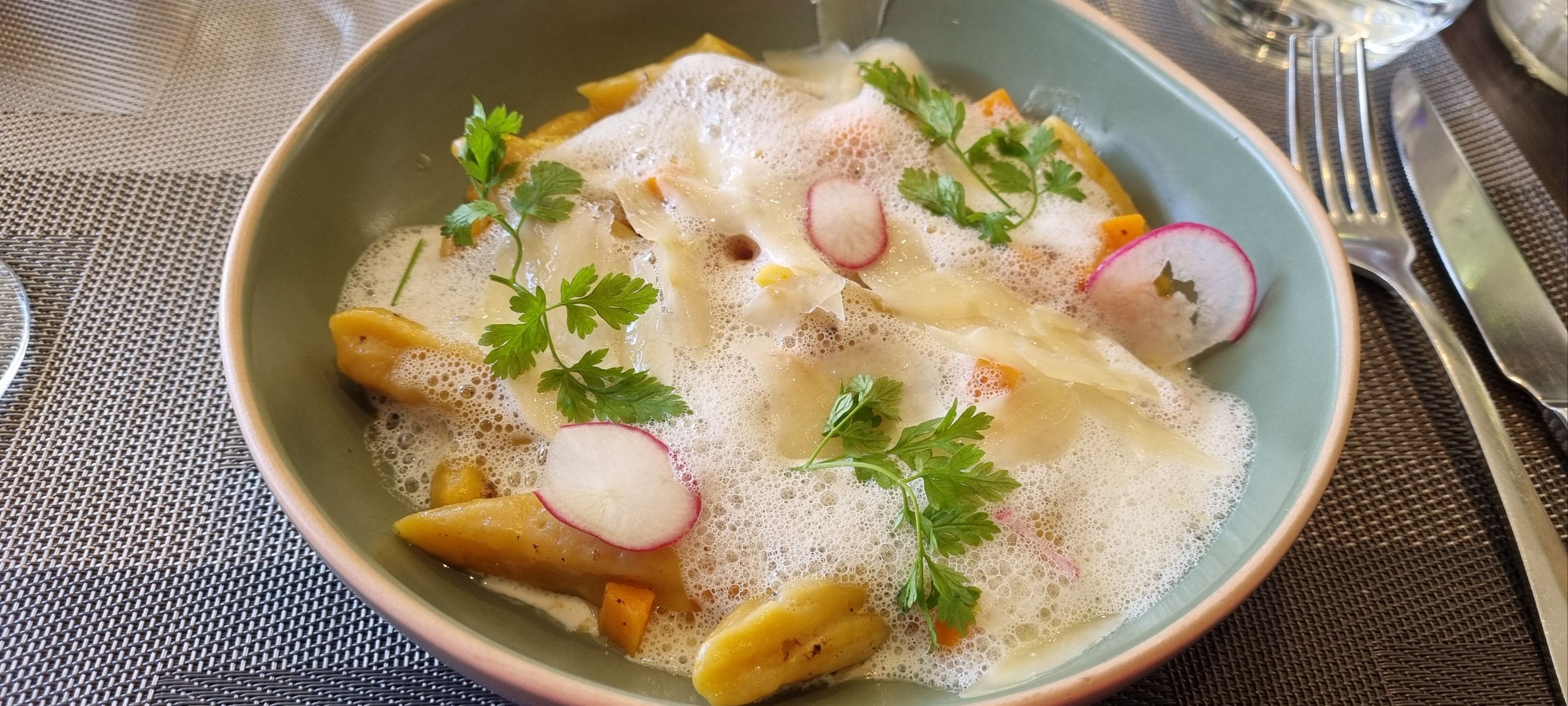
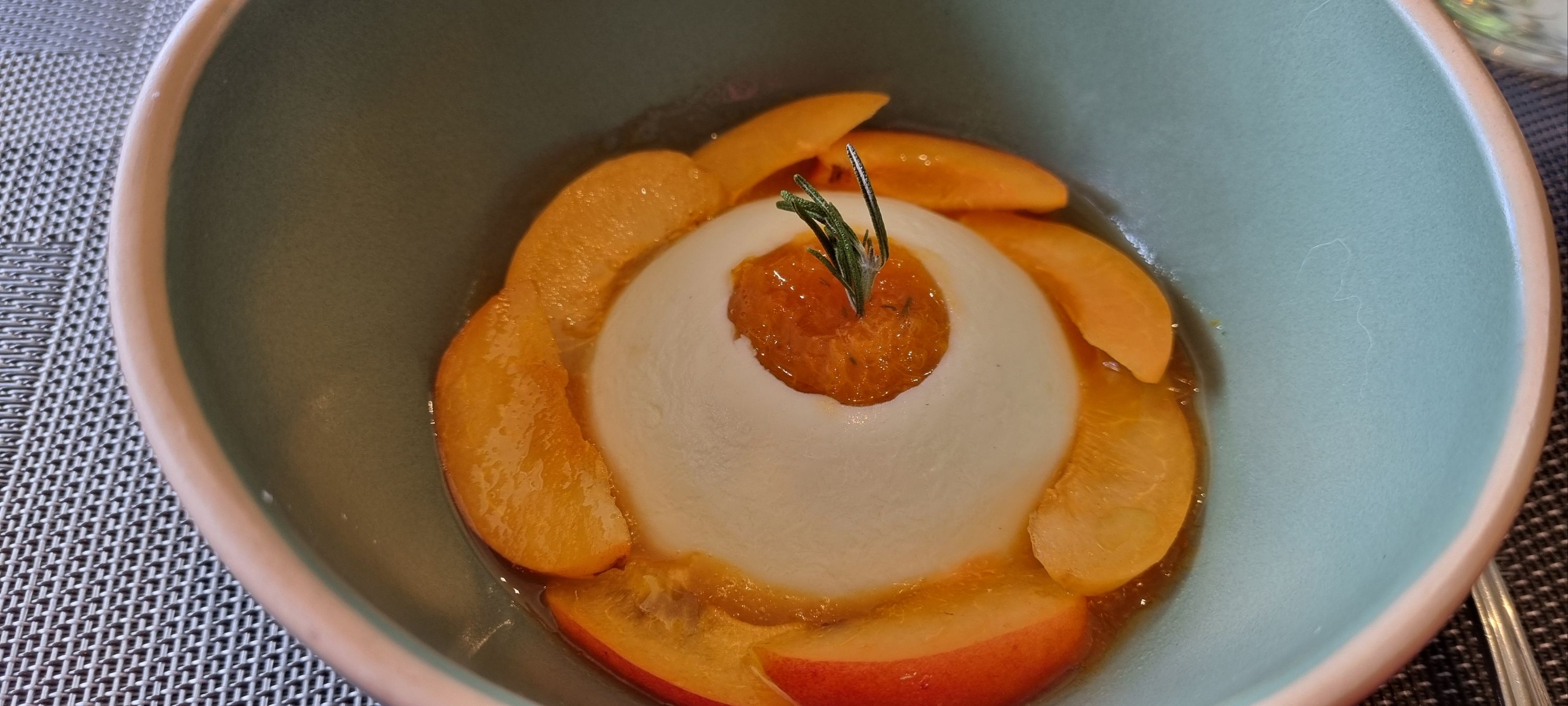
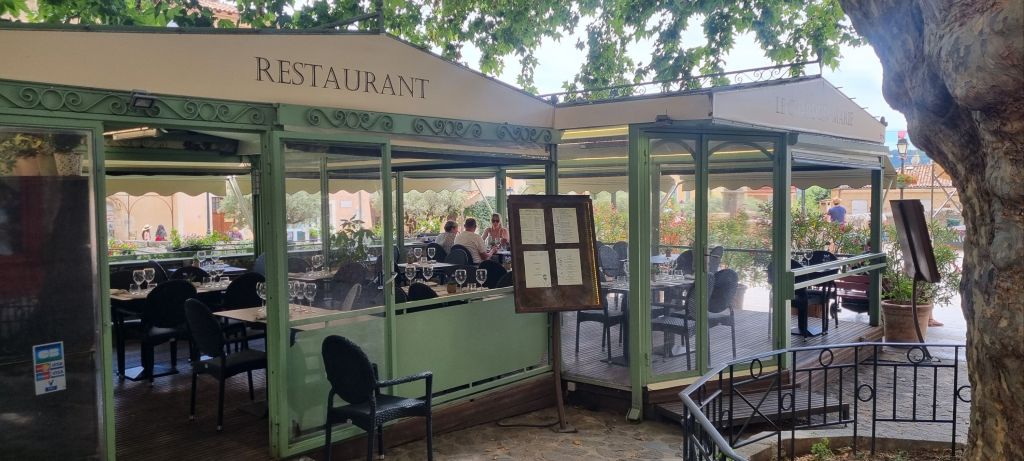
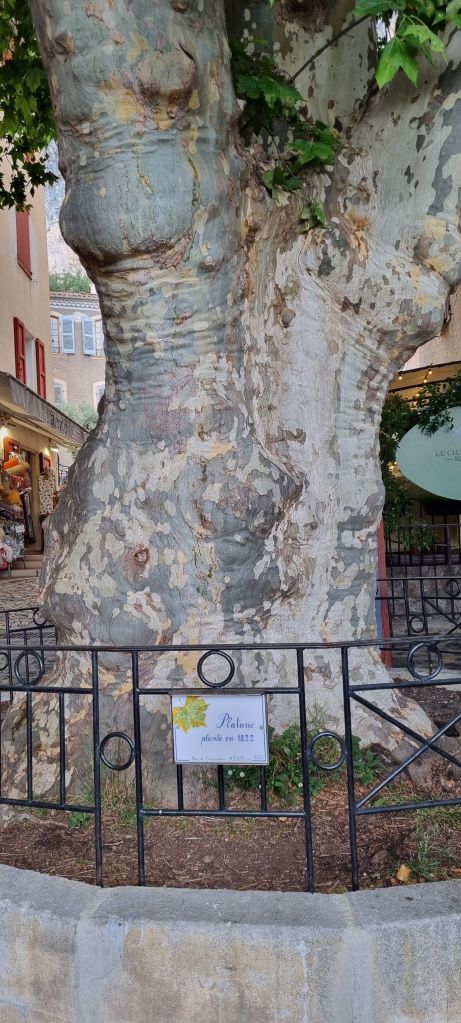
Just outside the restaurant is an enormous 200 year old plane tree.
Post lunch we wonder around for a last look and contemplate the 262 stairs to the chapel, set way on high into the mountain side. Only for a moment though. There’s no way we’re doing that, at least not after a three course lunch. It’s a vertical climb up precarious stone steps that have seen sounder days.
I’d love to take some of the beautiful faience platters on offer home but transporting them safely over long flights would be impossible.

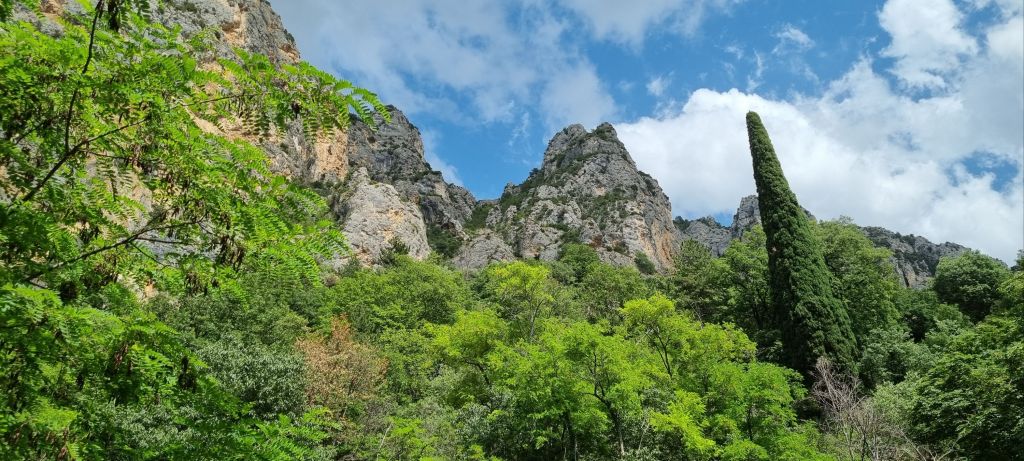
On the way home, blue skies replace yesterday’s grey and the mountains soar in sharp contrast. It’s truly a breathtaking setting.

 Miss Baci Travels