
It’s a short hop up the road to Beynac-et-Cazenac, yet another Dordogne Les Plus Beaux Village. We’re certainly spoilt for choice along the river. We’re still in what I’ll term ‘England in shorts’ – some 100,000 English resettled in the Dordogne during the 80s and 90s. That’ll explain the fish and chips on offer in tonight’s campground, and the more often than not, English chatter we hear everywhere we go.
Having settled in our new nook on the river and stocked up on local strawberries and other titbits, we wander into the village without a clear plan. Tour the village, or scale another blindly steep climb up to the Chateau de Beynac? Himself makes the call. Blindly steep climb on a hot day it is then. It makes yesterday’s climb look like a cake walk.


Whilst yesterday’s Chateau gardens were focused on the beauty of nature, there’s no denying the purpose of the Chateau de Beynac. This is a seriously defensive castle. One can only ponder at the effort required of fighting men of the day. They had to scale the cliff face in heavy armour, carrying heavy duty weaponry and then fight the good fight when they got to the top. Inconceivable.
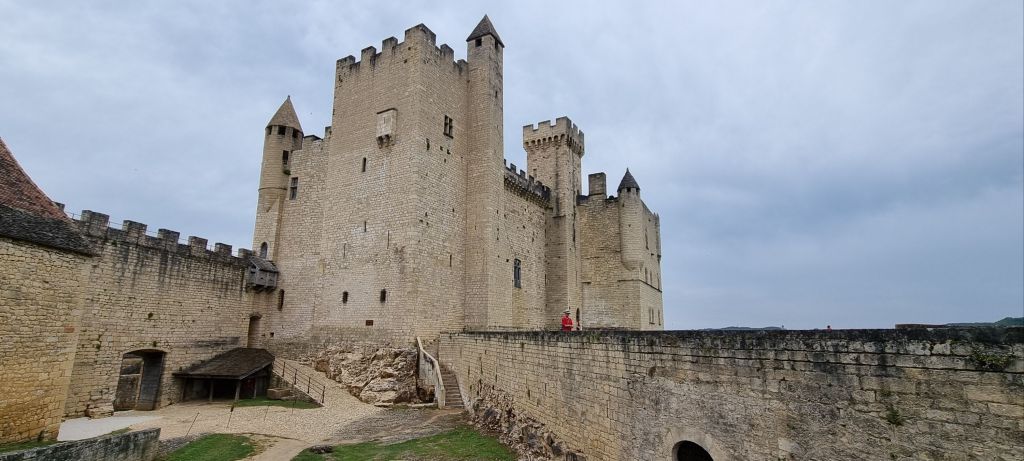
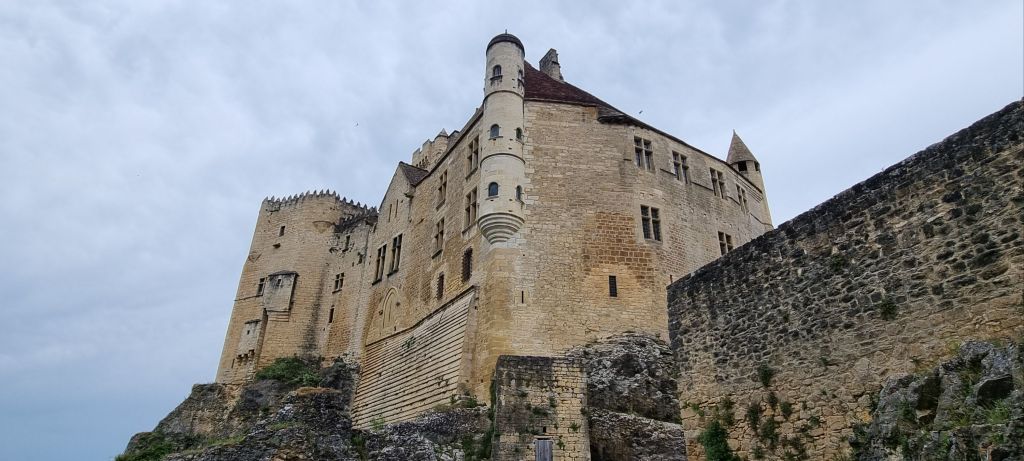
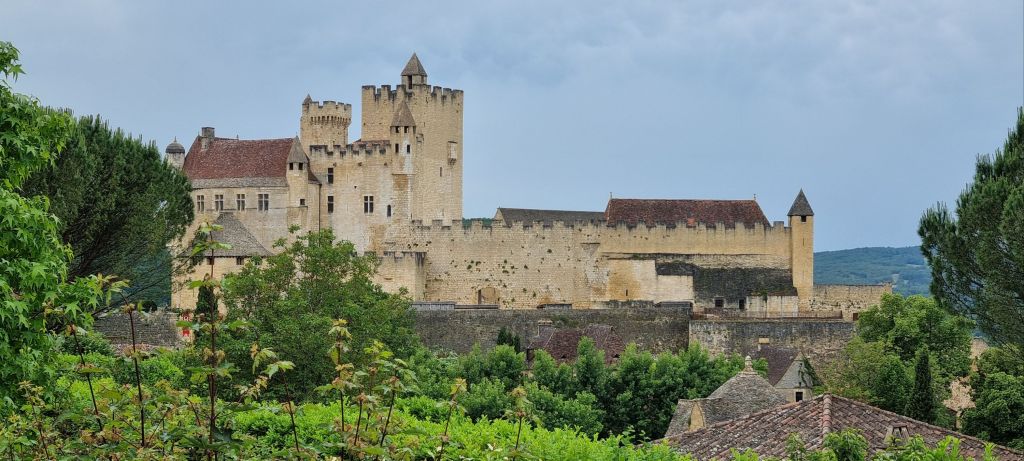
The Chateau’s defensive focus becomes clear when we understand its history. Its keep originally built in the 12th century, today it’s one of the most well preserved fortified castles in Perigord. The site of key battles in both the Hundred Year’s War and the Religious Wars, it was once conquered by Richard the Lionheart. History of his and his wife, Eleanor of Aquitaine, lives are told within.
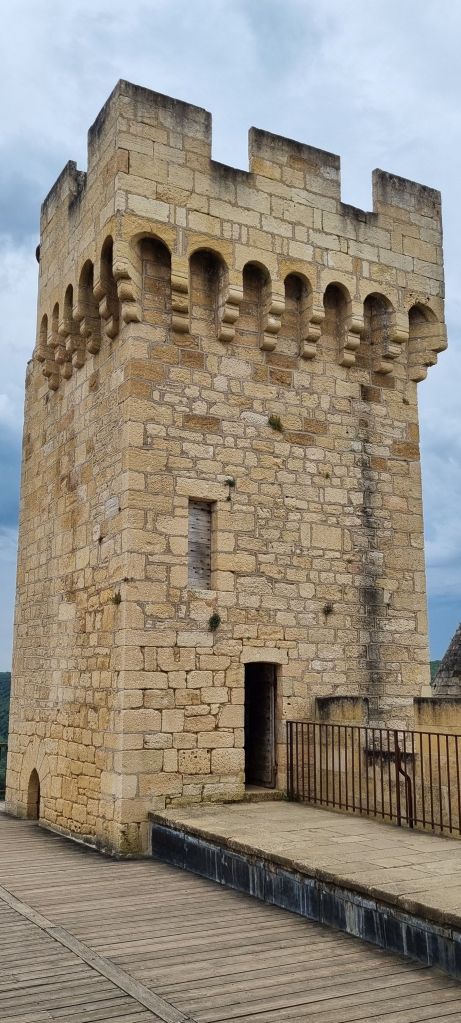
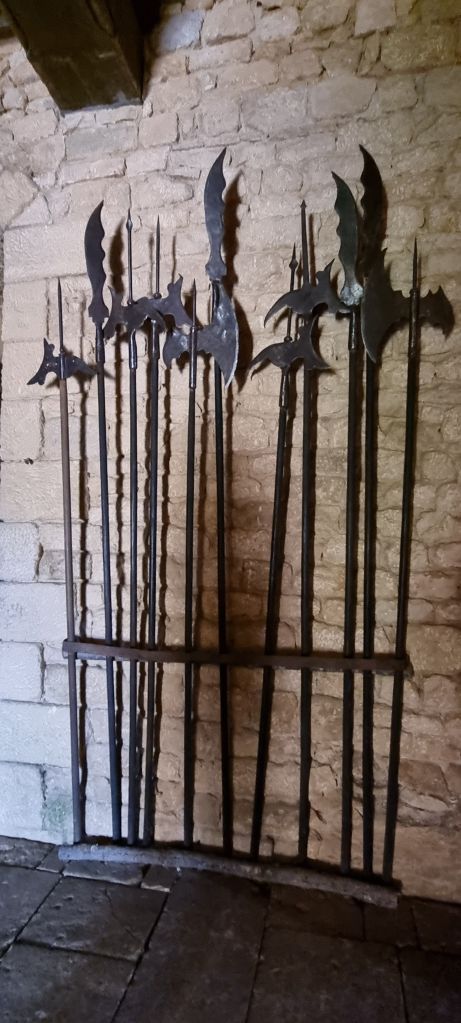
Rising above a precipitous cliff, Chateau de Beynac affords strategic views of enemy approach either down river or up cliff. Lots of forward warning and opportunity to sling burning and pointy things at them in defence. The weapons on display make me very glad that we live in the 21st century.
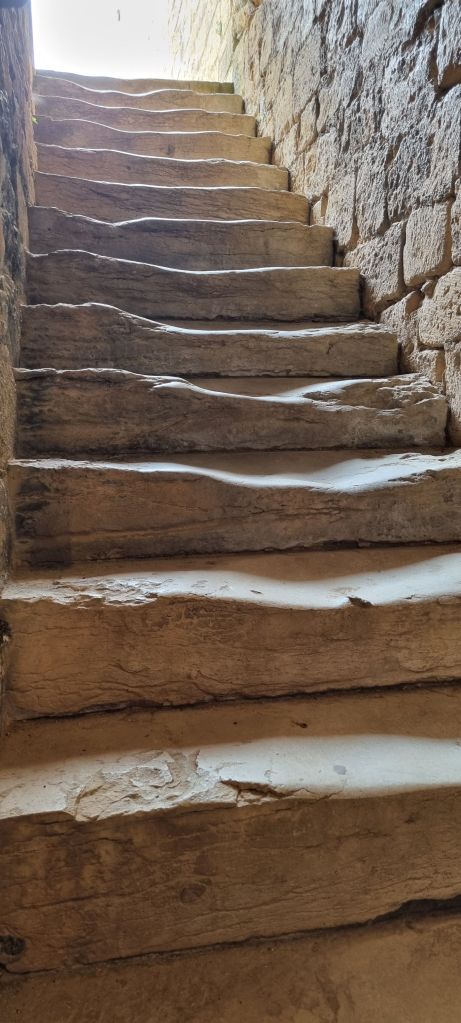
An electronic audio guide serves to tells us the story of each room as we make our way successively through the various steep levels seviced by never ending stairs, some of which are extraordinarily worn. How many footfalls must it take to wear down stone?
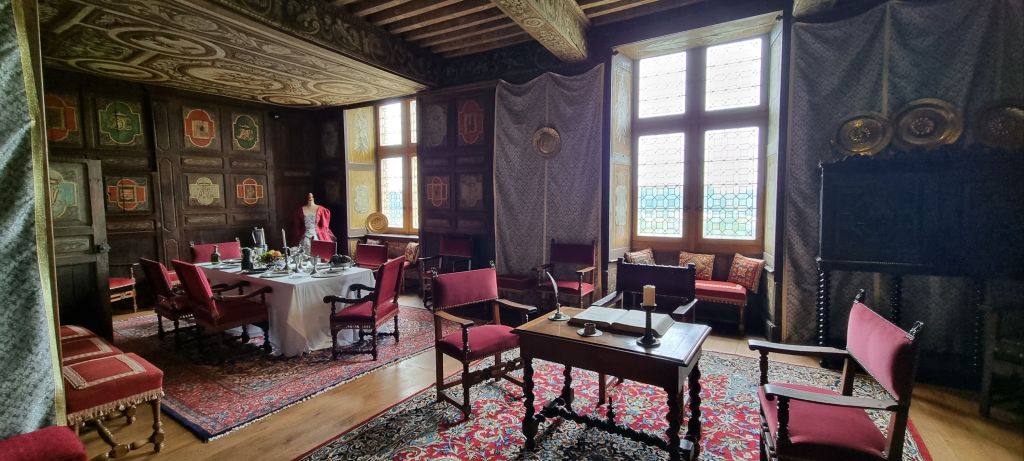
At the end of the feudal period the Chateau was expanded to include accommodation and state rooms where political meetings and business of the day were managed.
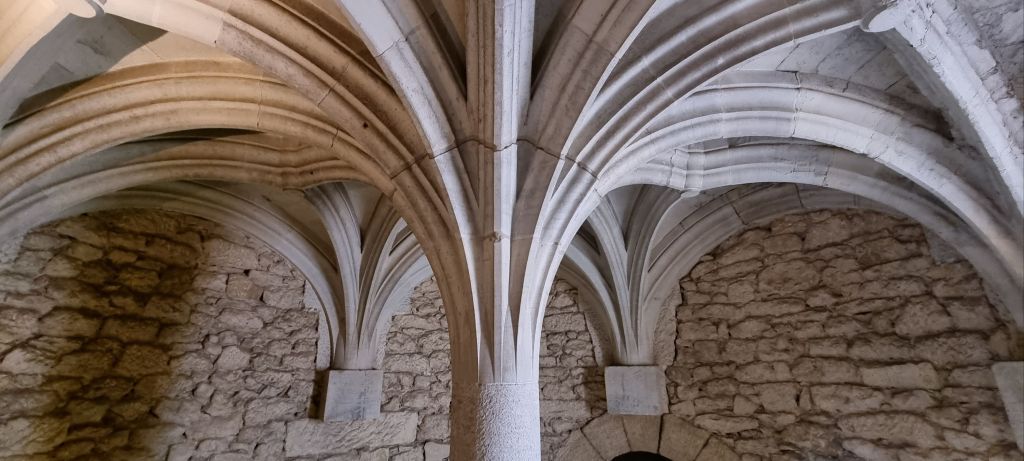
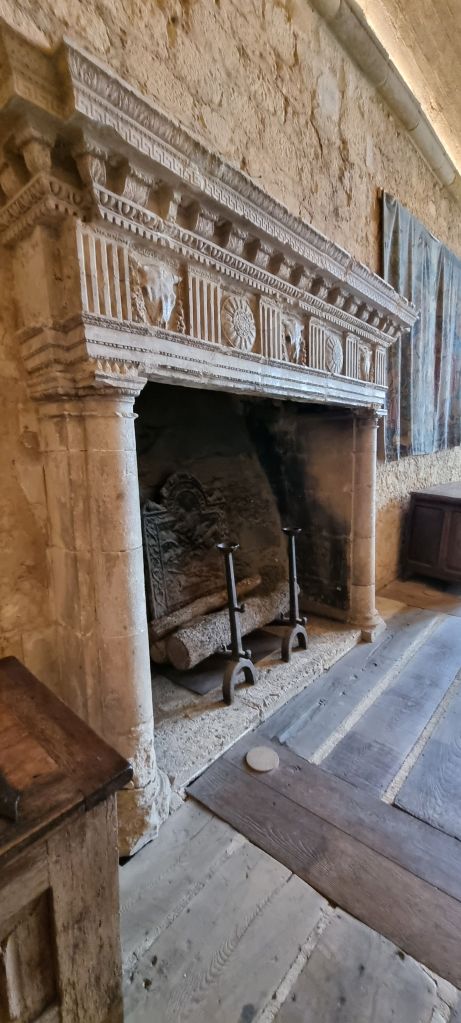
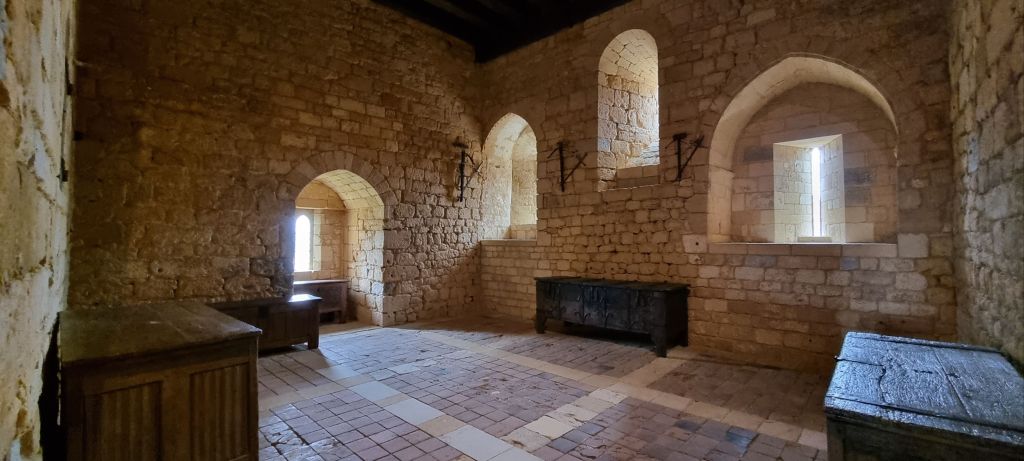
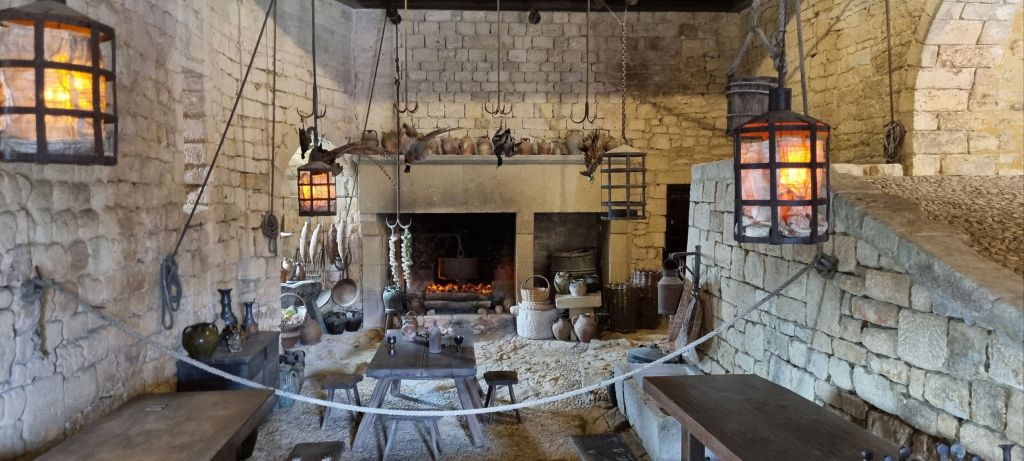
Always fascinating are the kitchens. This one is particularly interesting as it’s presented intact. It even has a drawbridge entrance under which sat a pit full of pointed sticks. If one was foolish enough to attempt an unwanted approach through the kitchen, they would fall into the pit, onto said pointed sticks and then have the disheartening experience of having a vat of fat poured on them and being set alight. Not terribly welcoming in the Middle Ages, then. No popping in unannounced for a spare cup lard. (There’s an excellent Monty Python skit waiting to be written here – a soldier arguing with the cook, wanting a vat of fat while she’s trying to cook lunch)
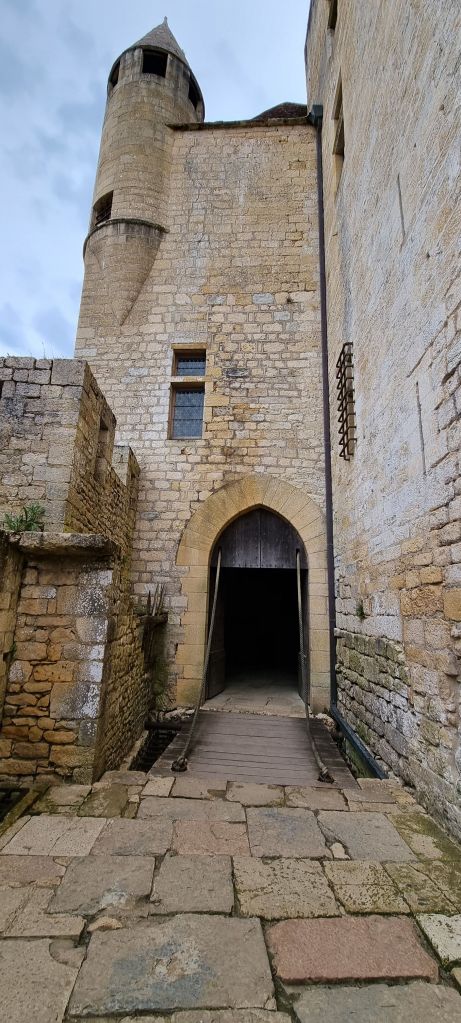
The Chateau also served as a prison of the day. You’d have to pity the poor soul caught and imprisoned here. Given that even the dining tables include parking spots for swords and those impressively pointy sharp weapons on display, one can only imagine the torture they had in store.
It’s fair to say though that the views are quite spectacular. We can clearly see the other four Chateau in the area. There’s a great view of both Le Roque-Gageac and Beynac-et-Cazenac below.
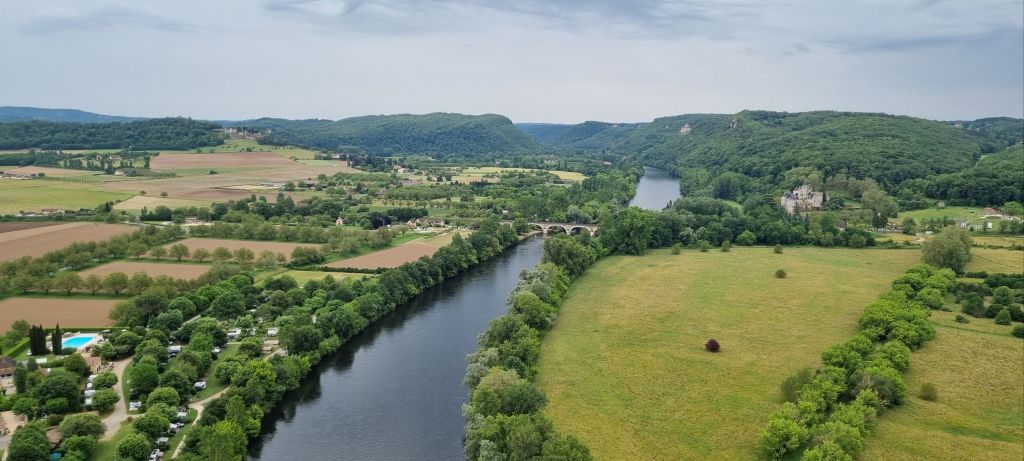
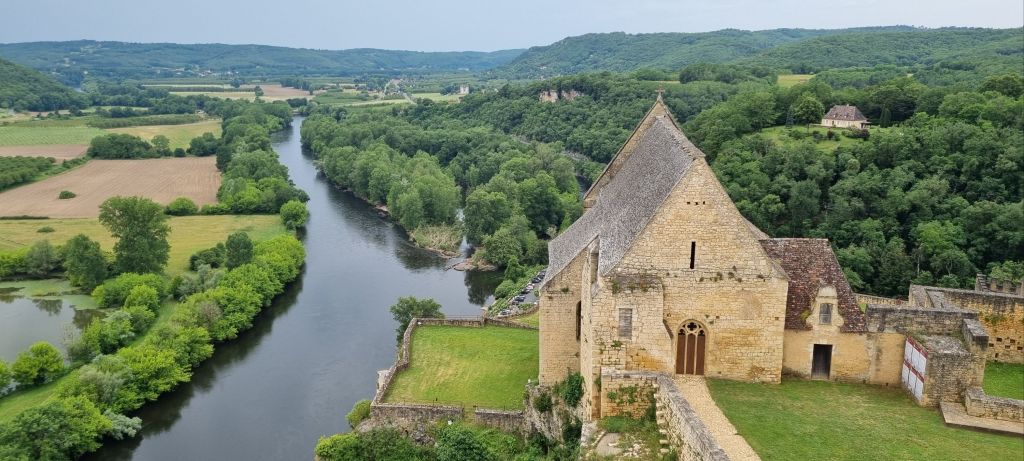
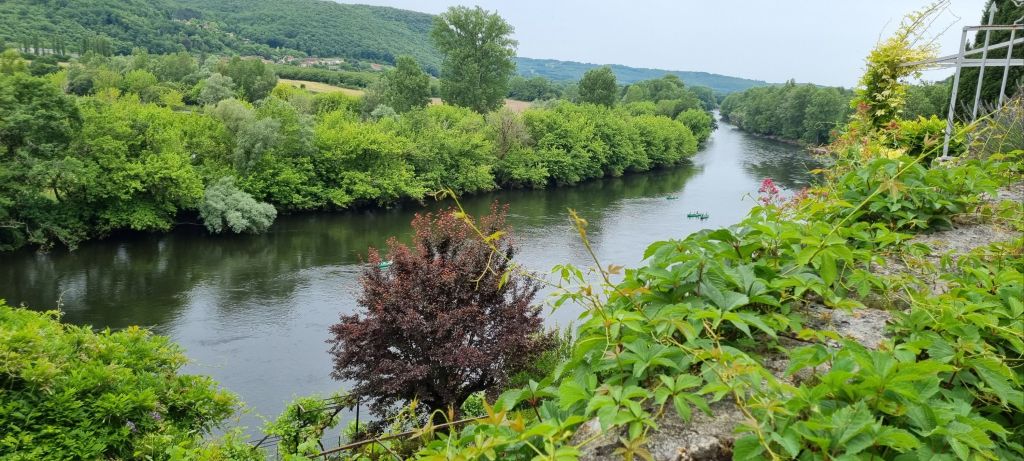
We learn that the Chateau was abandoned during the French Revolution. It sat empty until restoration work began in 1961 following which it was open to the public.
Tour over, we mountain goat it back down the cliff stopping only to admire the the Chapel Cazenave. With a different path leading back to the village, the descent is even steeper than the approach.

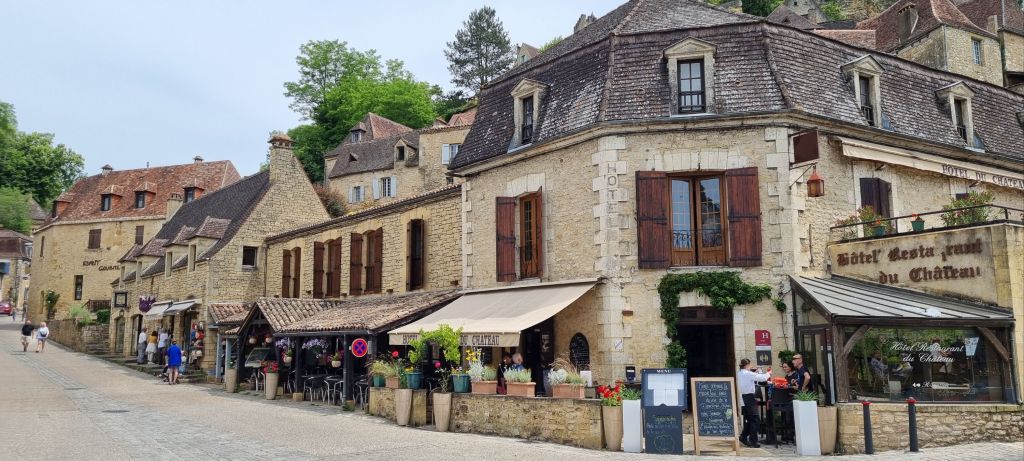
Below, Beynac-et-Cazenac has been occupied since the Bronze Age and together with the Castle was the seat of one of four baronies of the Perigord during the Middle Ages. For many years river trade underpinned village livelihood however the old port was abandoned and the river barges, the gabares, are now exclusively for tourists. Its medieval streets feature golden stones houses and tiled rooftops.
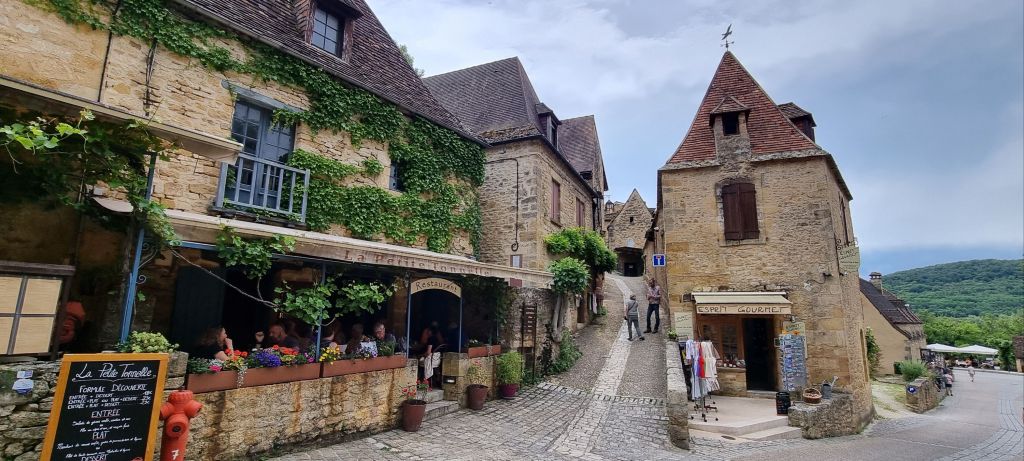

With weary legs we make our way back to the campground and settle in for a relaxing drink in the bar followed by a quiet evening under the Chateau’s watch.
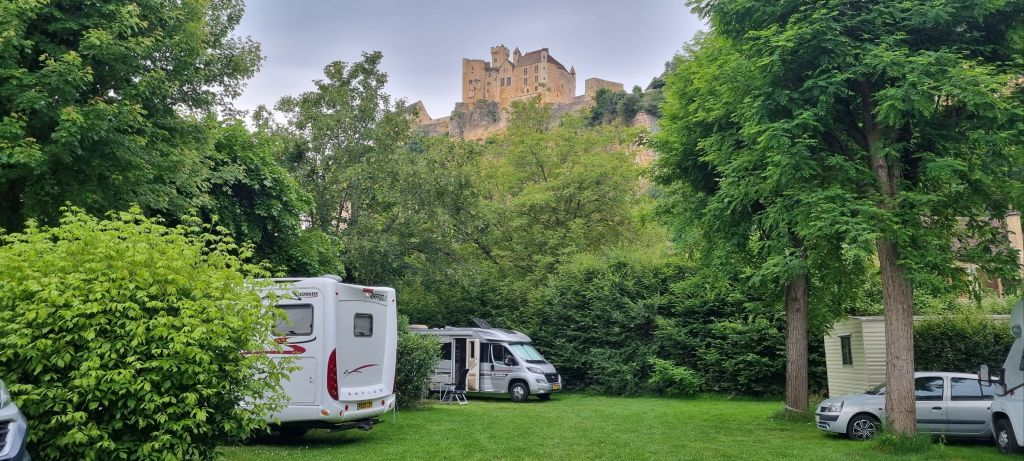

Himself makes friends with everyone. I think he quite likes having English neighbours he can talk to.
 Miss Baci Travels